
Superlative
Smartest birds in the world: 6 ranked by brain power
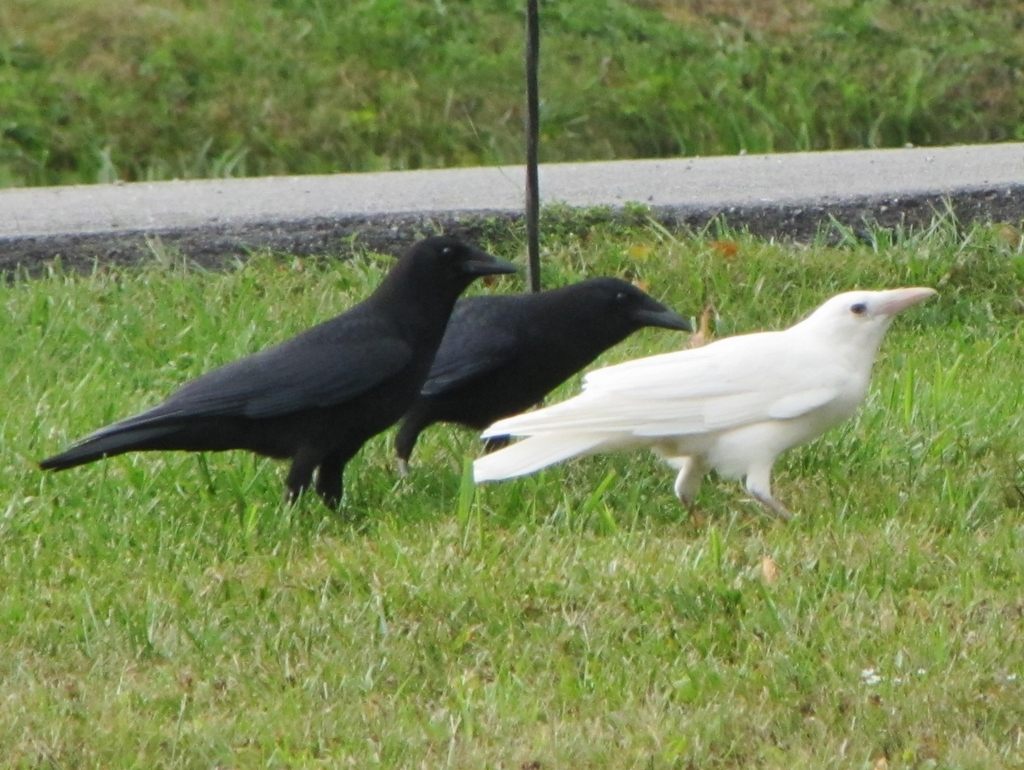
The smartest birds in the world are corvids (crows, jays, magpies, nutcrackers) and cockatoos. They use tools, plan ahead, recognise faces, pass the mirror self-recognition test, and remember tens of thousands of hiding spots. Their brain-to-body ratios rival those of great apes.
For most of the 20th century, "bird brain" was a genuine insult. Then researchers started actually testing corvids and parrots, and the results kept coming back wrong in a useful way: these birds were doing things that, until recently, only primates were supposed to manage. Here are the six best examples, grounded in the Kaught catalog and the science behind each one.
What makes a bird intelligent?
Intelligence in birds is measured by the same broad yardsticks used for mammals: brain-to-body ratio, social complexity, behavioral flexibility and performance on specific cognitive tasks (tool use, future planning, self-recognition, cause-and-effect reasoning). Corvids and parrots score consistently high on all of them, despite sharing no close evolutionary history with mammals. They arrived at similar cognitive solutions by a completely different path.
Kaught's catalog ranks each species by how often it is recorded in the wild. A Rare or Epic bird is not necessarily rarer than a Common one in the strict sense; it simply appears less often in real sightings, partly because many of the most cognitively complex birds are also cautious, territorial or thinly spread. For a deeper dive into general animal intelligence rankings, see our smartest animals in the world piece.
1. American Crow
The American Crow's signature cognitive trick is facial recognition with social memory. In a study by John Marzluff at the University of Washington, researchers wore rubber masks while trapping and handling crows on campus. For years afterward, those masked individuals were mobbed vigorously, while people nearby wearing different masks were ignored. The crows taught their offspring which face to distrust, without the young birds having any contact with the original researchers. The grudge, and the teaching of it, persisted for at least five years.
That is not instinct. It requires encoding a specific face, linking it to a negative outcome, retrieving the memory months later in a different context, and communicating threat information to naive relatives. It is a chain of cognitive steps that most vertebrates do not manage at all.
American Crows also use improvised tools in the wild, carry nuts to road intersections and wait for vehicles to crack them, and cache food in hidden stores they return to from memory. Their brain-to-body ratio falls within the range measured for chimpanzees. They occupy the Rare tier in the Kaught catalog: the species is wide-ranging but wary, and a close, confident sighting is harder than the maps suggest.
2. Eurasian Jay
The Eurasian Jay is the corvid best documented for episodic future planning, reasoning about events that have not happened yet. In Cambridge experiments led by Nicola Clayton, jays were allowed to cache food in two compartments, one where they would be fed in the morning and one where they would not. Jays that had previously experienced the "no breakfast" compartment pre-loaded it with food the evening before, specifically because they had learned that room would be unfed. They planned a future meal they were not hungry for at the time.
They also understand the concept of theft. A jay that has been watched by a competitor while caching will return and move the food to a new site once the witness is gone. Jays that have never stolen food themselves do not do this: the behaviour requires having a thieving mind to model another bird's intentions. This capacity is sometimes called theory of mind, the understanding that other individuals have perspectives and knowledge states different from your own.
Outside the lab, Eurasian Jays cache tens of thousands of acorns per autumn. Find them in mixed oak woodland across Europe and central Asia, loud and conspicuous in late summer but harder to spot once they begin foraging quietly through the canopy.
3. Black-billed Magpie
In 2008, Helmut Prior and colleagues at Ruhr University Bochum marked magpies with a dot of coloured feathers under the chin, in a spot visible only in a mirror. Birds that had been exposed to mirrors approached the reflection and then reached toward their own throat, not toward the mirror, to investigate or remove the mark. No bird without mirror experience bothered with the dot at all. The mirror self-recognition test, which had previously been passed only by humans, great apes, elephants, dolphins and orcas, was passed by the Black-billed Magpie: a bird with a brain the size of a walnut.
Self-recognition requires constructing a model of your own body as distinct from the external world, a cognitive foundation for self-concept that was assumed for decades to require a large neocortex. The magpie has no neocortex. Whatever structures it uses, they arrive at the same functional result.
In the field, Black-billed Magpies are open-country birds of western North America: black-and-white plumage, a long tail that catches a green iridescent sheen in sunlight, and a loud chattering call. They are bold and investigative, and frequently approach unusual objects or situations rather than withdrawing.
4. Sulphur-crested Cockatoo
In 2021, a Sulphur-crested Cockatoo in Sydney figured out how to open a hard-sided refuse bin secured by a five-stage mechanical lock. The sequence required bending a latch back, lifting a bar, turning a bolt, pulling a pin and flipping a lid: the animal completed the whole sequence on first encounter, with no trial and error, demonstrating it understood the causal chain rather than stumbling through it randomly.
More striking than the solution was what happened next. The technique spread through the Sydney cockatoo population by social learning: birds watched successful individuals, copied the relevant steps and opened bins in streets where no cockatoo had ever done so before. Different groups independently evolved local variations (some flip from left, others from right), which remained stable within neighbourhoods, the first documented example of cultural traditions in a non-primate bird spreading through an urban population.
Sulphur-crested Cockatoos live up to 80 years in captivity, and that long developmental period seems to support a cumulative cognitive toolkit that shorter-lived birds cannot build. They are conspicuous across eastern and northern Australia and much of New Guinea: large, white, with a bright yellow crest that fans forward when alarmed or excited.
5. Clark's Nutcracker
Clark's Nutcracker does not need to be the most flexible thinker on this list. It needs one specific cognitive capacity in extreme quantity: spatial memory. A single bird harvests up to 98,000 pine seeds per season and buries them across as many as 6,000 separate scatter-hoard sites, spread over an area of roughly 80 square kilometres at elevation. It recovers the majority of those caches months later, under several metres of snow, using nothing but memory of position relative to landmarks.
The anatomical evidence matches the behavioural data: the hippocampus of a Clark's Nutcracker is measurably and significantly larger than that of corvids that do not engage in scatter-hoarding. This is not a general intelligence advantage; it is a specific cognitive module expanded to an extreme by an extreme ecological demand. The nutcracker is not the most mentally flexible bird on this list, but no other bird, and very few mammals, can match its memory for spatial location.
Find them in the high-elevation pine forests of the Rocky Mountains and Sierra Nevada: a grey-white bird with black wings and tail, often seen prying seeds from the tight cones of whitebark pine, a keystone species that depends on the nutcracker to disperse it.
6. Blue Jay
Blue Jays are often cited for mimicry, and their hawk imitations are genuinely strategic rather than accidental. A Blue Jay encountering a feeder full of competing birds will produce an accurate copy of a Red-tailed or Red-shouldered Hawk call, which sends the other birds scattering, then move in and feed alone. This requires producing a signal that exploits another animal's learned fear response, in the right context, to achieve a specific outcome.
Beyond that, Blue Jays show a more unusual capacity: metacognition, awareness of the reliability of their own memories. In food-choice experiments, Blue Jays given an option between a certain small reward and a larger but uncertain one adjusted their strategy depending on whether the task required them to remember specific information they might have misencoded. They were less willing to gamble when they were likely to have a wrong memory than when they were likely to have a correct one. Knowing that you do not know something is a cognitive step above just not knowing it.
Blue Jays are familiar across eastern and central North America: bold blue-and-white plumage, a distinctive crest, and a wide repertoire of calls ranging from aggressive screams to quiet, conversational whistles. They cache acorns in autumn and have been significantly under-studied for a bird this abundant. See also: animal abilities that sound impossible but are real.
The common thread
Every species on this list is corvid (crows, jays, magpies, nutcrackers) or parrot (cockatoos), and every one of them has a complex social life, a varied diet that rewards flexible problem-solving, and a long developmental period by bird standards. None of this is coincidental. The same pressures that drove intelligence in social primates seem to have driven it independently in these birds, arriving at comparable cognitive outcomes from a completely different evolutionary starting point.
The Kaught catalog distinguishes each species by its primary type (Bird) and, where relevant, a secondary type reflecting its habitat or trait cluster. What the catalog cannot encode is the degree to which these animals are actively modelling the world and the minds of others around them, which makes them some of the most interesting species to actually watch in the field. For more on how animals navigate, plan and sense their environments, see animals with extreme senses and how bees navigate.
Smartest birds: frequently asked questions
What is the smartest bird in the world?
The American Crow is widely regarded as the world's most cognitively advanced bird. It recognises individual human faces, holds grudges for years, uses tools, and teaches its young which people to avoid. The New Caledonian Crow runs it close for multi-step tool use.
Are crows smarter than parrots?
On most measures, yes. Corvids consistently outperform parrots in future planning, social cognition and face recognition. Cockatoos lead on mechanical problem-solving and social learning; parrots lead on vocal mimicry and language comprehension tasks.
Why are corvids so intelligent?
Corvids have proportionally large brains for their body size, with a densely packed pallium that functions like the mammalian cortex. They also have long developmental periods, complex social lives and varied diets that reward flexible thinking over fixed responses.
What is the mirror test, and which bird passed it?
The mirror self-recognition test checks whether an animal understands that the reflection is itself. Researchers mark the animal with a visible dot only visible in a mirror and watch whether it investigates its own body. The Black-billed Magpie is the only bird confirmed to pass it.
How many seeds can a Clark's Nutcracker remember?
A Clark's Nutcracker caches up to 98,000 pine seeds per season across as many as 6,000 separate sites and recovers the majority months later under snow cover. Its hippocampus is measurably larger than that of corvids that do not cache.
Do Blue Jays really mimic hawks?
Yes. Blue Jays produce accurate imitations of Red-tailed and Red-shouldered Hawk calls, which cause competing birds to scatter from feeders. Jays then move in to feed alone. This deliberate acoustic deception is one of the clearest examples of strategic vocal mimicry in the wild.
How does bird intelligence rank against mammals?
Top corvids and cockatoos match or exceed many non-primate mammals on problem-solving, planning and social cognition tasks. Brain-to-body ratios for crows rival those of chimpanzees. The evolutionary route is completely different but the cognitive results are comparable.
The next thing you see could be
your first catch.
Kaught is live on the App Store and Google Play. Free to start, and your first catch is one photo away.
Free to start · Live on the App Store and Google Play
Species data, type, rarity tier and measurements, is drawn from the Kaught catalog, built on open biodiversity records from GBIF and iNaturalist. Rarity reflects how often a species is observed in the wild, not its conservation status.