
Adaptation explainer
How do bees navigate? The biology of the waggle dance, sun compass and magnetic map
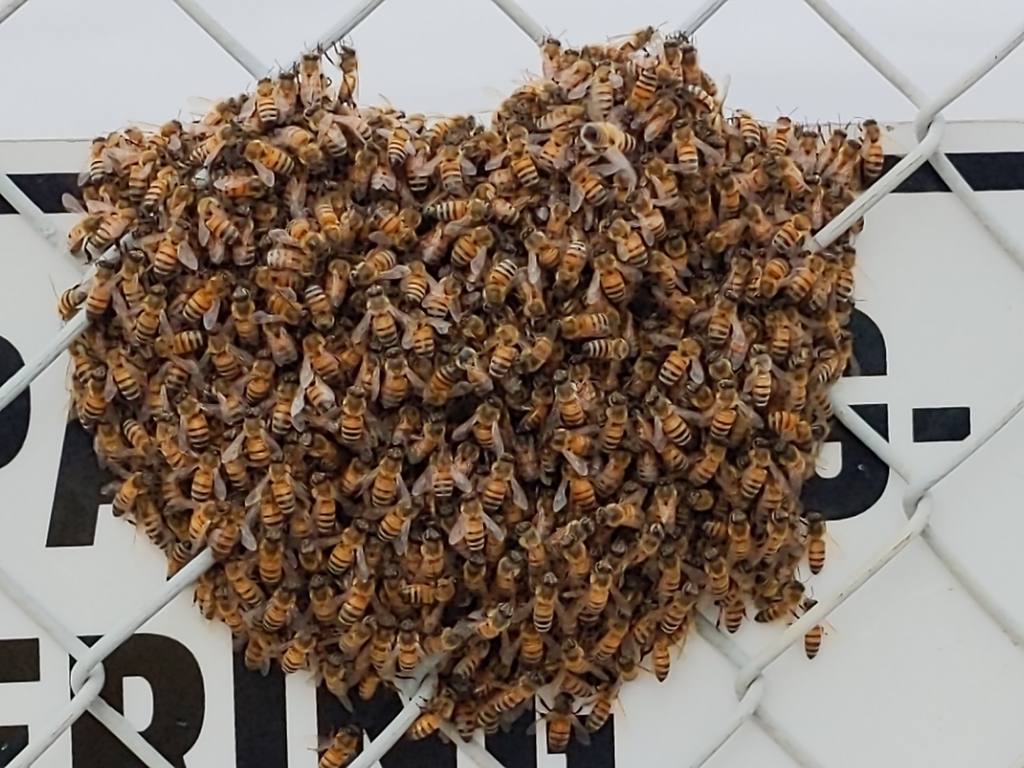
A western honey bee (Apis mellifera) navigates using four interlocking systems: a waggle dance that broadcasts direction and distance to nestmates, a sun compass corrected for the sun's movement, polarised light that works under cloud cover, and magnetite crystals in its abdomen for long-range orientation.
A western honey bee weighs about 0.1 grams. On a foraging trip it may travel 5 km from the hive, pass through dozens of different landscapes, locate a patch of flowers it visited three days ago, harvest nectar and pollen, and return to an entrance hole less than 2 cm wide with precision that puts GPS to shame. It does all of this with a brain roughly the size of a sesame seed. The navigation biology that makes this possible is one of the more remarkable things in the animal kingdom.
The waggle dance: encoding direction and distance
When a scout bee finds a good food source, it returns to the hive and performs the waggle dance on the vertical face of the comb. The dance is a figure of eight. The critical part is the central waggle run, where the bee vibrates its abdomen while walking in a straight line.
The angle of that waggle run relative to vertical encodes the direction of the food source relative to the sun. If the waggle run points straight up, fly toward the sun. If it points 60 degrees to the left of vertical, fly 60 degrees to the left of where the sun is. The dancing bee is essentially transcribing a compass bearing onto a vertical surface.
The duration of the waggle run encodes distance. A one-second run corresponds to roughly 750 m to 1 km of flight distance. A two-second run means 1.5–2 km, and so on. Bees watching the dance extract both pieces of information and can fly directly to food sources they have never visited, without following the scout.
What makes the dance extraordinary is that the dancing bee continuously updates the angle of the waggle run as the day progresses, compensating for the sun's movement across the sky. A dance performed at noon points differently from the same food source at 3 pm, and the bee corrects for this even while dancing in the dark inside the hive.
The sun compass and time-compensation
Bees track the sun's position and rate of movement using an internal clock. On a standard foraging flight, they know where the sun is, how fast it is moving at the current time of day, and can extrapolate its expected position for the return journey. This is called a time-compensated sun compass, and it is accurate to within a few degrees.
The circadian clock that drives this is robust: bees trained to forage at a particular time of day maintain that schedule even when kept in constant light or darkness, and can correct their sun-compass estimates during trips of several hours.
Polarised light: the cloudy-day compass
Sunlight scattered by the atmosphere creates a predictable pattern of polarisation across the sky, invisible to human eyes but detectable by bees. The compound eye contains a dedicated band of specialised facets along the dorsal rim, the dorsal rim area (DRA), whose ommatidia are oriented to detect the plane of polarised light rather than colour or intensity.
This polarisation pattern remains structured even under overcast skies, as long as a small patch of blue is visible somewhere. Bees can orient to this pattern as accurately as to the sun itself. On fully overcast days, navigation degrades, but bees can also fall back on landmark memory for the final kilometres of a journey.
Compare this to the bat's echolocation system: two very different solutions to the same problem of finding targets in the absence of direct visual information.
Landmark memory maps
Young bees make a series of orientation flights around the hive before their first foraging trip. During these flights they hover in front of the hive entrance, gradually increasing their altitude and radius, and memorise the surrounding landscape from multiple viewpoints. They are building a mental map: the shape of nearby trees, the gradient of the terrain, the colour of surrounding structures.
On foraging flights this map is used for the final approach and return. Bees can recognise individual landmarks, learn routes through complex mazes, and use buildings and hedgerows as navigation aids. When trained to a maze, they can solve it faster after exploring it freely than after being guided through it, suggesting they build a cognitive map rather than just a sequence of turns.
Magnetite: the magnetic sense
Honey bee abdomens contain deposits of magnetite (iron(II,III) oxide), the same magnetic mineral found in birds, fish and sea turtles. Bees exposed to shifting magnetic fields during training can learn to orient to magnetic north. In experiments where visual cues are eliminated, magnetic information allows bees to maintain orientation.
The mechanism is not fully understood, but the current model is that the magnetic sense provides a long-range reference bearing, helps calibrate the sun compass at dawn when the sun's position is ambiguous, and may assist in locating the hive entrance during the final approach. See animals with extreme senses for how this compares to migratory birds and sharks.
How the four systems work together
Bee navigation is not a single GPS-like system but a hierarchy of overlapping redundant cues. On a clear sunny day, the sun compass dominates. Under cloud, polarised light takes over. In the final 50 metres, landmark memory guides the approach. Over long distances and during orientation flights, the magnetic sense provides a background reference.
The waggle dance is not a navigation system itself but a communication channel that allows one bee's navigation solution to be broadcast to thousands of nestmates simultaneously, without any individual bee leaving the hive to check it. It is, in effect, an abstract language for encoding geographic information.
The longest animal migrations in the world rely on similar multi-cue navigation strategies, scaled up to thousands of kilometres and months of travel. The honey bee compresses those principles into a brain smaller than a pinhead.
Bee navigation: frequently asked questions
How do bees find their way back to the hive?
Bees use four overlapping systems: landmark memory built during orientation flights, a sun compass corrected for the sun's daily movement, polarised light that provides a compass even under cloud, and possibly magnetite crystals for long-range orientation. All four operate simultaneously, each compensating for the others' weaknesses.
What is the waggle dance?
A figure-of-eight dance performed on the vertical comb face. The angle of the central waggle run relative to vertical encodes the direction of a food source relative to the sun. The duration of the waggle run encodes distance. Nestmates watching the dance can fly directly to sources they have never visited.
Can bees navigate on a cloudy day?
Yes. Bees detect the polarisation pattern of skylight, which remains structured even through thin cloud and in a small patch of blue sky. Specialised facets along the dorsal rim of the compound eye read the plane of polarisation and deliver an accurate compass heading when the sun itself is not visible.
How far can a bee navigate from the hive?
Western honey bees forage up to 12–14 km from the hive in extreme cases, though most trips stay within 1–2 km. They can navigate back to within centimetres of the hive entrance after a journey of several kilometres through unfamiliar terrain.
Do bees have a magnetic sense?
Evidence strongly suggests yes. Magnetite crystals have been found in bee abdomens, and bees trained under magnetic conditions can maintain orientation when visual cues are removed. The magnetic sense is thought to provide a long-range reference bearing and help calibrate the sun compass at dawn.
The next thing you see could be
your first catch.
Kaught is live on the App Store and Google Play. Free to start, and your first catch is one photo away.
Free to start · Live on the App Store and Google Play
Species data, type, rarity tier and measurements are drawn from the Kaught catalog, built on open biodiversity records from GBIF and iNaturalist. Rarity reflects how often a species is observed in the wild, not its conservation status.