
Species spotlight
Green Sea Turtle: the ocean reptile that crosses entire basins to nest on its birth beach
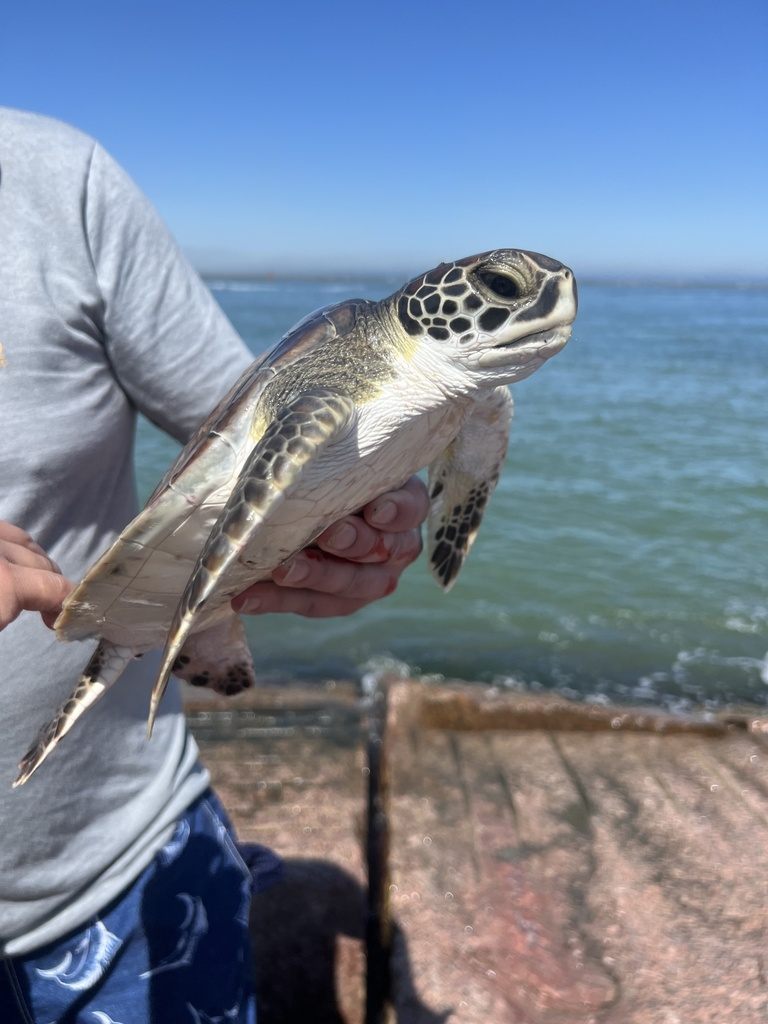
The green sea turtle (Chelonia mydas) is a large, smooth-shelled reptile found in tropical and subtropical seas worldwide. Adults eat only seagrass and algae, weigh up to 190 kg, and navigate thousands of kilometres using the magnetic signature of the beach where they hatched.
The green sea turtle is one of the most recognisable animals in the ocean, and one of the most ancient. Its lineage stretches back more than 100 million years. Today it glides through coral reefs and seagrass beds from the Caribbean to the Indo-Pacific, unhurried and seemingly weightless despite being the size of a coffee table. Here is how to identify one, what it is doing when you see it, and what drives its extraordinary navigational feats.
How to identify a green sea turtle
Start with the shell. The green sea turtle has a smooth, oval carapace, widest at the mid-point, with four pairs of large costal scutes that sit edge to edge rather than overlapping. The colour is typically olive-brown to dark brown above, and pale yellow below. An adult shell runs 80 to 150 cm long.
The head is the clearest field mark when comparing sea turtle species. Look for:
- Two prefrontal scales between the eyes (the hawksbill has four, in two pairs).
- A small, rounded, blunt beak, finely serrated on the lower jaw to crop seagrass. The hawksbill's beak hooks sharply downward like a bird of prey.
- One claw on each front flipper. Hawksbills typically have two.
In the water the green sea turtle moves with slow, deliberate wingbeats of its front flippers, rarely rushing. Adults surface every few minutes to breathe, a brief, visible gulp of air followed by a smooth dive back to the reef.
Why it's called "green"
Not for the shell. The name comes from the colour of the fat beneath the skin, a pale green tint derived from chlorophyll and carotenoids in the seagrass and algae the turtle spends its life eating. The shell itself is brown. This is one of those wildlife names that makes perfect sense once you know the biology, and makes none at all until you do.
Where green sea turtles live
The species is globally distributed across tropical and subtropical waters, roughly between latitudes 35 degrees north and south. Major nesting beaches include Tortuguero in Costa Rica, Ascension Island in the South Atlantic, Raine Island in Australia's Great Barrier Reef, and beaches in the Seychelles and Oman. Between nesting seasons, individuals forage hundreds to thousands of kilometres away at coastal seagrass and algae beds.
Despite a global range that stretches across every major ocean, individual green sea turtles are creatures of habit. Each one uses the same feeding grounds year after year, often sleeping wedged under a coral ledge in the same spot it used the season before.
What green sea turtles eat
Adults are strictly herbivorous, one of only a handful of large herbivorous reptiles on Earth. The diet is almost entirely seagrass and algae, cropped with the serrated jaw in short, tidy bites. A feeding green sea turtle works a seagrass bed methodically, keeping the blades trimmed to a length where growth is fastest, a behaviour that, over time, improves the health of the meadow.
Juveniles start life eating a broader diet, including jellyfish, invertebrates and sponges. The switch to a plant-only diet happens gradually as they grow, linked to changes in gut bacteria that allow efficient fermentation of fibrous plant material. By the time a green sea turtle reaches 30 to 40 cm in shell length, the diet has usually shifted to near-pure herbivory.
The magnetic compass that leads them home
The most remarkable thing a green sea turtle does is also one of the hardest to see. Females that hatched from a beach in Costa Rica in 1995 are still returning to that same strip of sand in 2026 to lay their own eggs, navigating from open ocean to within a few kilometres of their exact hatch site after decades at sea.
The mechanism is a magnetic map. As hatchlings scramble from their nest and enter the surf, they imprint on the specific combination of magnetic field intensity and inclination angle at that beach. Each beach has a unique magnetic signature, as distinct as a postcode. Decades later the female reads that signature from the ocean and steers toward it, using the Earth's field the way a navigator uses latitude and longitude. This is the same broad principle that allows Atlantic salmon to return to their home river after years in the open ocean.
The accuracy is striking. A 2019 study tracking green sea turtles from Ascension Island in the South Atlantic showed animals crossing more than 2,000 km of open ocean to reach nesting beaches within a few kilometres of where they had nested two to five years before.
Males are not part of this story. A male green sea turtle leaves the beach moments after it hatches and never returns to land again. His entire life, potentially 70 years, is spent at sea.
Nesting and hatchlings
A female typically nests every two to five years. When she does, she hauls out at night onto the same beach where she hatched, digs a flask-shaped chamber in the sand with her rear flippers, and lays between 100 and 150 eggs. She covers the clutch and returns to the sea, sometimes within the same night. She repeats this process three to five times within a single nesting season, at ten to fourteen-day intervals.
Incubation takes 45 to 70 days. Temperature determines sex: warmer nests produce more females, cooler nests more males. Hatchlings emerge together, usually at night, and make a frantic dash to the surf, guided by the brightness of the open horizon over the water. The first few years of a hatchling's life are poorly understood and sometimes called the "lost years": juveniles disappear into the open ocean, living among floating sargassum seaweed, before reappearing years later as sub-adults at coastal feeding grounds.
How to spot a green sea turtle
If you want a reliable sighting, find a place where they feed and rest rather than hoping to cross paths at sea. Feeding grounds over coral reef and seagrass, in clear, warm, shallow water, are the most productive. Reliable locations include:
- Great Barrier Reef, Australia: Lady Elliot Island and Heron Island are especially well-known.
- Maldives: Multiple atolls; turtles rest under bommies and feed on reef algae.
- Okinawa, Japan: Year-round resident populations at several dive sites.
- Red Sea: Ras Mohammed (Egypt) and reefs around Hurghada have reliable sightings.
- Galapagos Islands: Particularly around Isabela and Santa Cruz.
- Tortuguero, Costa Rica: The world's most important green sea turtle nesting beach; nightly nesting watches run from July to October.
At known resting spots, turtles surface every four to seven minutes. Patience, stillness and no sudden movement are the keys. A snorkeller who stays horizontal and quiet will watch a green sea turtle carry on feeding with complete indifference. One who kicks toward it will see the animal disappear in three unhurried wingbeats.
The Kaught catalog places the green sea turtle at the Common tier (one diamond), a reflection of how often the species turns up in real-world sightings. With over 45,000 records on iNaturalist and populations at major snorkelling destinations worldwide, a green sea turtle sighting is achievable for anyone who looks in the right place. Compare that with deep-ocean species such as the narwhal, which requires an Arctic expedition and a good deal of luck, or the extraordinary migrations tracked in the longest animal migrations ranking, where green sea turtles share the ocean lanes with humpback whales.
Green sea turtle vs hawksbill: the four field marks
The two species overlap at tropical reefs worldwide and are commonly confused. Here are the reliable separation points:
- Beak: green = blunt, rounded; hawksbill = hooked, pointed.
- Prefrontal scales: green = 2 (one pair); hawksbill = 4 (two pairs).
- Carapace scutes: green = flush, non-overlapping; hawksbill = overlapping like roof tiles.
- Size: green turtles are generally larger and more rounded; hawksbills tend to be narrower and smaller.
In most snorkelling encounters the beak shape is the fastest call: the green's blunt jaw versus the hawksbill's sharply hooked bill settles the ID in seconds.
Green sea turtle: frequently asked questions
What does a green sea turtle look like?
A large, smooth-shelled sea turtle with an oval olive-brown carapace up to 1.5 m long. The head is small and rounded with two large prefrontal scales between the eyes. Front flippers are long and paddle-like, each with a single claw. Adults weigh 68 to 190 kg.
What do green sea turtles eat?
Adults eat only seagrass and algae. The serrated lower jaw crops seagrass blades the way scissors cut paper. Juveniles are omnivorous, but switch to a plant-only diet as they mature. The name "green" comes from the green colour of this seagrass-rich fat, not the shell.
How do green sea turtles navigate back to their birth beach?
They imprint on the unique magnetic field of the beach where they hatched. As adults they detect both the intensity and inclination of Earth's magnetic field to locate that specific spot, sometimes after crossing an entire ocean basin.
Where can you see green sea turtles in the wild?
Widespread in tropical and subtropical seas. Reliable locations include the Great Barrier Reef (Australia), Maldives, Red Sea, Okinawa (Japan), Galapagos Islands, and Tortuguero (Costa Rica). They surface every few minutes to breathe, making them relatively easy to spot at feeding and resting sites.
How long do green sea turtles live?
Confirmed lifespans reach 70 to 80 years or more. Maturity is slow: most individuals take 25 to 35 years to reach breeding age. A female nests only every two to five years once sexually mature, laying three to five clutches of 100 to 150 eggs per nesting visit.
How do you tell a green sea turtle from a hawksbill turtle?
Check beak and head scales. Green sea turtle: blunt rounded beak, two prefrontal scales, flush non-overlapping carapace scutes. Hawksbill: hooked pointed beak like a bird of prey, four prefrontal scales, overlapping scutes like roof tiles.
Why is the green sea turtle Common in Kaught?
Kaught's rarity reflects how often a species is observed in the wild, not its conservation status. The green sea turtle is regularly spotted by snorkellers and divers at feeding grounds across the tropics, with over 45,000 records on iNaturalist alone, placing it in the Common tier.
The next thing you see could be
your first catch.
Kaught is live on the App Store and Google Play. Free to start, and your first catch is one photo away.
Free to start · Live on the App Store and Google Play
Species data, type, rarity tier and measurements, is drawn from the Kaught catalog, built on open biodiversity records from GBIF and iNaturalist. Rarity reflects how often a species is observed in the wild, not its conservation status.