
Identify safely
Reef Stonefish: the rock on the sea floor you really don't want to step on
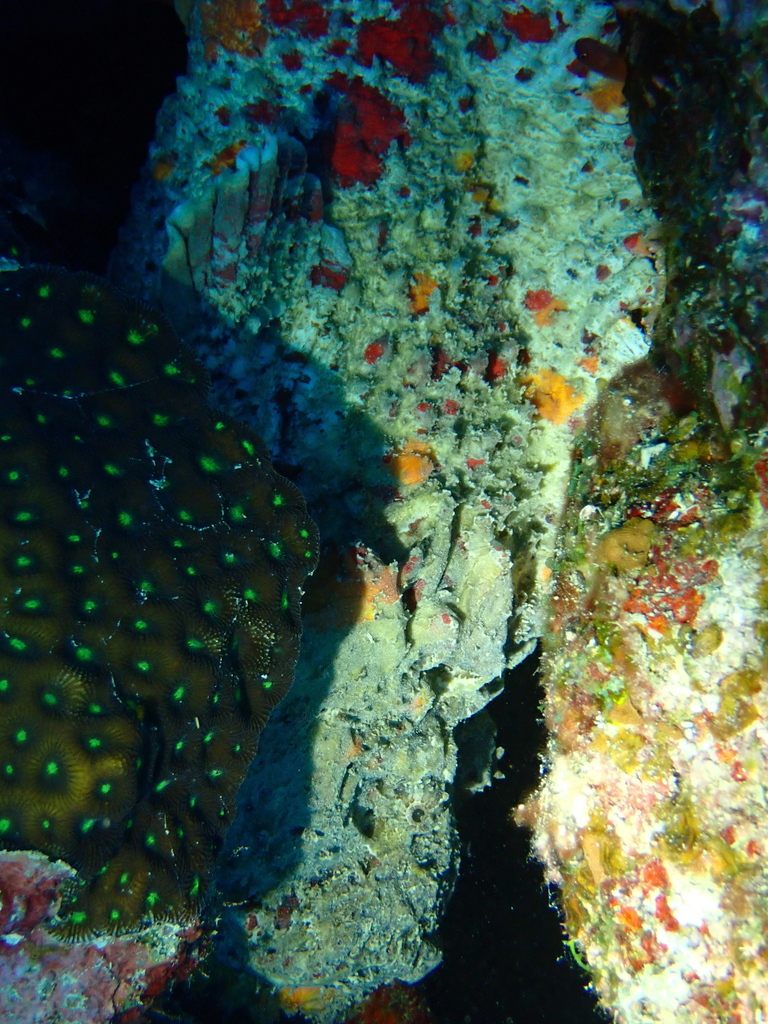
The reef stonefish (Synanceia verrucosa) is a camouflaged Indo-Pacific reef fish carrying 13 venomous dorsal spines, widely rated the most painful sting of any fish alive. Is it dangerous? Genuinely yes: stepping on one barefoot drives venom deep into the foot. Hot water, fast medical care and antivenom make deaths very rare today.
It looks like a rock. It feels, to a bare foot, like the worst mistake of the trip. The reef stonefish is widely rated the most painful sting of any fish on Earth, and it does nothing to earn that reputation except sit completely still. Here's how to recognise one, how the sting actually works, and what to do if you find out the hard way.
How to identify a reef stonefish
The whole point of a stonefish is that you can't identify it, not easily:
- Shape: a stocky, flattened body, 30 to 40 cm long, with a large upturned mouth and small eyes set high on the head.
- Texture: warty, lumpy skin studded with loose flaps of tissue, usually crusted with living algae, sponge and sediment.
- Colour: mottled grey, brown, yellow or reddish, matching whatever rubble or coral it's resting against.
- The spines: 13 stiff dorsal spines running along its back, each tipped in a soft sheath, easy to miss until you're already on top of them.
Most people never spot one until it's pointed out to them, usually by a dive guide standing uncomfortably close to what they swore was just a rock.
Where do reef stonefish live?
Reef stonefish occupy shallow water across the Indo-Pacific, from the Red Sea and East Africa to French Polynesia, making them the most widely distributed of the true stonefishes. They favour reef flats, lagoons and rubble zones in water that's often barely knee-deep, and can also turn up buried in sand with only their eyes and mouth showing. They rarely move. A single stonefish can sit in the same spot for days, which is exactly why wading without watching your footing is the single biggest risk factor for a sting.
How the sting actually works
A stonefish never attacks. Its venom delivery is entirely passive: each of the 13 dorsal spines sits inside a soft sheath connected to a venom gland at its base. Press down on the fish, with a hand or, far more often, a bare foot, and your own weight pushes the sheath back and drives the spine in, forcing venom up a duct and into the wound. The harder you press, the more venom goes in, which is why a full-weight step is so much worse than a light brush.
Ironically, the same fish is capable of extreme speed when it isn't defending itself. A reef stonefish ambushes small fish and crustaceans with an upward strike clocked at a fraction of a second, one of the fastest feeding strikes recorded in any fish, launched from a body that hasn't visibly moved in minutes.
What's actually in the venom
Stonefish venom is a cocktail of heat-sensitive proteins, the best studied being verrucotoxin, which disrupts the cardiovascular and nervous systems rather than just causing local pain. Because the toxins are proteins, they break down under heat, which is the whole reason hot-water first aid works rather than being an old wives' tale. Australia's CSL developed a dedicated stonefish antivenom back in 1959, one of the earliest marine antivenoms ever produced, raised from horses immunised against the venom, and it is still the standard treatment for a serious sting today.
Is a stonefish sting actually dangerous?
Yes, and it isn't exaggerated for effect. The pain is immediate, intense and often described by victims as the worst they have ever felt, radiating from the puncture site within seconds and, left untreated, lasting many hours. Swelling, nausea and, in serious cases, effects on the heart and breathing can follow a deep sting, particularly in a small child or when several spines go in at once. Fatalities do happen in rare, untreated cases, but where hot-water first aid, pain control and antivenom are available, which is the case across most popular Indo-Pacific dive and snorkel destinations today, deaths are genuinely uncommon.
What to do if you're stung
Get the affected area into water as hot as the person can safely tolerate, roughly bath-temperature and above, as soon as possible. The heat breaks down the venom's proteins and brings real pain relief, not just a folk remedy. Then get to medical care without delay: a specific stonefish antivenom exists and hospitals across the species' range carry it for exactly this situation. Rinse the wound, remove any visible spine fragments, and treat it as seriously as the pain itself is telling you to.
Stonefish vs lionfish: which is worse?
The stonefish, by a wide margin. A lionfish's sting is genuinely painful but rarely a medical emergency; its thin, delicate spines usually only graze skin. A stonefish's spines are thicker and driven in under a person's full body weight, pushing far more venom far deeper into tissue. That combination of potency and delivery is exactly why the reef stonefish, not the more visually dramatic lionfish, tops almost every serious ranking of the world's most venomous fish.
How rare is the reef stonefish in Kaught?
In the Kaught catalog the reef stonefish sits at the Epic tier, three diamonds out of four. That isn't a comment on how threatened it is, only on how often it's actually logged. Stonefish are not scarce where they live, but a confirmed sighting is: by design, the vast majority go completely unnoticed, their whole survival strategy built on being mistaken for a rock. Logging one on purpose, rather than finding out the hard way, is a genuine field skill.
For the full ranking this species belongs to, see the world's most venomous fish, and for the habitat it shares with other camouflaged reef hunters, coral reef animals. It also places in the wider most venomous animals in the world ranking, and for more on how it hides in plain sight, the best camouflaged animals in the world covers the same trick from several other angles.
Reef stonefish: frequently asked questions
Is a stonefish dangerous to humans?
Yes, genuinely. The reef stonefish carries 13 venomous dorsal spines and is widely considered to deliver the most painful sting of any fish. It is not aggressive and never attacks, but stepping on one barefoot drives venom deep into the foot.
What does a stonefish sting feel like?
Immediate, severe pain that is often described as the worst a victim has ever felt, radiating out from the puncture within seconds. Swelling follows fast, and without treatment the pain can last for many hours.
Can a stonefish sting kill you?
It can, in rare, untreated cases, especially with a deep sting or a child victim, as the venom can affect the heart and breathing. Deaths are now very rare where hot-water first aid, painkillers and antivenom are available.
How do you treat a stonefish sting?
Immerse the sting in water as hot as the person can safely tolerate, which breaks down the venom's proteins and eases pain, then get medical care immediately. Hospitals in stonefish range stock a specific antivenom for severe cases.
How do you spot a stonefish before stepping on one?
Shuffle your feet instead of stepping down on reef flats and rubble, wear sturdy water shoes, and avoid touching anything that looks like a lumpy, algae-covered rock in shallow Indo-Pacific water. That lumpy "rock" is exactly what a stonefish is built to look like.
Is a stonefish more dangerous than a lionfish?
Yes. A lionfish's sting is painful but rarely medically serious. A stonefish's thicker spines, driven in under a person's full body weight, deliver far more venom far deeper, which is why it tops almost every ranking of the world's most venomous fish.
Where do reef stonefish live?
Shallow reef flats, lagoons and rubble zones across the Indo-Pacific, from the Red Sea and East Africa to French Polynesia. Most encounters happen in water barely knee-deep, where people wade without watching their footing.
The next thing you see could be
your first catch.
Kaught is live on the App Store and Google Play. Free to start, and your first catch is one photo away.
Free to start · Live on the App Store and Google Play
Species data, type, rarity tier and measurements, is drawn from the Kaught catalog, built on open biodiversity records from GBIF and iNaturalist. Rarity reflects how often a species is observed in the wild, not its conservation status.