
Record holders
Longest Pregnancies in the Animal Kingdom: 5 Ranked
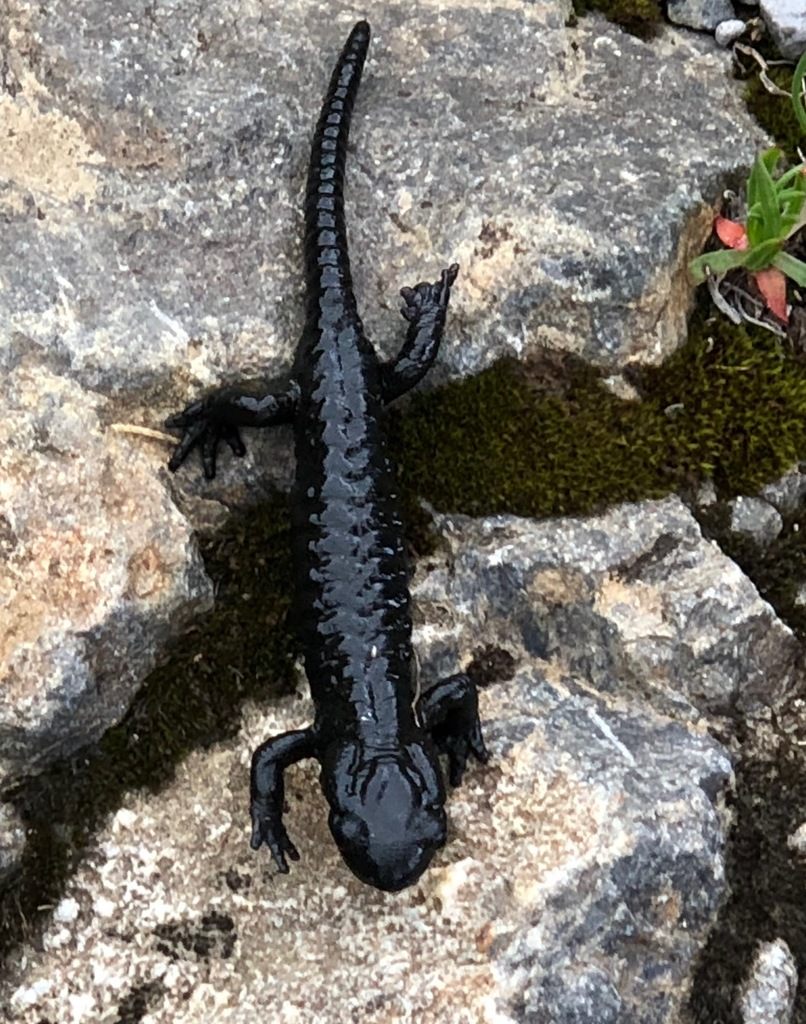
The elephant is not the record holder. The alpine salamander can carry live young for up to four years in its coldest, highest populations, longer than any mammal. The African elephant leads mammals at 22 months. Five real catalog pregnancies, ranked longest to shortest below.
"Pregnancy" here means true internal gestation that ends in live birth, not an egg left to incubate on its own. That rules out almost every bird, most fish, and the vast majority of insects, which makes the animals that do gestate internally, and for how long, genuinely strange outliers. The five below are all in the Kaught catalog with their observation-derived rarity tier.
1. Alpine Salamander, up to four years in the coldest populations
The alpine salamander never has an aquatic larval stage at all. Every embryo develops fully inside its mother and is born as a miniature, fully formed terrestrial salamander, ready to live on land from its first day. That whole-body development takes time, and at low elevation it already runs to about two years.
Push the population higher into colder, shorter alpine summers and development slows further still. Gestation in the coldest sites stretches to three years and, exceptionally, close to four, the longest confirmed gestation of any land vertebrate that gives birth to live young rather than laying eggs. Common in the catalog, one diamond, reflecting how often it turns up where it lives rather than how extreme its biology is.
2. African Savanna Elephant, 22 months, the longest of any mammal
An elephant's gestation runs roughly 660 to 680 days, about 22 months, the longest pregnancy of any living land mammal. Almost all of that time goes into brain and body growth: a newborn calf weighs around 100 kg and can usually stand, walk and follow the herd within hours of being born, a head start it needs immediately in open savanna.
It is the mammal record, not the overall one, elephants still lose to the alpine salamander above. Epic in the catalog, three diamonds, one of the largest and most recognisable animals on Earth, yet still a genuinely infrequent sighting against how much ground its range covers.
3. Striped Bark Scorpion, about eight months for an animal the size of a finger
Most arachnids lay eggs and are done with the job. Scorpions are a genuine exception: a female striped bark scorpion carries her developing young inside her body for around eight months, remarkably long for an animal that fits on a human palm, before giving birth to live young that immediately climb onto her back to ride until their first moult. See how the same species glows under a blacklight in why scorpions glow under UV light.
Common in the catalog, one diamond, a widespread species across the south-central United States that is still easy to miss, since it shelters under rock and bark by day and only forages after dark.
4. Green Anaconda, six to seven months underwater
A green anaconda is ovoviviparous: eggs form, develop and hatch entirely inside the mother, so what emerges is a litter of live young rather than a clutch of eggs. Gestation runs roughly six to seven months, through which a female eats little and basks to help regulate the embryos' temperature, before giving birth to dozens of young at once, each already strong enough to hunt. More on the species in the green anaconda exotic spotlight.
Rare in the catalog, two diamonds, the heaviest snake on Earth by mass yet still rarely confirmed in the wild, which is exactly what the tier is meant to capture.
5. Pile Surfperch, five to six months, exceptional for any fish
Fish gestation is close to a contradiction in terms. The overwhelming majority of fish fertilise externally and never carry young internally at all. The surfperch family breaks that pattern entirely: males and females mate directly, and a female pile surfperch gestates her young internally for roughly five to six months before giving birth to fully formed, free-swimming live fish, a gestation length that would be unremarkable in a mammal and is almost unheard of in a fish.
Legendary in the catalog, four diamonds, a reef and pier fish along the Pacific coast of North America that is genuinely one of the hardest entries on this list to actually record.
Why some pregnancies run so much longer than others
Two forces explain most of the spread on this list. Bigger bodies and bigger brains simply take longer to build, which is the entire reason an elephant outlasts almost every other mammal. Temperature does the rest: cold slows embryonic development directly, which is how the alpine salamander's gestation stretches across years instead of months at the coldest, highest sites it occupies.
The payoff in every case is the same, a long gestation buys a newborn that is further along and better equipped to survive from day one. For another reproductive strategy that flips the usual script entirely, see how male seahorses carry the pregnancy, or for a mammal that abandons live birth altogether, why the echidna lays eggs.
Longest animal pregnancies: frequently asked questions
What animal has the longest pregnancy in the world?
The alpine salamander. In the coldest, highest populations in the Alps, females can carry live young for up to four years before giving birth, the longest confirmed gestation of any land vertebrate, well ahead of any mammal.
How long are elephants pregnant for?
About 22 months, roughly 660 to 680 days. That is the longest gestation of any living land mammal, usually producing a single calf large and coordinated enough to stand and walk within hours of birth.
Can scorpions really be pregnant?
Yes. Scorpions are viviparous, unusual among arachnids, and a striped bark scorpion carries developing young inside her body for around eight months before giving birth to live young, which then ride on her back.
How long is a snake's pregnancy?
It varies by species. A green anaconda is ovoviviparous, meaning eggs develop and hatch inside the mother, and carries her young for roughly six to seven months before giving birth to dozens of live young at once.
Do fish get pregnant?
Almost never, most fish simply release eggs into open water. The surfperch family is a genuine exception: females fertilise internally and gestate for around five to six months before giving birth to fully formed live young.
Why do some animals have much longer pregnancies than others?
Bigger bodies and bigger brains need more time to develop, which is why elephants outlast mice. Cold also slows embryonic growth, stretching the alpine salamander's gestation across several short alpine summers instead of one long one.
The next thing you see could be
your first catch.
Kaught is live on the App Store and Google Play. Free to start, and your first catch is one photo away.
Free to start · Live on the App Store and Google Play
Species data, type, rarity tier and measurements, is drawn from the Kaught catalog, built on open biodiversity records from GBIF and iNaturalist. Rarity reflects how often a species is observed in the wild, not its conservation status.