Superlative
Most venomous fish in the world: the definitive ranking
The stonefish (Synanceia verrucosa) is widely accepted as the world's most venomous fish by potency: its 13 dorsal spines deliver a venom that causes immediate, severe pain and can be lethal. For frequency of human stings, the weever fish of European coastal waters tops the list. All venomous fish use their venom defensively, not to hunt.
Venomous vs poisonous: the distinction matters
Before the ranking: these are venomous fish, not poisonous ones. The difference is delivery. Venomous animals inject toxins actively, through spines, fangs or other structures. Poisonous animals harm you only if eaten, because the toxin is in their tissue. Stonefish, lionfish and weevers are venomous. Pufferfish, which carry lethal tetrodotoxin in their skin and organs, are poisonous. This article covers venomous fish only.
There are over 1,200 species of venomous fish known to science, more than all venomous snakes, mammals and lizards combined. All of them use venom as a defensive weapon. None uses it to hunt.
No. 1: Stonefish (Synanceia verrucosa and relatives)
The stonefish is the most medically significant venomous fish on Earth. It lies motionless on the reef floor, perfectly camouflaged as an encrusted rock or lump of coral, and erects 13 sharp dorsal spines when stepped on. Each spine is grooved and connected to a venom gland; pressure on the tip drives venom up the groove into the wound.
The venom is a complex mixture of proteins including stonustoxin and verrucotoxin, which disrupt cell membranes and cause immediate, severe cardiovascular effects in addition to the pain. Pain onset is immediate and described by those who have experienced it as among the worst pain imaginable, peaking within minutes and lasting hours without treatment. Cardiovascular collapse and death are possible in untreated stings from multiple spines.
Antivenom exists and is effective. Immediate immersion in the hottest water tolerable (45°C / 113°F) denatures the protein-based venom and dramatically reduces pain while awaiting medical care.
Stonefish are found on tropical Indo-Pacific reefs, in Australian coastal waters, and in the Red Sea. They are the ambush masters of the venomous fish world.
No. 2: Scorpionfish (family Scorpaenidae)
The scorpionfish family includes around 200 species and some of the world's most impressively camouflaged fish. They share the basic stonefish strategy: cryptic ambush, defensive spines, protein-based venom. The family includes several species worth knowing individually.
Common Lionfish (Pterois volitans)
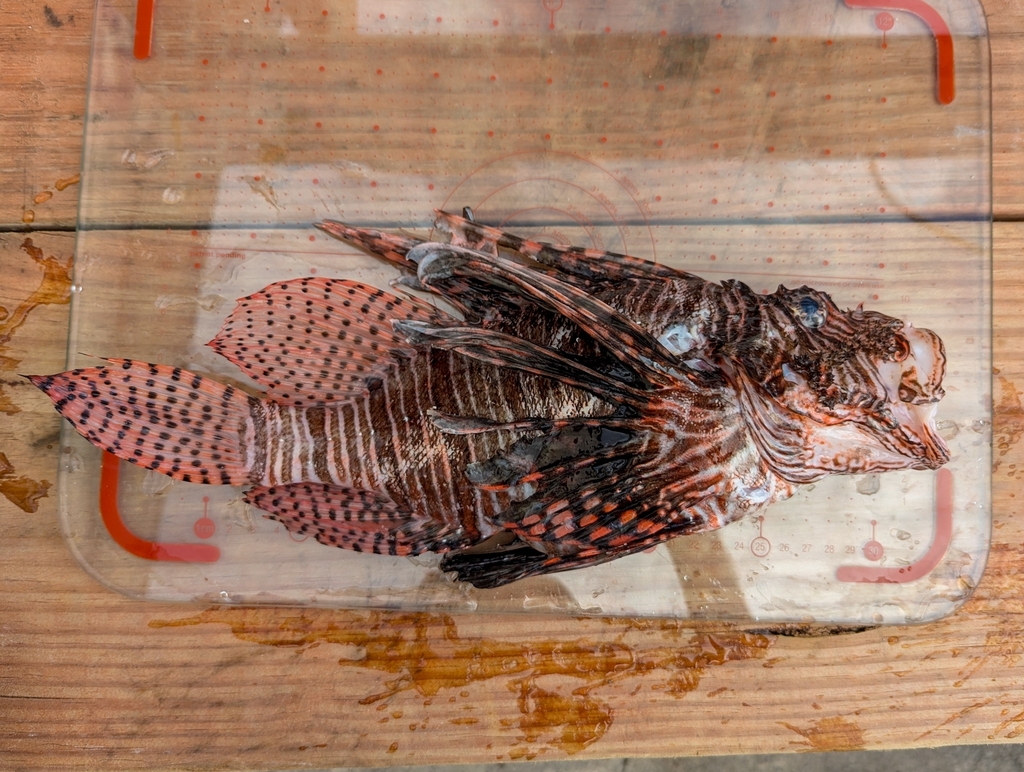
The most visually spectacular venomous fish. The lionfish trades camouflage for the opposite strategy: bold warning colours of red, white and brown bars, and a display of 18 venomous dorsal, pelvic and anal spines fanned out like a mane. The colours say, unmistakably, do not touch me.
Lionfish venom causes immediate, intense pain and swelling. In healthy adults, death is extremely rare. In the Atlantic, where lionfish were introduced as released aquarium fish and now have no natural predators, they have become one of the most destructive invasive species ever recorded on a coral reef, eating up to 30 fish per hour.
Devil Scorpionfish (Scorpaenopsis diabolus)
A master of disguise found across Indo-Pacific reef flats. It rests on its pectoral fins in a posture that mimics a discarded chunk of coral, with 13 venomous dorsal spines that it erects only when threatened. Its slightly elevated resting posture, unlike the flat stonefish, has led to more accidental foot-contact than almost any other scorpionfish.
Stone Scorpionfish (Scorpaena mystes)
The eastern Pacific equivalent, found from California to Peru and the most potent venomous fish in the Americas. At up to 45 cm it is large for a scorpionfish, and its venom causes intense pain lasting days. West coast divers have been stung reaching for what appeared to be a ledge or rock.
No. 3: Greater Weever Fish (Trachinus draco)
Less dramatic than a stonefish or lionfish, the greater weever is arguably the venomous fish most Europeans will actually encounter. It buries itself in sand in shallow coastal water with only its eyes and the black-tipped first dorsal fin visible. It is the fish responsible for the characteristic sting that ruins beach holidays: someone wading in shallow water steps on what feels like a sharp stone, then notices the pain spreading rapidly up the leg.
Weever venom is a protein-based toxin similar in mechanism to scorpionfish venom. Immersion in hot water (the hottest tolerable, around 45°C) for 30 to 90 minutes is the standard first-aid treatment and works because the toxin is heat-labile: high temperatures break it down. Pain typically resolves within 12 to 24 hours.
No. 4: Striped Eel Catfish (Plotosus lineatus)
Juvenile striped eel catfish school in dense balls of thousands of individuals, a writhing mass that resembles a single large organism and confuses predators. Each individual carries venomous spines in the first dorsal and pectoral fins, and touching a school causes multiple simultaneous stings. Adults are more solitary and nocturnal.
How fish venom works
Almost all fish venoms are protein-based, which is why heat treatment is effective. The proteins unfold (denature) above approximately 45°C, losing their biological activity. Immersion in hot water is not a folk remedy: it works mechanically on the toxin itself.
Fish venoms typically act in three ways:
- Pain: direct stimulation of nociceptors (pain nerve endings) at the wound site, often disproportionately intense relative to the physical injury.
- Local tissue damage: cell-disrupting proteins cause swelling, redness and sometimes tissue necrosis around the sting.
- Systemic effects: in severe stings (especially stonefish), cardiovascular effects including low blood pressure and arrhythmia can develop.
First-aid summary
- Immerse in the hottest water you can tolerate (around 45°C / 113°F) for 30 to 90 minutes.
- Do not use cold water, urine or vinegar: none of these helps and some worsen the injury.
- Remove any visible spine fragments with tweezers, being careful not to push them deeper.
- Seek emergency medical care for any stonefish sting or if systemic symptoms (difficulty breathing, chest pain, collapse) develop.
Most venomous fish: frequently asked questions
What is the most venomous fish in the world?
By potency of venom, the stonefish (Synanceia verrucosa) holds the title. Its 13 dorsal spines deliver a venom that causes immediate, severe pain and can be lethal. For frequency of stings in humans, the European weever fish causes more envenomations annually than any other species.
What should you do if stung by a stonefish?
Immerse the area in the hottest water you can tolerate (around 45°C / 113°F) for 30 to 90 minutes immediately. This denatures the protein-based venom and reduces pain. Get emergency medical care as quickly as possible: antivenom exists and is effective.
Are lionfish dangerous to humans?
Yes, but rarely fatally so. The sting causes immediate, intense pain and swelling, peaking within 30 minutes and lasting up to 12 hours. Hot water immersion helps. Deaths are exceptionally rare in healthy adults.
What is a weever fish sting like?
Immediate burning pain that intensifies rapidly and spreads up the affected limb. The pain is described as disproportionate to the wound's appearance and can last several hours. Immersion in the hottest water you can tolerate provides the best relief.
Is the difference between venomous and poisonous fish important?
Yes. Venomous fish inject toxins through spines or other structures. Poisonous fish are harmful only if eaten. Stonefish, lionfish and weevers are venomous. Pufferfish are poisonous (tetrodotoxin is in their tissue, not a spine).
The next thing you see could be
your first catch.
Kaught launches soon. Join the waitlist and be first to start a collection of the living world, one photo at a time.
Free at launch · No spam, just one email on launch day
Species data, type, rarity tier and measurements, is drawn from the Kaught catalog, built on open biodiversity records from GBIF and iNaturalist. Rarity reflects how often a species is observed in the wild, not its conservation status.