
Superlative ranking
Most venomous animals in the world: 6 catalog species ranked
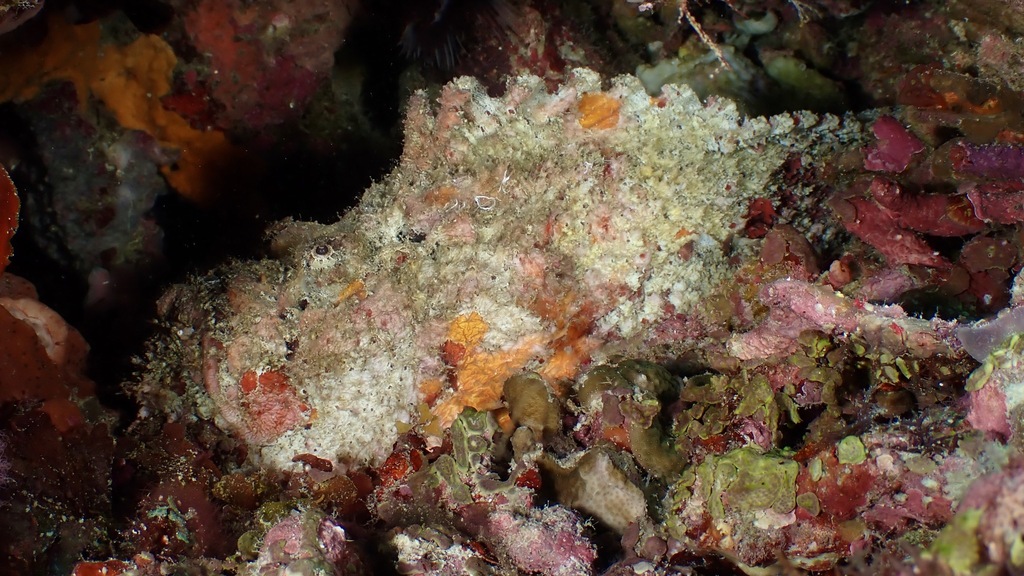
The most venomous animals in the world include the Reef Stonefish (most venomous fish), the Forest Cobra (Africa's most dangerous cobra), the Greater Blue-ringed Octopus (tetrodotoxin, no antivenom), the poison dart frog, the rattlesnake and, surprisingly, the platypus. Each entry comes from the Kaught catalog with its confirmed rarity tier.
Before the ranking: "most venomous" does not mean one thing. It can mean most toxic per milligram (chemical potency), most likely to kill a person who encounters one (risk), or most deaths caused globally per year (impact). These are different measures and they produce different lists. Every entry here is annotated with which type of threat it represents, because conflating them produces nonsense.
1. Reef Stonefish: the most venomous fish alive
The Reef Stonefish holds the record as the most venomous fish known to science. Thirteen hollow dorsal spines, each connected to a venom gland, point upward from its back. The fish does not inject actively: when a foot or hand presses a spine down, the pressure compresses the gland and forces venom up through grooves in the spine and into the wound. The fish simply sits there; the delivery mechanism requires only that something touches it.
The venom contains a cocktail of proteins including stonustoxin, a haemolytic and cytotoxic compound. The pain begins within seconds and has been described as the worst pain a human can experience without losing consciousness. Tissue destruction around the wound can be severe. Antivenom exists and is effective; untreated cases can, rarely, result in cardiac problems.
The Reef Stonefish is Epic tier in Kaught: genuinely rare to observe, because its camouflage is close to perfect. It looks like a barnacled rock on the reef flat. No spine-like protrusion is visible when at rest. This is the classic combination: dangerous and invisible.
2. Forest Cobra: Africa's largest and most potent true cobra
The Forest Cobra is the largest cobra on the African continent, reaching up to 2.7 m, and the largest true cobra in the world. It is also among the most venomous: its neurotoxic venom acts on the nervous system rapidly, causing progressive paralysis that, untreated, reaches the muscles controlling breathing. The venom yield per bite is large, reflecting the snake's size.
It is more aquatic than most cobras, readily crossing rivers and hunting fish alongside the usual diet of frogs, small mammals and other snakes. When threatened, it raises the front third of its body and spreads a wide hood. It is not typically aggressive in the way smaller, more defensive cobras can be, but its size, speed and venom potency make an untreated bite very dangerous.
Legendary tier in Kaught: iNaturalist records for the Forest Cobra are very sparse, reflecting both its forest habitat and the limited naturalist coverage of its core range in central Africa.
3. Greater Blue-ringed Octopus: no antivenom, tetrodotoxin
The Greater Blue-ringed Octopus is roughly the size of a tennis ball. It is docile when left alone and spends most of its time hiding in a shell or crevice. When threatened, it flashes 60 to 70 iridescent blue rings across its body in rapid pulses, a warning display that shifts the skin from drab to vivid in under a second.
If that display is ignored and the animal is handled, it bites. The saliva contains tetrodotoxin (TTX), the same neurotoxin found in pufferfish, produced not by the octopus itself but by symbiotic bacteria in its salivary glands. TTX is one of the most potent non-protein toxins known: it blocks sodium channels and causes rapid paralysis. The bite itself is often painless. Symptoms progress from tingling and numbness to full respiratory paralysis within minutes. There is no antivenom. Treatment is mechanical ventilation until the toxin clears.
An Epic-tier species in Kaught: observed in the wild less often than its relative, the Southern Blue-ringed Octopus, which inhabits more accessible Australian coastline.
4. Green-and-black Poison Dart Frog: not venomous, but still lethal to eat
Strictly speaking, poison dart frogs are poisonous, not venomous. The distinction: venom is actively delivered into another animal, usually by a bite or sting; poison is passive and takes effect when touched or eaten. The Green-and-black Poison Dart Frog secretes alkaloid toxins through its skin, obtained from its diet of mites and ants. A predator that eats one will be deterred, potentially fatally. The frog itself does not bite to deliver the toxin.
The species is Common tier in Kaught and genuinely abundant in its Central American range, a useful reminder that extreme toxicity and rarity are not the same thing. Its bright green-and-black patterning is aposematic: a visual signal to predators. Captive-bred individuals raised on commercial insect diets are non-toxic, confirming that the alkaloids are dietary in origin.
The closely related Golden Poison Dart Frog (Phyllobates terribilis) of Colombia is considered the world's most toxic vertebrate: its skin contains enough batrachotoxin to kill several adult humans. This species is not currently in the Kaught catalog.
5. Platypus: the venomous mammal most people forget exists
Mammals are not supposed to be venomous. The platypus disagrees. Male platypuses have a crural spur on each hind ankle, connected by a duct to a venom gland on the thigh. The spur is not used in predation; it appears to be used in competition between males during the breeding season.
The venom is not fatal to healthy adult humans, but the pain it causes is exceptional and long-lasting, resistant to standard opioid painkillers, and has been described in clinical reports as among the most severe pain associated with any animal encounter in Australia. Swelling around the wound can persist for weeks. The mechanism involves a class of peptides called defensin-like proteins, not related to snake or insect venoms, suggesting independent evolution of a venom system in a mammal lineage.
The platypus is one of only a handful of venomous mammals. Others include some shrews and slow lorises, though in each case the venom system differs. It is Common tier in Kaught, observed frequently enough in eastern Australia that sightings, while always a pleasure, are not rare.
6. Western Rattlesnake: the world's most widespread venomous snake
The rattlesnake is the canonical venomous snake for much of North America, instantly recognisable by the keratinous rattle at the tail tip. The rattle is not a threat display: it is a warning. A rattling snake is telling you it has noticed you and would very much prefer you leave. The snake that does not rattle before striking has already decided the situation is urgent; rattling is the polite option.
The Western Rattlesnake's venom is primarily haemotoxic, attacking tissue and disrupting blood clotting. A bite to a limb, treated promptly with antivenom, is rarely fatal in healthy adults. Fatality risk rises with bite location, delay in treatment and individual factors. The rattle is composed of segments added each time the skin is shed. The number of segments is not a reliable indicator of age, because snakes shed multiple times per year and segments break off.
Common tier in Kaught: frequently recorded across its range from British Columbia to Baja California in a wide range of habitats.
What these six species share
All six carry Kaught type data showing either a Venom secondary type or an Apex secondary type reflecting their top-predator status. All are grounded in the catalog's observation-derived rarity tiers, which is why a highly venomous species like the Forest Cobra sits at Legendary (rarely observed, remote habitat) while an equally venomous rattlesnake sits at Common (abundant, well-recorded). Danger and rarity are independent variables.
For more on the animal world's extremes, see strongest animals in the world. The Nile crocodile rounds out Africa's most dangerous fauna. For a completely non-venomous but deeply strange species, see the fire salamander, which uses toxins without any delivery mechanism at all.
Most venomous animals: frequently asked questions
What is the most venomous animal in the world?
It depends on the measure. By toxicity per milligram, some cone snails and the inland taipan rank highest. By confirmed human fatalities per envenomation, the box jellyfish and inland taipan lead. By annual human deaths, saw-scaled vipers cause more than any other snake. There is no single answer because the question conflates chemical potency, individual risk and population-level impact.
What is the most venomous fish?
The Reef Stonefish (Synanceia verrucosa) is considered the most venomous fish. Its 13 dorsal spines deliver venom that causes extreme pain, tissue death and, untreated, potential cardiac complications. The fish is passive: it does not attack; the venom is delivered by stepping on or touching a spine.
Is the blue-ringed octopus the most venomous mollusc?
Yes. The Greater Blue-ringed Octopus carries tetrodotoxin in its saliva, with no antivenom available. A bite can cause full respiratory paralysis within minutes. The animal is small, docile and rarely bites unless handled.
Are poison dart frogs venomous or poisonous?
Poisonous, not venomous. Venom is injected; poison is transmitted by contact or ingestion. Poison dart frogs carry alkaloid toxins in their skin, acquired from diet. Captive-bred individuals fed on commercial insects are non-toxic, confirming the toxins are dietary.
Is the platypus venomous?
Yes. Male platypuses have ankle spurs connected to venom glands. The venom causes intense, long-lasting pain resistant to standard painkillers, but is not fatal to healthy adults. It is one of the few functional venom systems in any mammal.
What is the difference between venomous and poisonous?
Venom is actively delivered into another animal by biting or stinging. Poison is passive: toxic if touched, eaten or absorbed. A snake bites and injects venom, so it is venomous. A poison dart frog carries toxins in its skin that affect predators that eat it, so it is poisonous.
The next thing you see could be
your first catch.
Kaught is live on the App Store and Google Play. Free to start, and your first catch is one photo away.
Free to start · Live on the App Store and Google Play
Species data, type, rarity tier and measurements, is drawn from the Kaught catalog, built on open biodiversity records from GBIF and iNaturalist. Rarity reflects how often a species is observed in the wild, not its conservation status.