
Record holders
Most Teeth in the Animal Kingdom: 6 Ranked
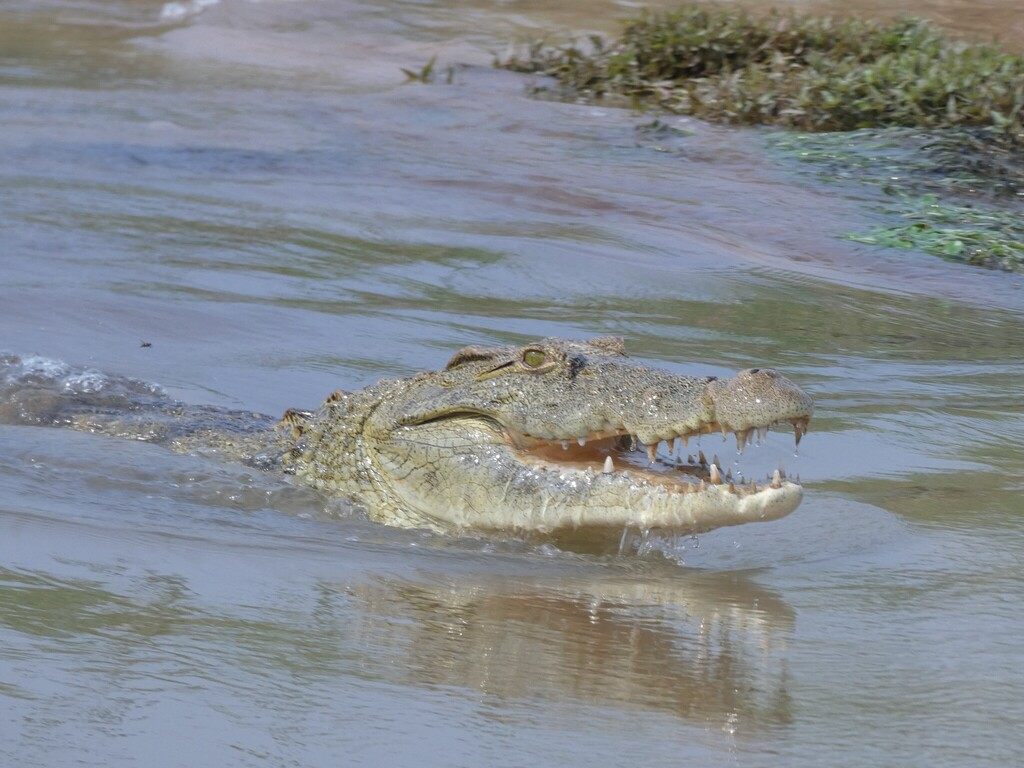
No single winner: a Garden Snail has the most teeth of any animal by raw count, around 14,000 on its radula, while an Amazon River Dolphin leads all mammals with up to 140. A Nile Crocodile cycles through roughly 3,000 over its life, and a Sperm Whale carries the largest, each up to 20 cm long. Six real teeth records, ranked.
"Most teeth" sounds like it should have one answer, but teeth do wildly different jobs across the animal kingdom: grinding plant matter, crushing shellfish, gripping slippery fish, or just never wearing down. Line up the real record-holders and the count, the size and the lifetime total all belong to different animals entirely. Every species below is in the Kaught catalog with its own observation-derived rarity tier.
1. Garden Snail, the most teeth of any animal by raw count
A garden snail doesn't have jaws in any familiar sense. Instead it feeds with a radula, a flexible, chitin-ribbon "tongue" studded with row after row of microscopic teeth, roughly 14,000 of them on a single animal. Rasped back and forth across a leaf or a wall, the radula works less like a mouth and more like a conveyor-belt file, shredding plant tissue into pieces small enough to swallow.
Those teeth wear down constantly, so the snail keeps growing replacements from the back of the radula to push forward as the front row dulls, the same renewal trick several animals further down this list rely on in their own way. Common in the catalog, one diamond: it's one of the easiest animals on Earth to actually find, out in force after any warm rain.
2. Amazon River Dolphin, the most teeth of any mammal
Strip out invertebrates and the record for most teeth belongs to the Amazon river dolphin, or boto, with 100 to 140 teeth packed along both jaws. What makes that count more interesting than the number alone is the shape: the boto is the only dolphin species with genuinely heterodont dentition, front teeth that are sharp and conical for grasping fish, and back teeth that flatten out like crude molars for crushing shells and armoured prey. Every other dolphin makes do with one uniform tooth shape from front to back.
That dual toolkit suits murky river water, where a boto often can't see its catch at all and relies on echolocation to find it, then whichever end of its jaw the prey needs to be dealt with. Rare in the catalog, two diamonds, restricted entirely to the flooded forests and channels of the Amazon and Orinoco systems.
3. Nile Crocodile, roughly 3,000 teeth over a lifetime
A Nile crocodile carries 60 to 80 teeth in its jaws at any one moment, a modest number next to a snail's radula. The record shows up over time instead: each tooth socket holds a stack of generations, a new tooth forming inside the base of the old one and gradually pushing it out as it's lost to wear, breakage or a fight. Repeat that process for every tooth, for decades, and a single crocodile can cycle through an estimated 3,000 teeth across its lifetime, far more than any mammal ever grows.
It's a strategy built for a mouth that does serious damage to its own hardware: crushing turtle shells, wrestling prey many times its own tooth's size, snapping shut on bone. Losing a tooth here and there is simply the cost of doing business, so evolution made replacement cheap and constant. Epic in the catalog, three diamonds, for an animal that is genuinely widespread but still demands real caution and distance around its waterways.
4. Alligator Gar, a double row of needle-sharp teeth
Among freshwater fish, the record isn't the count so much as the arrangement. The alligator gar is the only North American gar species with a true double row of teeth on its upper jaw, long, needle-like points set in two parallel lines rather than one. The outer row of smaller teeth makes first contact in a sideways snap, pinning a fish before it can twist free; the inner row's larger teeth finish the job, driving deep enough to hold prey that would otherwise slip straight out of a single-row bite.
It's the same broad, armoured snout that gives the species its name, and the same bite that let it grow into one of the largest freshwater fish in North America. Common in the catalog, one diamond, drifting motionless near the surface of warm, slow-moving southern waters until something edible swims past.
5. Sperm Whale, the largest teeth of any predator
Where the garden snail wins on count, the sperm whale wins on size. Its cone-shaped teeth run up to 20 centimetres long and about a kilogram each, the largest teeth of any predator on Earth, living or extinct among toothed hunters. There are only 40 to 52 of them in total, and all of them sit in the lower jaw; the upper jaw carries no functional teeth at all, just sockets that the lower teeth fit into when the mouth closes.
That's a strange trade for an animal hunting giant squid two kilometres down in total darkness, but the teeth may matter less for catching prey than for settling disputes between rival males, where sheer size does the talking. Common in the catalog, one diamond, found in deep water on every ocean on the planet.
6. Eurasian Beaver, teeth that sharpen themselves
The beaver's record isn't count or size, it's durability. Its four front incisors never stop growing, adding several millimetres a week, and they're built from two different materials in one tooth: hard, iron-rich enamel on the front face, giving the teeth their trademark orange colour, and softer dentin behind it. Gnawing wears the soft back away faster than the hard front, so the tip naturally resharpens itself into a permanent chisel edge with every bite.
That self-maintaining edge is strong enough to fell a tree a metre across, tooth marks and all. Epic in the catalog, three diamonds, for a genuine landscape engineer that is far harder to catch in the act than the dams it leaves behind would suggest.
Why "most teeth" depends on what you're counting
Set these six side by side and the pattern repeats: there's no single champion, only whichever record you're asking about. The snail needs sheer surface area to grind plant fibre. The boto needs two tooth shapes to grasp and crush in water too murky to see through. The crocodile needs cheap, endless replacement for a mouth that breaks its own teeth routinely. The gar needs a double grip on prey that would otherwise twist free. The sperm whale's teeth may settle rank more than catch squid. The beaver needs an edge that never actually goes dull.
A single modified tooth tells the opposite story: the narwhal's spiral tusk is really one giant incisor, and almost nothing else. For more real records measured the same way, see the animal kingdom's strongest bites, and for the two record-holders above in full, the Nile crocodile and Eurasian beaver species guides.
Most teeth: frequently asked questions
What animal has the most teeth in the animal kingdom?
It depends what you're counting. A garden snail has the most teeth of any animal by raw count, around 14,000 microscopic teeth on its radula. Among mammals, the Amazon river dolphin leads with up to 140 teeth. There's no single record, just different kinds of "most."
How many teeth does a garden snail have?
Around 14,000, arranged in rows across a ribbon-like structure called a radula. They're microscopic and made of chitin, and they wear down with use, so new rows keep forming at the back of the mouth to replace them.
How many teeth does a dolphin have?
An Amazon river dolphin carries 100 to 140 teeth, the most of any mammal. Unusually for a dolphin, its front teeth are sharp and conical for grasping while its back teeth are broad and flat for crushing, a split other dolphins don't have.
How many teeth does a crocodile get through in its lifetime?
A Nile crocodile carries 60 to 80 teeth at once, but each one can regrow dozens of times, a new tooth forming inside the old one and pushing it out. Over a full lifetime, one crocodile cycles through roughly 3,000 teeth.
Why does the alligator gar have two rows of teeth?
Its upper jaw carries a double row of long, needle-sharp teeth, unique among North American gar. The outer row grips first on the strike, and the inner row's larger teeth finish securing prey too slippery or powerful to hold with one row alone.
How big is a sperm whale's tooth?
Up to 20 centimetres long and about a kilogram each, the largest teeth of any predator alive. A sperm whale only has 40 to 52 of them, all in its lower jaw; its upper jaw has no functional teeth at all.
Why are a beaver's teeth orange?
Iron compounds in the enamel on the front of each incisor turn it orange and make it far harder than the plain dentin behind it. The softer back wears away faster, constantly resharpening the tooth to a chisel edge as the beaver gnaws.
The next thing you see could be
your first catch.
Kaught is live on the App Store and Google Play. Free to start, and your first catch is one photo away.
Free to start · Live on the App Store and Google Play
Species data, type, rarity tier and measurements, is drawn from the Kaught catalog, built on open biodiversity records from GBIF and iNaturalist. Rarity reflects how often a species is observed in the wild, not its conservation status.