
Evolution story
Echidna: the spiny mammal that never stopped laying eggs
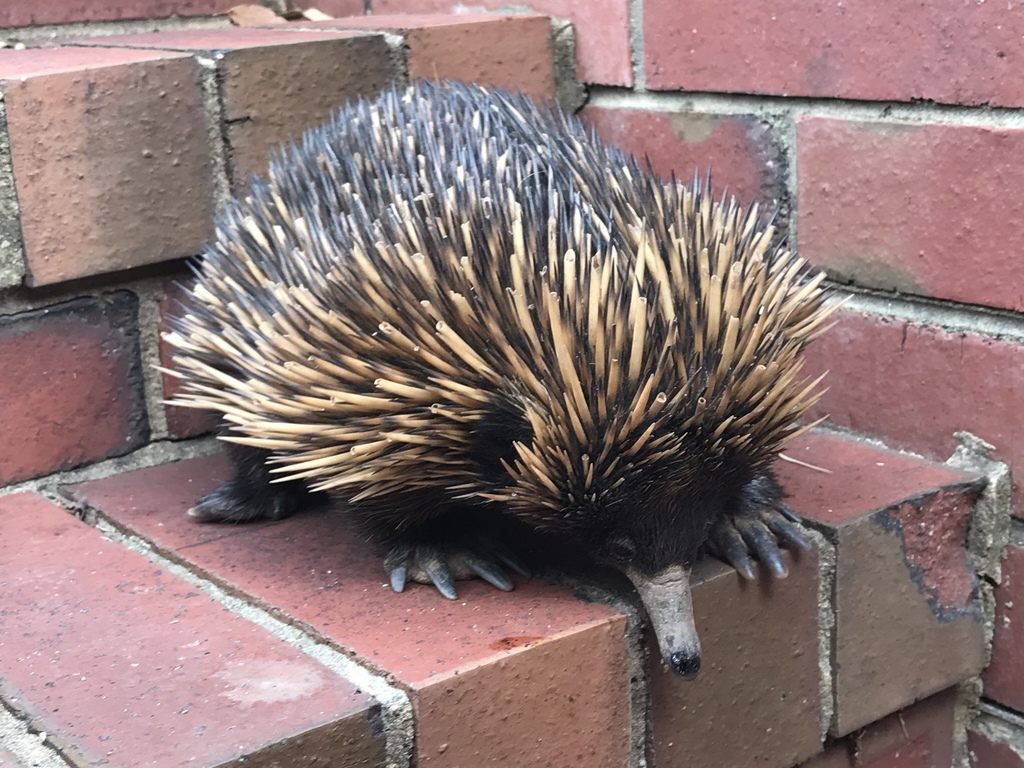
The short-beaked echidna (Tachyglossus aculeatus) is a spiny, egg-laying mammal found across Australia and New Guinea. It's one of only five living monotremes, alongside the platypus, a lineage that split from all other mammals around 180 million years ago and never gave up laying eggs.
An echidna looks like a solved problem: keep every predator away with spines, and never move fast enough to need anything else. But under that quiet, bristling exterior is one of the strangest survivors in mammal evolution, a lineage so old it kept a trait every other mammal on Earth gave up. Here's what an echidna actually is, why it still lays eggs, and how that egg becomes a spineless, jellybean-sized baby without a single nipple in sight.
What exactly is an echidna?
The short-beaked echidna is a solitary, mostly diurnal mammal found in nearly every habitat across Australia and New Guinea, from snow-covered alpine slopes to arid desert and tropical rainforest. It digs into ant and termite nests with broad, sickle-shaped claws, then works a long, sticky tongue in and out of the opening up to 100 times a minute to lap up prey. It has no teeth: food is ground between the base of the tongue and hard pads on the roof of the mouth instead.
Its spines are simply modified hairs, keratin like your fingernails, growing among a coat of coarser fur. That's worth pausing on, because a hedgehog and a porcupine both look like an echidna's close cousins and neither one is. A hedgehog is a placental mammal from Europe, Asia and Africa; a porcupine is a rodent. All three independently evolved sharp keratin spines as the same solution to the same problem, a textbook case of convergent evolution between lineages that share no recent ancestor at all.
Why does the echidna still lay eggs?
The real answer sits far back in the mammal family tree. Monotremes, the group that contains the echidna and the platypus, split away from the ancestor of every other living mammal somewhere around 180 million years ago, according to current molecular and fossil dating. That split happened before the branch leading to marsupials and placental mammals evolved live birth. Monotremes simply never left that older reproductive strategy behind.
That doesn't make the echidna a "primitive" animal frozen in time. It has fur, it's warm-blooded, and it feeds its young on milk, genuine mammal traits, all present alongside the egg. It's more accurate to say the echidna's branch is the oldest still living, and egg-laying is the one ancestral trait riding along with everything else mammals later added.
Inside the pouch: how an echidna egg actually works
During the breeding season, a female echidna develops a temporary fold of skin on her belly that functions as a pouch. Roughly three weeks after mating she lays a single soft-shelled, leathery egg, barely the size of a grape, and moves it directly into that pouch. The egg hatches after about 10 days into a "puggle": blind, hairless, and roughly the size of a jellybean.
Female echidnas have no nipples or teats at all. Instead, milk oozes directly from specialised patches of skin inside the pouch, and the puggle laps it up from tufts of surrounding hair. It stays there feeding for 45 to 55 days, until its spines begin to develop, at which point its mother deposits it in a nursery burrow rather than keep a spiny baby against her own skin. She returns roughly every five days to nurse it until it's fully weaned at around seven months old.
Echidna vs platypus: same order, very different lives
The echidna's only living relatives are the platypus and three other echidna species restricted to New Guinea, together making up all five monotremes alive today. Despite that shared ancestry, the platypus and short-beaked echidna live almost opposite lives: one spends its time swimming and hunting underwater, the other never enters water if it can help it.
Only the platypus carries genuine venom, delivered through spurs on the male's hind ankles and used mainly against rival males in the breeding season. Male echidnas have similar vestigial spurs, but no venom comes with them. Both species also share a rare sense among mammals: electroreception, detecting the faint electrical signals of prey muscles through receptors in the skin. The platypus's bill packs tens of thousands of these receptors for hunting in dark water; the short-beaked echidna's snout carries only around 400, tuned instead to finding insects in damp soil. Recent genetic and fossil work even suggests the two lineages split from each other far more recently than the deep monotreme-mammal divide, some estimates put it as recently as 20 to 60 million years ago, with echidnas likely descending from a swimming, platypus-like ancestor that later moved fully onto land.
Is the echidna dangerous?
Not to people. An echidna has no venom and no interest in confrontation. Threatened, it curls into a tight ball of spines or, on soft ground, digs straight down in minutes, vanishing as if it had sunk. The spines can prick a careless hand, but that's the extent of the risk.
How rare is the echidna in Kaught?
In the Kaught catalog the short-beaked echidna sits at the Common tier, one diamond out of four. That can feel like an undersell for an animal with this evolutionary pedigree, but Kaught's rarity reflects how often a species is actually logged in the wild, never how biologically unusual it is. Short-beaked echidnas turn up regularly in backyards, parks and bushland right across Australia, which keeps confirmed sightings genuinely common even for a mammal this ancient.
Egg-laying isn't the only reproductive rule an Australian mammal manages to break. The eastern grey kangaroo gives birth to a joey the size of a jellybean instead, and the platypus shares the echidna's egg and its venom spurs, ranked among the most venomous animals in the world. For more real evolutionary stories behind Kaught's catalog species, see how a California sheephead changes sex and why the ribbon eel is born male and ends up female.
Echidna: frequently asked questions
Why does the echidna lay eggs?
The echidna belongs to the monotremes, a mammal lineage that split off from all other mammals roughly 180 million years ago, before live birth evolved in the branch that led to marsupials and placental mammals. Egg-laying is simply a trait that branch never lost.
Is the echidna a mammal?
Yes. It has fur, is warm-blooded, and feeds its young milk, all mammal traits. It just does one very un-mammal-like thing alongside them: it lays a soft-shelled egg instead of giving birth to live young.
What's the difference between an echidna and a hedgehog?
They aren't related. An echidna is a monotreme from Australia and New Guinea; a hedgehog is a placental mammal from Europe, Asia and Africa. Both evolved sharp keratin spines independently, a case of convergent evolution, not shared ancestry.
How many monotremes are alive today?
Five. The platypus is the only living species outside the echidna family, and the echidna family (Tachyglossidae) holds four species: the short-beaked echidna and three long-beaked echidna species restricted to New Guinea.
Is the echidna dangerous?
No. It has no venom and never attacks. Its only defence is passive: it curls into a ball of spines or digs straight down into soft ground in minutes, disappearing almost like it sank. The spines can prick careless fingers, nothing more.
Why is the echidna "Common" in Kaught?
Kaught's rarity tier tracks how often a species is actually recorded in the wild, not how biologically unusual it is. Despite its ancient lineage, the short-beaked echidna turns up in backyards and bushland across Australia regularly, which keeps it at the Common tier.
The next thing you see could be
your first catch.
Kaught is live on the App Store and Google Play. Free to start, and your first catch is one photo away.
Free to start · Live on the App Store and Google Play
Species data, type, rarity tier and measurements, is drawn from the Kaught catalog, built on open biodiversity records from GBIF and iNaturalist. Rarity reflects how often a species is observed in the wild, not its conservation status.