
Species spotlight
Narwhal: the Arctic whale with the spiral tusk that is really a tooth
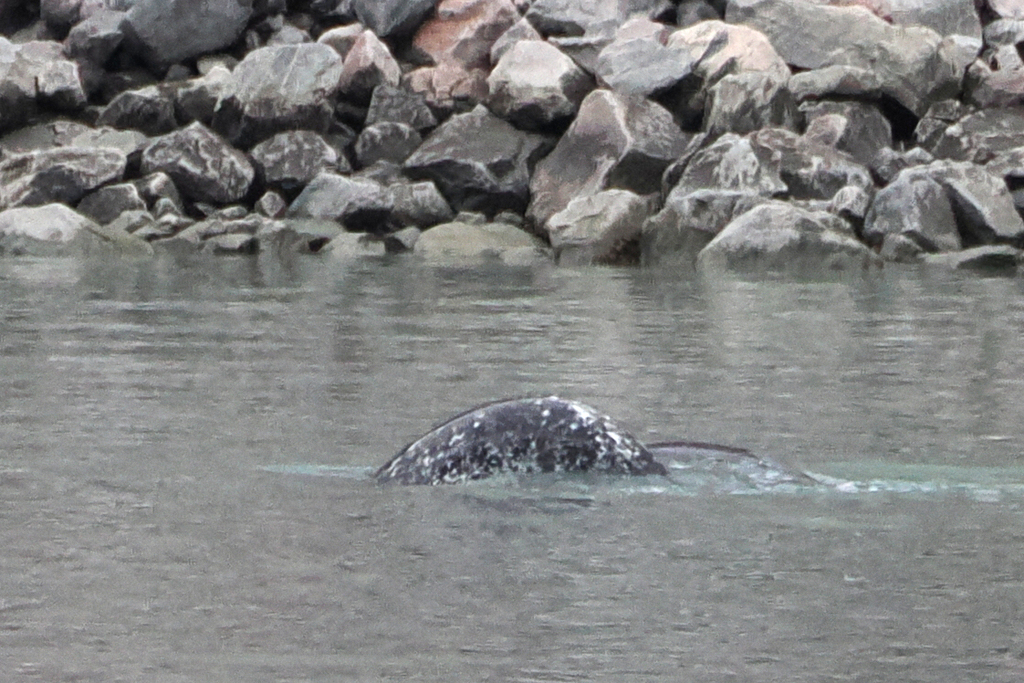
The Narwhal (Monodon monoceros) is a medium-sized Arctic toothed whale whose most famous feature, the long spiral tusk, is not a horn at all. It is a modified left canine tooth packed with roughly 10 million nerve endings that detect pressure, temperature and salinity through the ocean. Narwhals reach 4 to 5.5 metres, dive to at least 1,500 metres, and spend winter hunting fish under Arctic pack ice. Epic tier in the Kaught catalog, three diamonds.
Medieval Europeans who encountered narwhal tusks in trade were certain they had found unicorn horns, and for centuries these were sold at many times their weight in gold as magical cure-alls. The animal itself, living in Arctic seas so remote that most Europeans never reached them, remained almost entirely mysterious. We now know rather more, and the reality is, if anything, more interesting than the legend.
How to identify a narwhal
In open water, a narwhal is distinctive and essentially unmistakable if you can see it at all. Key features:
- The tusk. An adult male almost always carries a single tusk protruding from the upper left jaw. It spirals counter-clockwise (left-handed) and can reach 3 metres, roughly half the body length. A small percentage of males grow two tusks; about 15 percent of females grow one.
- Body colour. Adults are mottled grey-black and cream, the pattern becoming more concentrated toward the back. Calves are blue-grey. Old males can be nearly white across much of the body.
- No dorsal fin. Unlike most cetaceans, narwhals have no dorsal fin. A low, irregular dorsal ridge runs along the back half. This reduces drag under ice and prevents the fin from being damaged on the underside of sea ice.
- Tail shape. The tail flukes curve forward at the tips, giving a distinctive recurved "moustache" silhouette from above or below.
The closest relative in the catalog is the Beluga, also a member of the family Monodontidae. Belugas are solid white as adults, have no tusk, and have a more rounded, flexible head with a visible melon. At range, a Beluga is white and round; a Narwhal is mottled and armed.
The tusk: what it actually is and what it does
The tusk is a tooth. Specifically, it is the left upper canine, which in male narwhals erupts through the upper lip early in life and grows throughout the animal's life in a counter-clockwise spiral. The right canine almost never erupts. The tooth has no enamel coating, just dentine with a porous outer layer.
That porous outer layer is the key. The tusk surface is perforated by roughly 10 million tiny tubules that connect the external ocean to the dental pulp inside. These tubules allow the narwhal to detect gradients in water temperature, salinity, pressure and possibly chemical signals in real time, through the tusk as an extended sensory organ.
Male narwhals have been filmed using their tusks in slow-contact sparring, rubbing them against each other in what appears to be social assessment rather than combat: testing each other's length, thickness and possibly the sensory information being transmitted. Large-tusked males generally have higher social rank, consistent with the tusk functioning as a secondary sexual character alongside its sensory role.
Do females manage without one? Yes, and they apparently have no disadvantage in finding food or navigating. The tusk is not required for survival. But males with longer tusks tend to be in better body condition, suggesting some connection between tusk quality and individual fitness.
Habitat: under the Arctic ice
Narwhals live in the Arctic Ocean and subarctic seas around Canada, Greenland, Norway and Russia. Their annual cycle is defined by the sea ice. In summer, pods move into open coastal fjords and bays where food is accessible close to the surface. In winter, they follow the advancing ice edge and eventually move to spend several months hunting under dense pack ice, surfacing at breathing holes and cracks to breathe.
Winter diving records are extraordinary. Narwhals have been tracked diving to 1,500 metres, spending up to 25 minutes submerged on a single breath. They repeat these dives up to 15 times per hour during active foraging under the ice. At depth, they hunt Greenlandic cod, polar cod, halibut and squid.
The lack of a dorsal fin makes this lifestyle possible. Beneath pack ice, a projecting fin would catch on the underside of ice sheets during surfacing or lateral manoeuvring. The dorsal ridge is shallow enough to slide along the underside of the ice as the animal surfaces at a breathing hole, a small anatomical modification that opens up an entire winter habitat inaccessible to most other large cetaceans.
Life in pods
Narwhals are social animals. They typically travel in pods of 5 to 25 individuals during summer, and these pods merge into larger aggregations of hundreds or occasionally thousands during seasonal migrations along the coast. Summer pods tend to be segregated by sex and age, with female pods accompanied by calves forming separately from male groups.
Communication is by clicks and whistles produced through the nasal passages, not the larynx. The echolocation clicks are used for navigation and prey detection at depth, where visibility is zero and the only way to find a fish is by the sonar return. Calves are born in summer after a gestation of 14 to 15 months and nurse for approximately 20 months.
Where narwhals sit in the catalog
Epic tier, three diamonds: observed far less often than the Rare-tier species that are widespread and encountered regularly, but more frequently recorded than the small handful of Legendary animals that are almost never seen in open wildlife databases. Narwhals are genuinely hard to reach. The communities and researchers who observe them regularly are in Greenland, Arctic Canada and Svalbard, places without a large wildlife-recording public. Open iNaturalist records total fewer than 200 globally.
For another unusual Arctic mammal story, the Sable article covers a very different cold-climate hunter, this time from the Siberian forest rather than the Arctic sea. And for the deepest-ocean equivalent of the narwhal's remote existence, the Vampire Squid survives in a habitat as inaccessible as pack ice, for much the same reason.
Narwhal: frequently asked questions
What is a narwhal?
A medium-sized toothed whale of the Arctic Ocean and subarctic seas, reaching 4 to 5.5 metres. Males carry a single spiral tusk that can exceed 3 metres. Related to the Beluga Whale in the family Monodontidae. Epic tier in the Kaught catalog, three diamonds.
What is the narwhal tusk?
A modified left canine tooth, not a horn. It grows in a counter-clockwise spiral and is perforated by roughly 10 million tiny tubules connecting the ocean to the tooth's nerve supply. This lets the narwhal detect water temperature, salinity and pressure through the tusk in real time.
Do female narwhals have tusks?
About 15 percent of females develop a shorter tusk. Around 1 in 500 males grows two. The right canine almost never erupts in either sex. Females without a tusk hunt and navigate just as effectively as those with one.
Where do narwhals live?
Arctic Ocean and subarctic seas around Canada, Greenland, Norway and Russia. They spend summer in open coastal fjords and winter under pack ice, hunting fish at depths to 1,500 metres through breathing holes. No dorsal fin allows movement under dense ice.
What do narwhals eat?
Fish, squid and shrimp hunted at depth under ice using echolocation. Greenlandic cod, polar cod and halibut dominate the winter diet. They suction-feed rather than bite, drawing prey into the mouth with a powerful indrawn current.
Why is the narwhal Epic in Kaught?
The Kaught rarity tier reflects how often a species is observed in the wild. Narwhals live in remote Arctic waters, spend most of winter under pack ice, and have fewer than 200 open iNaturalist records worldwide. Epic, three diamonds, is accurate for observation frequency regardless of total population size.
The next thing you see could be
your first catch.
Kaught is live on the App Store and Google Play. Free to start, and your first catch is one photo away.
Free to start · Live on the App Store and Google Play
Species data, type, rarity tier and measurements, is drawn from the Kaught catalog, built on open biodiversity records from GBIF and iNaturalist. Rarity reflects how often a species is observed in the wild, not its conservation status.