
Superlative ranking
Strongest animal bites in the world: 6 jaw-force record-holders ranked
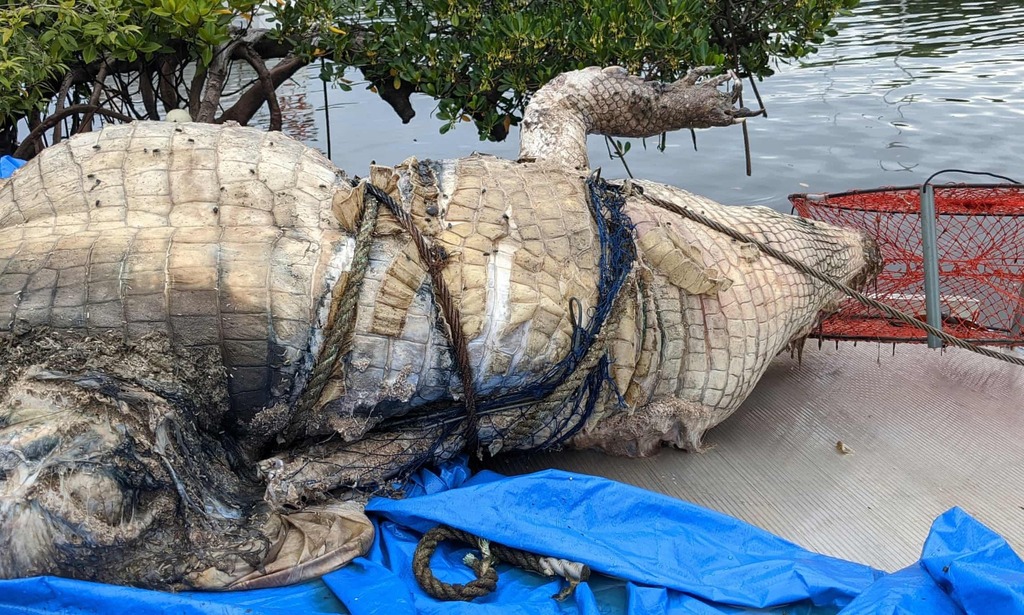
The saltwater crocodile has the strongest measured bite force of any living animal: approximately 16,000 Newtons. The ranking below covers six species from the Kaught catalog, each verified by biomechanics research. Bite force is distinct from overall strength: a powerful biter is not always the overall strongest animal.
Bite force is one of the most studied metrics in comparative biomechanics, and one of the most misreported. Pop-science lists frequently mix measured values with estimates, compare different measurement methods, or confuse bite force with jaw pressure per unit area. This ranking uses measured Newton values from peer-reviewed biomechanics studies where available, with estimates flagged.
One caveat before the list: raw force figures depend on where in the jaw the measurement is taken. A crocodile's rear teeth generate more force than the front. The figures below represent peak measured or estimated biting force across the full jaw.
1. Saltwater Crocodile, approximately 16,000 N
The saltwater crocodile holds the highest reliably measured bite force of any living animal: around 16,000 Newtons in large adults. That is roughly the force of 1,600 kg pressing on a small area between the rear teeth. The closing muscles are extraordinarily powerful and well-documented in biomechanics literature (Erickson et al., 2012). The jaw-opening muscles, by contrast, are weak: a strong adult human can hold a crocodile's jaws shut with their hands.
The evolutionary logic is sound. A crocodile kills by seizing prey at the waterline and dragging it under. It does not need to chew. It needs to hold, and 16,000 N ensures it holds anything short of an elephant.
2. Nile Crocodile, approximately 9,000 N
Africa's largest reptile produces estimated peak bite forces around 9,000 N in large individuals, lower than the saltwater crocodile but still far above any mammal. The Nile crocodile's teeth are robust and the skull is built for repeated torsional stress: the "death roll" that dismembers large prey works by twisting the body while the jaws hold absolutely still. See the full profile at our Nile crocodile guide.
3. Common Hippopotamus, approximately 8,100 N
Among mammals, the hippopotamus has the strongest measured bite. Peak force estimates reach 8,100 N, more than double any big cat. The canines can reach 50 cm and the incisors are broad and sharp. Hippos use this jaw primarily in territorial fights between males, opening a near-180-degree gape as a threat display before striking.
The bite is not used for feeding: hippos are grazers and use their wide, flat lips and blunt teeth to crop grass. The jaw force evolved entirely for combat.
4. Jaguar, approximately 1,350 N (canine) with extreme pressure per area
The jaguar's measured bite force is around 1,350 N at the canines, lower than many assume, but the figure misses the point. The jaguar's canines are proportionally the thickest and most robust of any big cat. The force applied through that small contact area generates extreme pressure per square centimetre. The jaguar kills not by suffocation (unlike lions, leopards and tigers) but by a single crushing bite through the skull, piercing the braincase directly. It can crack a river turtle's shell and punch through a caiman's armour. See the full jaguar guide.
5. Lion, approximately 1,000–1,300 N
Lions bite with approximately 1,000–1,300 N of force, similar to other large Panthera cats but applied differently. The lion kills by clamping the throat and cutting off airflow or blood supply, holding for minutes until the prey loses consciousness. The carnassial teeth that shear meat are blade-like rather than crushing, a design optimised for slicing through flesh rather than cracking bone. The skull and jaw musculature are built for a sustained hold, not a single high-force strike. See our strongest animals ranking for context on how bite force relates to overall body strength.
6. American Black Bear, approximately 750–850 N
The American black bear produces estimated bite forces of 750–850 N, making it one of the stronger biters among North American land mammals. Bear molars are broad and ridged for crushing, adapted for a highly varied omnivorous diet that includes hard nuts, bones and tough plant material. The jaw is unusually flexible compared with other carnivores: the hinge allows both the shearing action of a predator and the grinding action of a herbivore, a design compromise that slightly limits maximum bite force but gives the bear remarkable dietary range. Brown bears bite harder still, with estimates reaching 1,400 N in large individuals.
Strongest animal bites: frequently asked questions
What animal has the strongest bite in the world?
The saltwater crocodile (Crocodylus porosus) holds the measured record at approximately 16,000 Newtons, the highest reliably documented bite force of any living animal. This is over 1.6 tonnes of force applied between the rear teeth.
What is bite force measured in?
In Newtons (N) of force. One Newton is the force needed to hold up roughly 100 g against gravity. A saltwater crocodile's 16,000 N is equivalent to the weight of 1,600 kg pressing on the area between its jaws.
Does a hippo have a stronger bite than a lion?
Yes, significantly. Hippo bite force reaches approximately 8,100 N compared with a lion's roughly 1,000–1,300 N. The hippo's canines, up to 50 cm long, also make each bite far more physically damaging.
How strong is a jaguar bite compared to other big cats?
The jaguar's raw force figure (around 1,350 N at the canine) is similar to a lion's, but the teeth are much thicker and the pressure per unit area is far higher. The jaguar is the only big cat that kills prey with a direct skull-crushing bite rather than suffocation.
Can a crocodile's jaws be held shut by a person?
The jaw-closing muscles are enormously powerful. But the jaw-opening muscles are comparatively weak. A strong adult can physically hold a crocodile's jaws shut with both hands. Letting go is the dangerous part.
The next thing you see could be
your first catch.
Kaught is live on the App Store and Google Play. Free to start, and your first catch is one photo away.
Free to start · Live on the App Store and Google Play
Species data, type, rarity tier and measurements, is drawn from the Kaught catalog, built on open biodiversity records from GBIF and iNaturalist. Rarity reflects how often a species is observed in the wild, not its conservation status. Bite force figures are sourced from comparative biomechanics research; estimates are indicated where direct measurement data are not available.