
Superlative ranking
Most dangerous animals in the world: 6 ranked
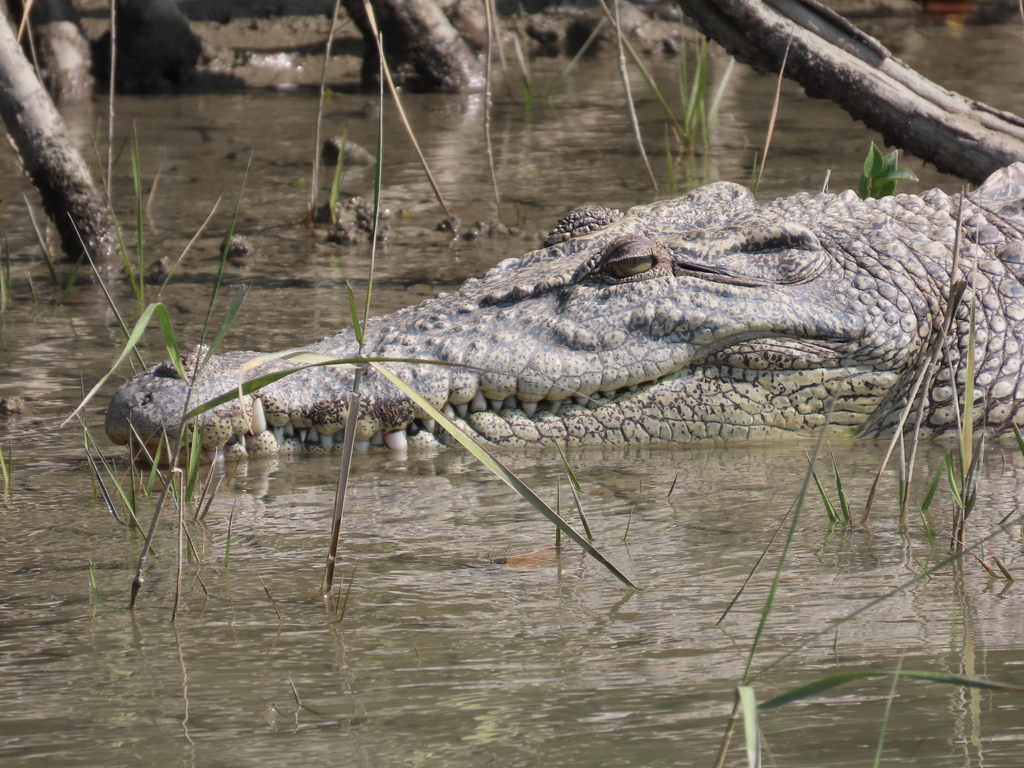
The six most dangerous animals to humans by direct attack, in order: common hippopotamus, saltwater crocodile, lion, forest cobra, brown bear and polar bear. The hippo's combination of mass, speed and extreme unpredictability puts it above animals with higher body counts but more predictable behaviour.
Most rankings of "dangerous animals" conflate venom toxicity, annual fatality counts, and likelihood of a fatal encounter into a single number that does not mean anything clear. This list does not do that. It ranks six animals from the Kaught catalog by the genuine threat posed through direct physical attack: bite force, body mass, aggression trigger, and survivability if the attack connects. Venomous species are covered separately in the most venomous animals guide.
1. Common Hippopotamus: Africa's most dangerous animal
The hippopotamus is considered the most dangerous large land animal in Africa by most regional field researchers. The reasons are specific: it weighs up to 3,500 kg, can reach 40 km/h on land in short bursts, and is not a defensive attacker. Hippos will charge and kill humans who enter their space for no reason a person would recognise as a provocation. Unlike most dangerous predators, which attack when surprised or cornered, a hippo may attack boats, fishermen and riverside travellers in open water in full daylight.
The territorial instinct is the key factor. A bull hippo regards a large section of river as its own, and anything that enters, human or crocodile, may be treated as a threat. Fatalities are common when people are between a hippo and the water, as the animal forces a straight-line path to the river it considers home.
The hippo's bite force is approximately 8,100 Newtons, produced by canine teeth that can reach 50 cm. The lower canines are the weapons; they can bisect a canoe. The animal is Epic tier in the Kaught catalog, three diamonds, reflecting how rarely it is encountered in a genuine wildlife observation context.
2. Saltwater Crocodile: the highest confirmed bite force of any living animal
The saltwater crocodile holds the verified record for the highest measured bite force of any living animal: approximately 16,000 Newtons, more than double the hippopotamus and more than the bite force attributed to T. rex in some fossil estimates. A large male reaches 6 m and 1,000 kg.
The attack method is the death roll: once the crocodile has a grip, it rolls rapidly in the water to disorient prey and tear pieces free. Unlike most animals on this list, the saltwater crocodile actively enters the water and comes very close to people on riverbanks, waiting motionless at the waterline for extended periods before striking. It attacks at eye-level with no warning and with a force that nothing in its range can survive without external help.
It is also the only crocodilian that regularly crosses open ocean between islands: individuals have been tracked hundreds of kilometres from their home range. The saltwater crocodile is Legendary tier, four diamonds in the Kaught catalog. The strongest animals guide covers its bite force record in full.
3. Lion: the apex hunter of the African savanna
Lions are the only large cat to live in social groups, and cooperative hunting is what makes them particularly dangerous. A solitary lion is highly capable; a coalition of five can bring down a giraffe. In the context of human safety, lion attacks most often occur at night when prey animals and people are less alert, and the lion's extremely low reflectance coat makes it effectively invisible in firelit darkness at 10 metres.
Most attacks on people are made by individuals, often young males expelled from prides and hungry enough to take unusual prey. Attacks on sleeping people in tents or livestock enclosures are a consistent pattern across sub-Saharan Africa. The bite force is approximately 4,500 Newtons, delivered to the throat or nape to block breathing. Lions are Legendary tier, four diamonds in the Kaught catalog.
4. Forest Cobra: Africa's fastest-acting large cobra
The forest cobra reaches up to 2.7 m, making it Africa's largest true cobra. It is both a pursuit predator (chasing prey actively) and a good swimmer, which increases the chance of encounters in forested riverside areas. The venom is neurotoxic and acts fast: without antivenom, untreated envenomation can cause respiratory paralysis within hours.
What separates the forest cobra from other venomous snakes on this list is its willingness to stand and face a threat. It spreads a large, visible hood and holds position rather than retreating, which can be misread as hesitation. The bite, when it comes, is accurate and full-envenomation. The forest cobra is Legendary tier, four diamonds. The complete venom comparison is in the most venomous guide.
5. Brown Bear: the ambush animal you do not want to surprise
A large male brown bear weighs up to 600 kg and can generate a swipe force exceeding 5,000 Newtons at the paw. It is faster than a horse over short distances: the sprint speed of a grizzly on a clear run approaches 55 km/h. Neither a human on foot nor on a bicycle can outrun one.
The characteristic brown bear attack is defensive: a surprised bear, a mother with cubs, or a bear on a carcass. This is the good news; defensive attacks can sometimes be survived by playing dead. The bad news is that a defensive bear can still apply the full weight and power of a 500 kg animal at speed. Fatalities occur consistently in North America, Europe and Russia, and field protocols across bear country exist specifically because the threat is real and statistically predictable. Brown bears are Legendary tier, four diamonds in the Kaught catalog.
6. Polar Bear: the only large predator that hunts humans as prey
The polar bear is a specialist predator of marine mammals, primarily ringed seals, and its attack profile is built around hunting prey at breathing holes in sea ice. Humans enter that profile directly. Field zoologists working in polar regions operate under protocols that treat polar bears as the only large predator that will actively stalk and hunt a person as a prey item, not as a rival or a threat to respond to, but as something to eat.
Annual encounter numbers are low compared to brown bears, because the polar bear's range is remote and human activity there is limited. But the per-encounter fatality rate is high. A polar bear attack is not a defensive response; it is predation, and the animal's behaviour in an approach reflects that: slow, circling, closing from downwind. It reaches up to 700 kg and is also an excellent swimmer, capable of covering hundreds of kilometres of open water. The polar bear is Legendary tier, four diamonds. The full profile is in the polar bear article.
What about snakes with higher fatality counts?
Snakes as a group cause more human deaths globally than any of the six animals above, and certain species, particularly saw-scaled vipers in South Asia, account for enormous numbers. They are excluded from this ranking not because they are less deadly in aggregate, but because this list covers the per-encounter danger posed by a single identified individual from the Kaught catalog. A saw-scaled viper is genuinely dangerous; it is not in the catalog. The most venomous catalog species are ranked in the separate guide.
The strongest bites guide and the strongest animals guide give additional context for the bite forces and raw power figures used here.
Most dangerous animals: frequently asked questions
What is the most dangerous animal in the world?
By direct attack fatalities among large animals, the common hippopotamus is considered the most dangerous land animal in Africa, responsible for more human deaths per year than lions in many regions. Its aggression is unpredictable, it moves at 40 km/h and it does not attack only in defence; it will charge boats and riverside people in open daylight.
Is the hippo more dangerous than a crocodile?
By raw attack frequency in Africa, yes. However, the saltwater crocodile in Asia and Australia has a near-100% attack fatality rate without intervention, making direct comparison difficult. Both are genuinely among the most dangerous animals on Earth by direct attack.
Which bear is most dangerous to humans?
Brown bears cause more annual human fatalities globally due to higher encounter rates. But polar bears are considered more dangerous per encounter: they are the only large predator known to actively stalk and hunt humans as prey, not in defence. Both are Legendary tier in the Kaught catalog.
Are lions or tigers more dangerous?
Both can kill a human easily. Lions attack more people annually due to higher overlap with dense human populations in Africa. Tiger attacks are rarer but often fatal. Both are Legendary tier in the Kaught catalog.
What makes an animal dangerous rather than just venomous?
Venom and physical danger are separate measures. A hippo is not venomous but causes more deaths through direct attack than most venomous species combined. This ranking covers attack danger by mass, speed and aggression. Venom toxicity is covered in the separate most venomous animals guide.
The next thing you see could be
your first catch.
Kaught is live on the App Store and Google Play. Free to start, and your first catch is one photo away.
Free to start · Live on the App Store and Google Play
Species data, type, rarity tier and measurements, is drawn from the Kaught catalog, built on open biodiversity records from GBIF and iNaturalist. Rarity reflects how often a species is observed in the wild, not its conservation status.