
Species spotlight
The Honey Badger: skin thick enough to turn a blade, and a temper to match
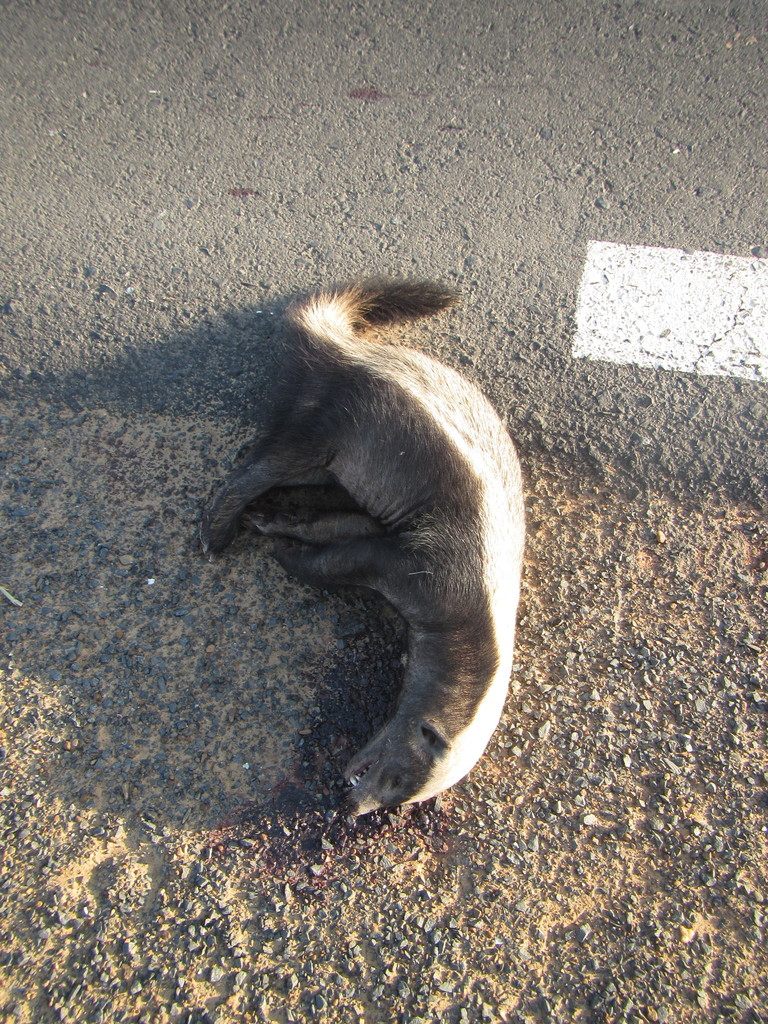
The honey badger (Mellivora capensis) is a stocky African mustelid holding the Guinness World Record as the world's most fearless animal. Its loose, thick hide resists stings and bites, it can survive venomous snake strikes that would kill a dog, and its temperament backs down from nothing.
Few wild animals have a reputation as outsized as the honey badger's. Most of it is earned. This is an animal that regularly raids the nests of venomous bees without protective equipment, eats cobra as a meal, and has been documented returning to a beehive after absorbing enough stings to put a horse in the ground. The biology behind that reputation is worth understanding.
A face built for confrontation
The honey badger is a low-slung, heavily built mustelid, in the same family as otters, weasels and the European badger. The back and crown are silver-grey to almost white; everything below that, the face, legs and underside, is solid black. The contrast is stark and deliberate-looking. The animal is not hiding.
Males can reach 16 kg and 77 cm from nose to tail base. Females run smaller, typically 5 to 10 kg. The legs are short and heavily muscled. The front claws can reach 40 mm on the middle digit: long, thick, slightly curved tools designed for digging through packed earth, dismantling termite mounds, and opening beehives with the kind of force that bends metal.
The range covers sub-Saharan Africa north through the Sahel and Nile Valley, across the Arabian Peninsula, through Iran, and into South Asia as far as Nepal and India. Twelve subspecies vary in the intensity of the back colouration from pale silver in arid North African populations to darker grey in equatorial forest ones.
The skin: nature's most practical armour
The honey badger's most important feature is not its claws. It is its skin. The hide on the back and neck is roughly 6 mm thick, among the toughest of any land mammal relative to body size, similar in resistance to hardened leather. It also sits loosely on the underlying muscle, far more loosely than the skin of a dog or cat.
That looseness carries real consequences in a fight. When a predator bites and holds, the badger can rotate inside its own skin to face the attacker, often turning to bite before the predator can readjust its grip. A lion may clamp down on the scruff of a honey badger's neck and find itself looking at the badger's teeth a moment later.
Bee stings, which deliver venom through a needle finer than the skin is thick, barely penetrate the back and neck at all. Porcupine quills, which cause serious injury to leopards that swallow them, require repeated, forceful stabbing to embed in the badger's hide. The facial skin is thinner and does not share all these properties, but the face is also the part that drives forward into a threat, while the defended neck and back absorb whatever comes from behind.
Snake venom: partial immunity, fully documented
The honey badger regularly eats venomous snakes, including cobras, puff adders and black mambas. After a bite severe enough to cause brief collapse, the animal has been documented recovering fully and finishing the meal.
This is not invincibility. The honey badger carries mutations in the nicotinic acetylcholine receptor, the nerve-muscle junction protein that alpha-neurotoxins in cobra venom block to cause paralysis. The same class of mutation appears in mongooses, which occupy a similar ecological niche. The resistance reduces the binding affinity of the toxin rather than eliminating it: a large enough dose, or haemotoxic viper venom delivered directly into a vein, can still incapacitate the animal for several hours.
The brief loss of consciousness after a strike is genuine. Field observers have documented the badger collapsing, breathing slowly for an hour or two, then waking and continuing to eat the snake. The immune response is partial. The outcome, frequently, is the same. For more on how venom works at the molecular level, see our piece on the most venomous animals in the world.
Diet and the honeyguide partnership
The honey badger is one of the most opportunistic foragers in Africa. The menu runs from honey and bee larvae through snakes, lizards, scorpions, beetles, bird eggs, roots and small mammals. It will break into a beehive without preparation, absorbing thousands of bee stings across a single feeding session lasting up to three hours.
Before raiding a hive, a honey badger everts its anal scent glands and deposits a secretion near the entrance. This appears to fumigate the colony, slowing the bees' defensive response and reducing the number of stings received at the entry point. The behaviour has been recorded at multiple sites across Africa.
The partnership with the greater honeyguide bird (Indicator indicator) is one of the best-documented interspecies mutualisms in the natural world. The honeyguide gives a distinctive churring call and moves toward a bee hive in stages, pausing to wait for the badger to follow. The badger opens the hive with its claws; the bird then feeds on the exposed wax and remaining larvae after the badger leaves. Each participant gets something the other cannot easily obtain alone: the bird cannot break open a hive; the badger covers vast ground less efficiently without an aerial scout.
Nocturnal habits and how to spot one
Honey badgers are mostly nocturnal and crepuscular, spending the day in burrows they excavate themselves. A honey badger can dig itself out of sight in packed earth in minutes, using those front claws and a powerful shoulder musculature that looks out of proportion to the rest of the body.
In Kaught's catalog, the Ratel sits at the Rare tier, two diamonds out of four. Rarity in Kaught reflects observation frequency rather than any other factor: with around 1,254 iNaturalist records globally, it is an animal present across a broad range but rarely encountered on any given day in the field. It is active at night in terrain that is often remote, and it does not loiter near people. Sightings tend to be brief and unexpected.
The Guinness record is not hyperbole
The Guinness Book of World Records has listed the honey badger as the world's most fearless animal since 2002. The designation is grounded in documented field behaviour, not legend.
Published accounts record honey badgers driving lions and leopards off kills. One studied individual held off six lions for over an hour before the lions gave up. When a honey badger is cornered, it attacks directly rather than retreating. If displaced, it returns.
That behaviour is not recklessness. It is a rational response to a physical advantage. The animal's skin and its venom resistance have expanded its threat window to a degree that most predators simply cannot exploit. The strongest bites in the animal kingdom are impressive numbers. Against 6 mm of hardened, rotating hide, they are less useful than they look.
Honey badger: frequently asked questions
What does a honey badger look like?
A low, stocky animal roughly the size of a small dog. The back and crown are silver-grey to almost white; the face, legs and underside are solid black. Adults are 55 to 77 cm in body length with short, heavily muscled legs and prominent curved front claws up to 40 mm long.
Are honey badgers dangerous to people?
Not typically. They are not aggressive toward people unless cornered or threatened, and will bite hard if handled. In the wild, giving them space is the right approach. Attacks on humans are rare and almost always defensive.
Can a honey badger survive a snake bite?
Yes. Honey badgers carry mutations in a nerve receptor that reduce the paralysing effect of cobra-type venom. A severe bite may cause brief unconsciousness lasting one to two hours, but the animal typically recovers fully. The immunity is partial, not absolute, and it regularly eats venomous snakes after recovering.
What does a honey badger eat?
Almost anything. The diet includes honey and bee larvae, venomous snakes, scorpions, beetles, bird eggs, lizards, roots, bulbs and small mammals. It regularly follows the greater honeyguide bird to locate bee hives, which it then excavates with its front claws.
What is the honey badger's relationship with the honeyguide bird?
The greater honeyguide calls and flies toward a bee hive in stages, waiting for the badger to follow. The badger opens the hive, feeds on honey and larvae, then leaves. The bird feeds on the exposed wax and remaining larvae. Each gains something the other cannot easily obtain alone.
Why is it called Ratel in Kaught?
Kaught uses the GBIF primary common name, which is Ratel, the older Afrikaans and Dutch name for the species. Honey badger is the standard English name. Both refer to the same animal, Mellivora capensis.
How rare is the honey badger?
In the Kaught catalog the honey badger sits at the Rare tier, two diamonds out of four. Kaught's rarity reflects how often a species is recorded in the wild, not any other factor. With around 1,254 iNaturalist observations globally, it is present across a wide range but largely nocturnal and secretive, making a clear sighting uncommon.
The next thing you see could be
your first catch.
Kaught is live on the App Store and Google Play. Free to start, and your first catch is one photo away.
Free to start · Live on the App Store and Google Play
Species data, type, rarity tier and measurements, is drawn from the Kaught catalog, built on open biodiversity records from GBIF and iNaturalist. Rarity reflects how often a species is observed in the wild, not its conservation status.