
Field guide
9 nocturnal animals you can actually spot after dark
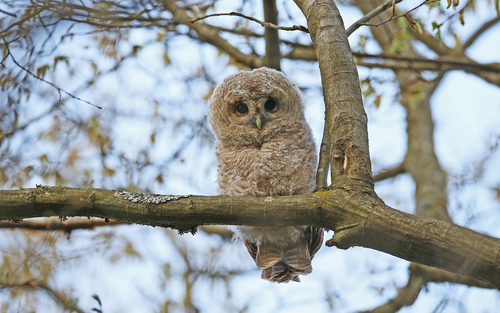
The best wildlife watching often starts at dusk. Tawny owls, foxes, hedgehogs, badgers, bats, moths, toads, glow-worms and stag beetles all come alive after dark, and most live closer to you than you'd think. Here's what to look and listen for, and the best time to catch each one.
Step outside an hour after sunset and a different cast takes the stage. You don't need a remote wilderness, a garden, a park edge or a quiet lane will do. Here are nine creatures of the night, roughly in the order you're likely to meet them, with how to find each one.
1. Tawny owl, the voice of the woods
Strictly nocturnal, the tawny owl hunts from a perch and drops in total silence on prey it has pinpointed by sound alone. You'll almost always hear it before you see it. The famous "twit-twoo" is a duet, the female calls a sharp "ke-wick" and the male answers "hoo-hoo-hoo." Best time: autumn and winter nights, when pairs are most vocal.
2. Red fox, the streetlight patrol
Most active at dusk and through the night, the fox patrols a regular route mapped by scent. In towns it dens under sheds and trots down quiet streets after midnight. Watch for the white tail-tip catching a streetlight. Best time: the first hour after dark. Read the full red fox guide →
3. European hedgehog, the snuffler in the leaves
Listen for the surprisingly loud snuffling and rustling as a hedgehog forages for beetles, worms and slugs in the leaf litter. An adult carries around 5,000 spines, each a modified hair it can raise independently. Best time: warm, damp nights from spring to autumn. A hedgehog out in daylight may be unwell, worth reporting to a rescue.
4. Bats, the first shapes against the dusk
The earliest night animals to appear, often before the sky is fully dark. A common pipistrelle, small enough to fit in a matchbox, can eat up to 3,000 midges in a single night, twisting and flickering on the wing to catch them. Best time: the 20 minutes right after sunset, around water, hedges and streetlights where insects gather. Read the full pipistrelle guide →
5. Common toad, the slow walker
Unlike frogs, toads walk rather than hop, plodding across lawns and paths on humid nights to hunt invertebrates. Each spring they migrate back to ancestral ponds in their thousands. Best time: mild, wet evenings, especially after rain.
6. Badger, the woodland heavyweight
Britain's largest land predator emerges from its sett after dusk to forage, with earthworms making up the bulk of its diet. Badgers are shy and easily spooked, but a downwind, silent vigil near an active sett can be richly rewarded. Best time: still summer evenings, sitting quietly downwind from cover.
7. Moths, the overlooked majority
For every butterfly there are dozens of moth species, many spectacularly patterned, none more so than the pink-and-olive elephant hawk-moth that hovers at honeysuckle on summer nights. You can draw moths in simply by leaving a bright light against a pale sheet, or by "sugaring" a fence post with a sweet wine-and-treacle mix. Best time: warm, still, overcast nights, the muggier the better.
8. Stag beetle, the summer giant
On warm summer evenings, males take clumsy, droning flights in search of mates, their antler-like jaws held high. The larva spends up to six years in dead wood before just a few short weeks as an adult. Best time: dusk on warm evenings in June and July, near old trees and log piles.
9. Glow-worm, the living light
Not a worm at all but a beetle, the female glow-worm climbs a grass stem on warm summer nights and shines a steady greenish light from her tail to attract a flying male. Find one and you've found one of the most magical sights in the night-time countryside. Best time: still, warm nights in midsummer, on grassy banks and verges away from artificial light.
How to watch wildlife at night (without scaring it off)
- Swap white for red. A dim red light lets you see without destroying your night vision, or the animal's.
- Let your eyes adjust. Give yourself a full 10–15 minutes in the dark before expecting to see much.
- Be still and downwind. Most night animals find you by smell and sound long before sight. Pick a spot and wait.
- Use your ears. After dark, half of wildlife watching is really wildlife listening.
Nocturnal wildlife: frequently asked questions
What animals come out at night?
Common ones include tawny owls, red foxes, hedgehogs, badgers, bats, moths, toads, glow-worms and stag beetles. Most are active from dusk and many live in ordinary gardens, parks and woodland edges.
What's the easiest nocturnal animal to see?
Bats and tawny owls. Bats appear as flickering shapes right after sunset, and tawny owls give away their location with their familiar calls from autumn through winter.
What bird hoots at night?
In Europe, the classic night-time hoot is the tawny owl. The "twit-twoo" is a duet, the female calls a sharp "ke-wick" and the male answers with a wavering "hoo-hoo-hoo."
Are hedgehogs nocturnal?
Yes, almost entirely. They emerge after dark to forage for beetles, worms and slugs. A hedgehog out in broad daylight may be unwell and worth reporting to a local rescue.
The next thing you see could be
your first catch.
Kaught is live on the App Store and Google Play. Free to start, and your first catch is one photo away.
Free to start · Live on the App Store and Google Play
Species data, type, rarity tier and measurements, is drawn from the Kaught catalog, built on open biodiversity records from GBIF and iNaturalist. Rarity reflects how often a species is observed in the wild, not its conservation status.