
Species spotlight
European Badger: the powerful nocturnal digger living under your countryside
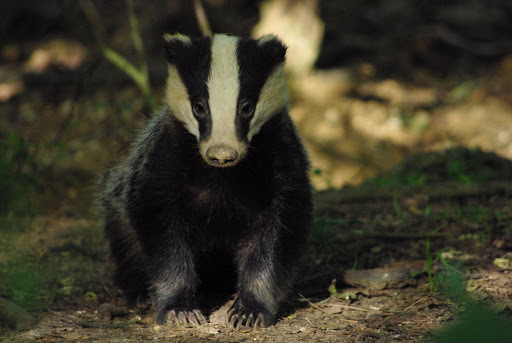
The European badger (Meles meles) is Britain's largest mustelid: a heavy, grey-silver animal with a bold black-and-white striped face. It lives in underground tunnel systems called setts, emerges after dark to hunt earthworms, and lives in family clans. Strictly nocturnal and rarely seen, it sits at the Epic tier in the Kaught catalog.
The European badger lives everywhere from ancient woodland to suburban gardens, yet most people never see one. It spends its days underground in a tunnel system that can stretch for decades and its nights nose-down in the grass, hunting worms by smell. Here is everything you need to find one.
How to identify a European badger
The face is unmistakable. A white head with two broad black stripes running from the snout through the eyes and behind the ears, and a short, pointed muzzle. No other British mammal looks anything like it.
- Body: stocky and low-slung, roughly the size of a small dog but much heavier for its length. The back is pale grey-silver with coarse guard hairs; the underside is darker.
- Legs: short and powerful, all black, with long, sturdy claws built for excavation.
- Tail: short and bushy, pale grey.
- Gait: a rolling, somewhat bear-like walk. Badgers trot when moving between foraging areas and can cover several kilometres in a night.
At night you will hear them before you see them: snuffling, snorting, and a low churring sound during social interaction at the sett entrance. Tracks in soft mud show five toes with long claw marks in front, wider than a fox print and pointing forward.
The sett: a tunnel city underground
A badger sett is more than a burrow. The largest setts in Britain contain over 100 metres of tunnels dug from compacted soil or sand, with multiple chamber rooms lined with dried grass and leaves that the badgers carry in backwards under their chins. Some setts have been in continuous use and gradual expansion for over a century, passed down through generations of the same clan.
Badgers maintain strict hygiene in the sett, digging latrine pits a short distance away and regularly replacing bedding. Fresh claw marks on nearby trees, worn pathways through the undergrowth, and piles of old soil and bedding outside the entrance holes are the most reliable signs of an active sett.
What badgers eat, and why earthworms matter
Earthworms are the core of the diet, making up more than 60 percent of what a badger eats over a year. On a warm, damp night, when worms emerge close to the surface, a single badger can eat several hundred in a few hours. The badger's elongated snout is packed with sensory cells finely tuned to detect worm movement just below the soil surface.
On dry or frozen nights, when worms retreat too deep, badgers switch to beetles and leatherjackets, rabbits, voles, hedgehogs, windfall fruit, bulbs and carrion. Blackberries and fallen plums make up a surprisingly large share of the autumn diet as badgers build body fat before winter.
Unlike most other mustelids, badgers do not kill their prey with a precise bite to the neck. They simply grab and crunch, relying on jaw strength rather than hunting technique.
Clan life and the social badger
Badgers are one of the few truly social mustelids. A typical clan consists of 2 to 12 adults and their cubs, sharing a main sett and a territory that can cover 50 to 150 hectares depending on the food supply. Clan members groom each other and share a communal scent, a mix of secretions from musk glands near the tail, that marks every member of the group. A stranger smelling wrong gets expelled or fought.
Cubs are born underground in January or February, remaining in the sett for the first 8 weeks of their lives. They emerge blinking into spring daylight in April and begin learning to forage alongside the adults. By autumn they can fend for themselves, though many stay with the natal clan for several years.
Are badgers dangerous?
To people, no. Badgers are shy animals that retreat when they sense a human. Their powerful jaws and long claws are tools for digging and earthworm extraction, and they use them accordingly. A cornered or injured badger can deliver a painful bite, but this is not a realistic risk for someone simply watching from a distance.
To gardens, some. Badgers will dig up lawns searching for chafer beetle grubs and leatherjackets, especially in dry summers when surface food is scarce. They also raid bins and compost heaps. The damage is rarely severe, and a sett-digging badger in the garden is more sign of healthy local wildlife than a problem.
How to spot a badger
The best method is a sett watch. Find an active sett in daylight (look for the large, D-shaped entrance holes, claw marks on nearby tree roots, and latrine pits), then return on a calm, mild evening. Arrive well before sunset, position yourself downwind of the entrance, keep noise to zero, and wait. Badgers typically emerge 20 to 40 minutes after sunset in summer, later in autumn. A red-light torch lets you watch without disturbing them.
Night walks with a torch along woodland edges also turn up foraging badgers, most often on damp nights in spring and summer when earthworms are abundant.
The badger shares its woodland habitat with the other nocturnal animals of the British countryside, including the tawny owl, fox and hedgehog. The hedgehog, unlike the badger, is a genuine hibernator; its winter survival strategy is completely different, as explained in our hibernation guide.
How rare is the European badger?
The European badger sits at the Epic tier in the Kaught catalog, three diamonds out of four. That is not a conservation rating. Kaught rarity is purely about how often a species turns up in real-world sighting records. Badgers are widespread across Britain and Europe, but their strictly nocturnal habits and underground lifestyle mean most people who live alongside them never actually see one. A clear, unambiguous sighting of a foraging badger takes real patience and the right conditions, which is exactly what the Epic tier reflects.
European badger: frequently asked questions
What does a European badger look like?
A heavy-set mammal with a bold black-and-white striped face: white head, two black stripes from snout to behind the ears. The body is grey-silver above, darker below, with short black legs and long digging claws. Adults reach about 80 cm in length and up to 12 kg.
Where do European badgers live?
Across most of Europe and into western Asia, wherever the soil is deep enough to dig a sett. They prefer deciduous woodland with adjacent grassland where earthworms are abundant, but also live on farmland, in hedgerows and occasionally beneath urban gardens.
Are European badgers dangerous to people?
No. Badgers are shy and move away when they sense a human. Their strong claws and jaws are digging tools, not weapons. A cornered or injured individual can bite, but a watching badger from downwind poses no risk at all.
What do badgers eat?
Earthworms make up over 60 percent of the diet. On a warm, damp night a single badger can eat several hundred. When worms are deep or scarce, badgers switch to beetles, voles, rabbits, fruit and carrion.
Are European badgers nocturnal?
Yes. Badgers emerge after dark and return before dawn, most active in the hours around sunset and midnight. They do not hibernate, but reduce activity when the ground is frozen and earthworms are inaccessible.
Why is the European badger Epic in Kaught?
Kaught rarity reflects how often a species is recorded in the wild, not conservation status. Badgers are widespread but spend most of their lives underground and emerge only after dark, so a clear sighting is genuinely uncommon. That places them at Epic, three diamonds out of four.
The next thing you see could be
your first catch.
Kaught is live on the App Store and Google Play. Free to start, and your first catch is one photo away.
Free to start · Live on the App Store and Google Play
Species data, type, rarity tier and measurements, is drawn from the Kaught catalog, built on open biodiversity records from GBIF and iNaturalist. Rarity reflects how often a species is observed in the wild, not its conservation status.