
Legendary spotlight
The Eurasian Lynx: Europe's ghost cat and one of the hardest animals to actually see
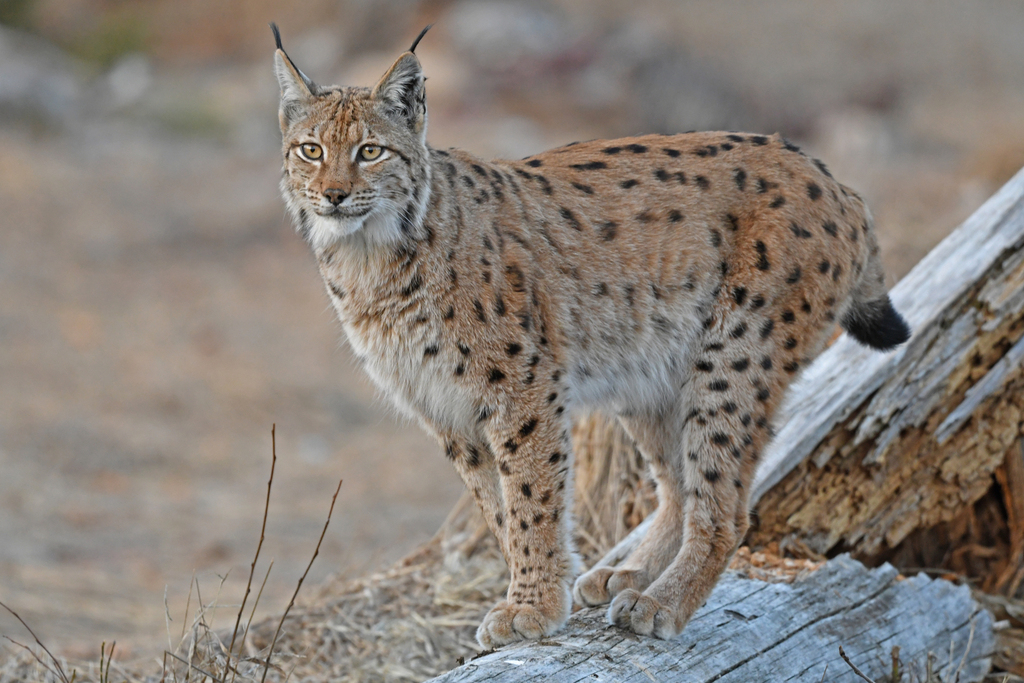
The Eurasian lynx (Lynx lynx) is the largest wild cat in Europe: a spotted, ear-tufted apex predator that stalks boreal and mountain forest from Scandinavia to Siberia. It is intensely secretive, almost entirely crepuscular, and registers a Legendary rarity tier in Kaught because confirmed sightings are genuinely exceptional even within its range.
Most people who spend a week hiking in prime lynx country never see one. Not because the lynx avoids the area: it may have watched you from thirty metres, standing motionless in the understory, and then dissolved back into the forest without a sound. That is the point. The Eurasian lynx is the closest thing Europe has to a ghost predator.
How to identify a Eurasian lynx
If you do see one, the silhouette is unmistakable. The lynx is large for a cat: roughly the size of a labrador but more powerfully built through the shoulders. The key field marks:
- Ear tufts: long black pencils of fur rising from the tip of each ear. No other European wild cat has them. At a glance they make the head look triangular and almost comically large.
- Short bobbed tail: unlike any other large cat, the tail is only about 15 cm long, with a solid black tip. In a fleeing animal, that black stump is the fastest ID.
- Paws: disproportionately large and densely furred, functioning as natural snowshoes. The tracks are round, soft-edged, and lack visible claw marks (claws are retracted in walking).
- Coat: tawny to silver-grey, heavily spotted on most individuals, though the pattern varies regionally. The cheek ruffs are pale and shaggy.
- Leg length: longer-legged relative to body size than most cats, giving it a slightly loping, dog-like movement at a walk.
The species should not be confused with the smaller bobcat (Lynx rufus), which is found only in North America, or the Iberian lynx (Lynx pardinus), a distinct and much rarer species confined to southern Spain and Portugal.
Where the Eurasian lynx lives
The lynx has the largest range of any wild cat in the world, stretching from Portugal in the west to the Pacific coast of Russia in the east, and from Scandinavia in the north to the mountains of Central Asia. Across this range it consistently chooses the same habitat: dense forest with good vertical cover, rocky terrain to den in, and a healthy population of small ungulates as prey.
In Europe, the best-established populations are in Scandinavia (Sweden and Norway), the Carpathians (Romania, Slovakia), the Alps (Switzerland and Austria), and the Balkans. The lynx was extirpated from much of Western Europe centuries ago and has been reintroduced to several countries, with mixed success.
Within any given territory, a single lynx may patrol 100 to 400 square kilometres, moving mostly at night and dusk, rarely using the same route twice, and leaving virtually no visible trace. This low encounter rate is exactly why the species sits at the Legendary tier in the Kaught rarity system: not a statement about population size, but about how often a real field sighting actually occurs.
How the lynx hunts
The Eurasian lynx is an ambush specialist. It does not run prey down; it closes the gap in near-silence to within a few metres and then launches a short, explosive charge. The kill is almost always a throat or nape bite, delivered in under a second.
Roe deer and chamois are the preferred prey across most of European range, supplemented with red foxes, hares, and ground-nesting birds. A lynx kills roughly one large prey animal per week in summer, more frequently in winter when hares are less available.
After a kill, the lynx typically eats, then covers the carcass with snow, leaves, or soil and returns over several nights until it is consumed. Finding a raked-over deer carcass in mountain forest is often the only evidence you will ever have that a lynx was there.
How to improve your chances of seeing one
The realistic answer is: go to the right place, in the right season, and lower your expectations substantially. That said, some approaches genuinely help:
- Scandinavia in winter. Fresh snow turns the landscape into a tracking sheet. Round, clawless paw prints about 8 cm across, laid in a relaxed walk rather than a scramble, are unmistakable. Norwegian forest roads at dusk can produce a sighting when a lynx crosses to hunt on the other side.
- The Carpathians in spring. Lynx activity peaks in late winter and spring (the breeding season runs from February to April), and they are marginally more vocal and mobile. Romania's Retezat and Fagaras mountains have the densest populations in Europe.
- Dawn and dusk, not midday. The lynx is crepuscular, most active in the hour either side of sunrise and sunset. Midday walks through prime habitat will almost certainly produce nothing.
- Guided tracking. Professional trackers who know individual lynx territories can narrow the search area dramatically. This is the most reliable route to a confirmed sighting.
For context on what "Legendary" really means in observation frequency compared to other forest species, see the British woodland animals guide and the pine marten spotlight, another forest predator that sits at the Legendary tier for similar reasons.
The lynx in the Kaught catalog
In Kaught, the Eurasian lynx registers as a Legendary Mammal/Apex type, four filled diamonds out of four. That apex tag reflects its position at the top of the European forest food chain: no animal in its range reliably predates an adult lynx. The Legendary tier is not a value judgment or a conservation statement; it is the catalog's way of saying that a genuine field observation of this animal is, across the global user base, vanishingly rare.
Kaught's rarity scale runs on observation frequency: how often real-world users actually encounter and record a species. The lynx trails far below even the tawny owl or the pine marten in logged sightings, which is why it earns all four diamonds.
Three things that make the lynx remarkable
- Its hearing is so acute that it can locate a mouse under 30 cm of snow. The ear tufts are thought to act as directional antennae, channelling sound toward the inner ear.
- Individual lynxes are territorial and largely solitary. Two adults sharing the same forest rarely interact, and their territories are mapped through scent-marks on trees rather than any visible boundary.
- A lynx can adjust its entire diet season to season: deer in summer, hares in deep winter, rodents in lean periods. This dietary flexibility is part of why it occupies such a wide geographic range.
Eurasian lynx: frequently asked questions
What does a Eurasian lynx look like?
The Eurasian lynx is a large wild cat, the biggest in Europe, standing about 60 cm at the shoulder and weighing up to 30 kg. It has a spotted tawny to grey coat, long black-tipped ear tufts, a short bobbed tail with a black tip, and oversized padded paws that act as natural snowshoes.
Where does the Eurasian lynx live?
The Eurasian lynx ranges from Western Europe through Siberia and into Central Asia. It inhabits dense boreal and montane forest with good cover. Best European populations are in Scandinavia, the Carpathians, the Alps, and the Balkans.
Is the Eurasian lynx dangerous to humans?
No. The Eurasian lynx is secretive and deeply avoids people. There are no documented fatal attacks on humans in modern records. It will retreat silently long before you know it is there.
What does the Eurasian lynx eat?
Roe deer and other small ungulates are the main prey across most of Europe, supplemented by hares, foxes, and ground-nesting birds. A lynx may take one or two deer per week, cached and revisited over several days.
Why is the Eurasian lynx Legendary in Kaught?
Kaught's Legendary tier reflects how rarely a species is actually recorded in the wild, not any conservation designation. The Eurasian lynx is crepuscular, intensely shy, and moves through dense forest, making a confirmed sighting exceptionally rare even within its range.
How do you find a Eurasian lynx in the wild?
Your best chance is at dusk or dawn in dense boreal or mountain forest, particularly in winter when tracks show up in snow. Look for round, snowshoe-sized paw prints without claw marks, and for deer carcasses raked with leaves. Scandinavia and the Carpathians offer the most realistic odds in Europe.
Do Eurasian lynxes live in the UK?
Not currently. The lynx was native to Britain but was extirpated centuries ago. There are ongoing proposals to reintroduce it to parts of Scotland, but no population exists there today.
The next thing you see could be
your first catch.
Kaught is live on the App Store and Google Play. Free to start, and your first catch is one photo away.
Free to start · Live on the App Store and Google Play
Species data, type, rarity tier and measurements, is drawn from the Kaught catalog, built on open biodiversity records from GBIF and iNaturalist. Rarity reflects how often a species is observed in the wild, not its conservation status.