
Species spotlight
The Pine Marten: the rarest mammal you could ever catch in a British wood
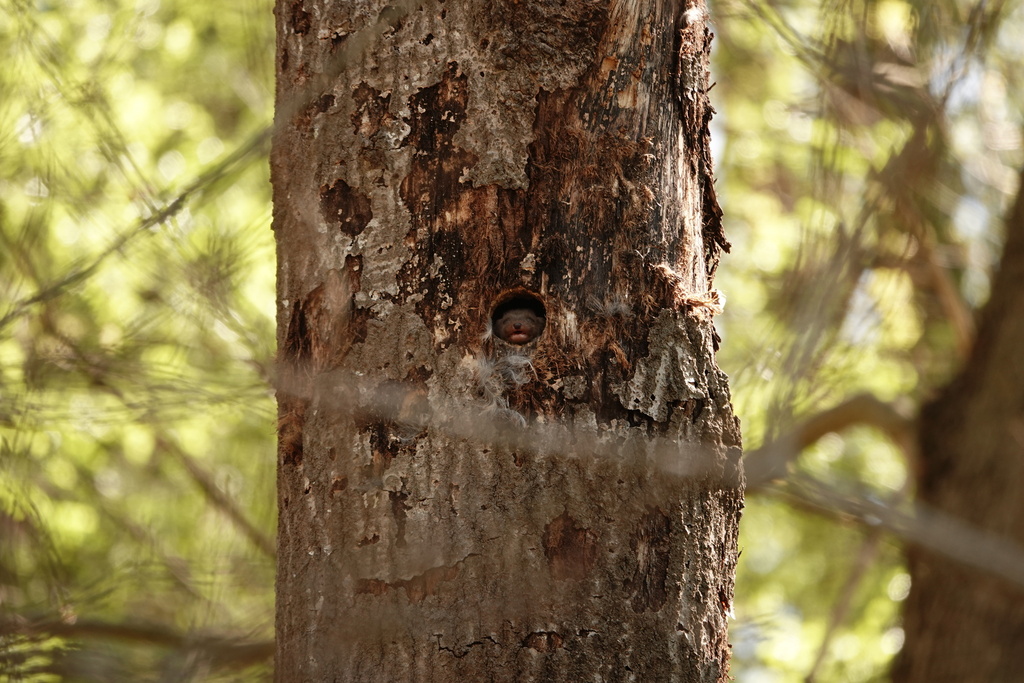
The pine marten (Martes martes) is a cat-sized mustelid with chocolate-brown fur and a pale creamy-yellow throat patch. It lives in old woodland, hunts at night, and is one of the hardest wild mammals to see in Britain. In the Kaught catalog it sits at Legendary, four diamonds out of four.
Ask a serious British naturalist what animal they most want to see, and the pine marten comes up constantly. It ticks every box: beautiful, shy, mostly nocturnal, and confined to the wilder north and west. Here is how to identify one, where to look, and what its remarkable comeback means for the wider woodland.
How to identify a pine marten
The pine marten identification is easier than its rarity suggests, because one field mark is unmistakable:
- The bib: a large, irregular, creamy-yellow throat patch that covers the chest. No other British mustelid has this, and it shows clearly at a distance.
- Colour: rich chocolate-brown above, darker on the legs and tail. The coat shifts toward a silkier, paler chestnut in winter.
- Size and build: bigger than a stoat or weasel, smaller than a badger. About 50 cm of sinuous, low-slung body plus a long bushy tail of 25 cm or more.
- Ears: rounded, slightly pointed, outlined in pale cream, giving the face a cat-like frame quite different from a mink or polecat.
- Movement: a long bounding gallop on the ground; in the trees it flows branch to branch at speed, head low, tail streaming behind.
At any distance, the bib and the bushy tail together are enough. Stoats and weasels are far smaller; polecats have dark masks and paler flanks but no bib; mink are uniformly dark. The pine marten is its own thing.
Where do pine martens live?
Pine martens need old, mixed or conifer woodland with dense understory, hollow trees to den in, and territories large enough to support their wide-ranging hunt. In Britain that means the Scottish Highlands, the most reliable area by a wide margin. Small, slowly recovering populations exist in parts of Wales, and Ireland holds a genetically distinct population that has fared better.
Within woodland the marten ranges both low and high. It hunts on the ground like a large weasel and chases prey into the canopy like nothing else in British wildlife. It dens in hollow trees, old squirrel dreys or rocky outcrops, sleeping through the day and emerging around dusk.
What the pine marten eats, and an unexpected side effect
The pine marten is highly opportunistic. The menu changes through the year: field voles and wood mice form the year-round staple; rabbits, birds and eggs come in spring and summer; beetles, rowan berries and other soft fruit build fat reserves in autumn. It will take squirrels when it can catch them.
That last point has an unexpected consequence for the wider woodland. Grey squirrels are heavier and less agile in the canopy than native red squirrels. Where martens have recovered, grey squirrel numbers have dropped and red squirrel populations have been able to rebound. The marten's return now features in conservation plans for reds, even though no one planned it that way.
How rare is the pine marten?
Kaught's catalog places the pine marten at Legendary, four diamonds out of four. That is the top rarity tier, reflecting how seldom the species turns up in genuine field observations, not any statement about the population.
Historically found across most of Britain, the marten was pushed close to extinction south of Scotland by a century of persecution and woodland loss. Numbers are recovering, but slowly, and its core territory is remote. You can walk through marten country for months and see nothing but a twisted, dark dropping on a prominent rock. A confirmed daytime sighting is something many experienced naturalists never achieve. The full ranking of the rarest animals you can actually spot in the UK puts the pine marten at the top.
How to improve your chances of seeing one
- Trail cameras near hollow trees. The marten uses regular routes around its territory. A well-placed camera in Highland woodland is more reliable than any amount of patient waiting.
- Feeding stations. In parts of Scotland where landowners set out jam and peanut butter (martens are fond of sweet things), dusk watches near the bait have produced reliable sightings.
- Listen first. Pine martens give a sharp, cat-like "wook-wook" contact call and a loud churring alarm. Hearing one before you see it is common. The full guide to watching wildlife after dark covers the fieldcraft.
- Read the signs. Twisted, dark droppings on prominent rocks or logs, and five-toed prints in soft ground near hollow trees, tell you a marten uses an area. Find signs, and a patient nocturnal wait in the right spot becomes a genuine plan.
Three things that make the pine marten extraordinary
- Its claws are semi-retractable, like a cat's. They stay sharp for gripping bark and can be drawn back to run quietly on the ground.
- Its long tail acts as a counterweight in the canopy, allowing it to run along branches that would not support a grey squirrel chasing from below.
- It practices delayed implantation: a fertilised egg can be held in suspension for months, so cubs are born in spring at the optimal moment regardless of when mating happened the previous summer.
Pine marten: frequently asked questions
What does a pine marten look like?
A cat-sized mustelid with rich chocolate-brown fur and a large creamy-yellow throat patch called the bib. It has a long bushy tail, rounded pale-edged ears, and a sinuous weasel-family build: about 50 cm of body plus 25 cm of tail.
Where do pine martens live in the UK?
Mainly the Scottish Highlands, with small recovering populations in Wales and Ireland. England sightings are very rare, usually dispersing individuals. They need old woodland with hollow trees and dense cover.
How rare is a pine marten sighting?
Very rare. Legendary tier in Kaught, four diamonds out of four. Intensely shy, almost entirely nocturnal, confined to remote woodland. Most observers never see one in years of searching.
What does a pine marten eat?
Voles, rabbits, birds, eggs, beetles and autumn berries, especially rowan. It will also take squirrels, and in areas where martens have recovered grey squirrel numbers have fallen while red squirrels have rebounded.
Are pine martens dangerous to people?
Not at all. Pine martens flee long before you can approach and pose no threat to people. They may occasionally take poultry from poorly secured runs, but wild encounters carry no risk.
Why do pine martens help red squirrels?
Grey squirrels are less agile in the tree canopy than native reds, so martens preferentially catch them. Where martens have recovered, grey squirrel numbers have fallen and red squirrels have bounced back, a relationship now observed repeatedly across Scotland and Ireland.
The next thing you see could be
your first catch.
Kaught is live on the App Store and Google Play. Free to start, and your first catch is one photo away.
Free to start · Live on the App Store and Google Play
Species data, type, rarity tier and measurements, is drawn from the Kaught catalog, built on open biodiversity records from GBIF and iNaturalist. Rarity reflects how often a species is observed in the wild, not its conservation status.