
Rarity ranking
The rarest animals you can actually spot in the UK: a tier ranking
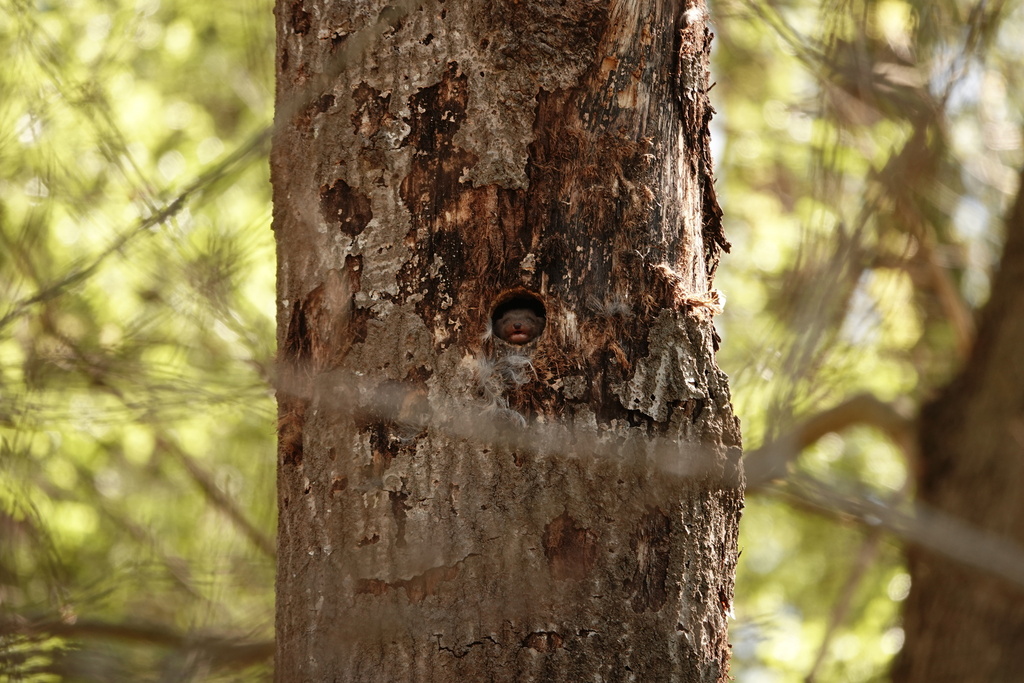
The pine marten tops the ranking at Legendary (four diamonds). Below it sit several Epic-tier species including the tawny owl, red squirrel and stag beetle. Rarity here means how often a species actually turns up in real field records, not whether it is threatened. A robin is common. A pine marten is almost never seen.
Most "rarest animals in the UK" lists conflate two different things: how hard a species is to find and whether it is globally threatened. These are not the same. Some common animals are perfectly widespread but almost never seen because they are nocturnal or shy. Some rare-in-the-sense-of-threatened birds are actually easy to observe at the right location. Kaught's rarity tier cuts through the confusion by using one metric: how often does the species actually appear in field observations?
Here is where eight native species fall, from the top of the scale down to the garden species you could log before breakfast.
Legendary tier (4 diamonds): the pine marten
One species in the Kaught catalog sits at four diamonds: the pine marten. Nocturnal, intensely shy, confined to the Scottish Highlands with pockets in Wales and Ireland, it is the species most observers actively search for across years without success. Trail cameras and feeding stations have made sightings more achievable, but a spontaneous daytime encounter remains exceptional. Read the full pine marten field guide for how to stack the odds.
Epic tier (3 diamonds): the species that reward dedicated searching
Epic-tier species are genuinely hard to observe well. They are not impossible to find, but a quality sighting usually requires deliberate effort: the right habitat, the right time of day, and a degree of luck.
Tawny Owl
Strictly nocturnal and an expert in daytime concealment, roosting motionless against bark with eyes closed. You are far more likely to hear the famous "twit-twoo" duet on an autumn night than to see the bird itself. Finding a roost requires knowing the signs: pellets of compacted fur and bone dropped beneath a favourite perch, and whitewash on the bark below.
Red Squirrel
The red squirrel is absent from most of England and Wales, confined to the Scottish Highlands, Northumberland, a few islands and Anglesey. Observers in London or the Midlands may never see one without a dedicated trip north. Where they are present, they can be surprisingly confiding at feeding stations in conifer woodland. The red vs grey squirrel guide has the field marks to separate them in the field.
Stag Beetle
Britain's largest beetle, with males carrying antler-like jaws for combat, is tied entirely to the presence of rotting broadleaf wood where its larvae spend up to six years developing underground. It flies only for a few weeks in June and July, only in southern England, and only on warm evenings around dusk. Outside that window and that geography, it simply does not exist to be seen.
Marbled Newt
A western European species rather than a British one, the marbled newt is found in France, Spain, Portugal and the Basque country, not mainland Britain. For UK-based naturalists it falls into the "trip sighting" category: achievable, but requiring deliberate travel to the right part of France or the Pyrenean foothills. In the marbled newt guide you will find everything needed to identify one when you get there.
Rare tier (2 diamonds): widespread but not everyday
Rare-tier species are present across large parts of the country but are not the kind of thing you see from a kitchen window. A sighting requires being in the right habitat at the right time, or a degree of focused searching.
Red Fox
The fox is arguably the most widespread wild carnivore on Earth, yet a clear, close sighting is less common than many people expect. Largely crepuscular and nocturnal, it tends to see you before you see it and melt away. In towns the odds improve at dusk near quiet streets and railway embankments.
Common Kingfisher
Tied to clear, slow water with overhanging perches, the kingfisher is often heard before it is seen, a sharp high "tseep" as it arrows low and fast along the river surface. Sitting quietly near a suitable perch for half an hour, especially on winter mornings, converts most misses into a sighting. See the full kingfisher guide.
Common tier (1 diamond): the ones you should log today
Common tier does not mean uninteresting. It means a species that appears frequently in real observation records across a wide range of habitats. The robin is not a lesser entry in a catalog: it is No. 001 for a reason, the species that begins the collection, the baseline against which everything rarer is measured.
European Robin
Present in virtually every garden, park, hedgerow and woodland in Britain, singing year-round and tame enough to perch within a metre of a quiet observer. Common tier reflects that frequency honestly. The why robins sing in winter guide explains the territorial drive behind that song.
What the tier system is not
Kaught's rarity tier is not a conservation assessment. A legendary-tier animal is not necessarily threatened. A common-tier one is not necessarily thriving everywhere. The tiers reflect observation frequency: how often a species actually turns up in real field records submitted by real observers. That is the metric that matters for a catalog built on what you can actually find.
Rarest UK animals: frequently asked questions
What is the rarest animal you can spot in the UK?
By observation frequency, the pine marten. It is Legendary tier in the Kaught catalog, four diamonds out of four: nocturnal, confined to remote Highland woodland, and genuinely elusive even where it is known to be present. Most observers never see one.
What does Kaught's rarity tier mean?
How often a species actually turns up in field observations, not whether it is threatened. Common (1 diamond) means you could see it any day in the right habitat. Legendary (4 diamonds) means most observers never see one despite searching. The scale is: common, rare, epic, legendary.
Is the red squirrel rare in the UK?
In terms of observation frequency, yes. The red squirrel is Epic tier, three diamonds out of four. It is confined to Scotland, a few northern English sites and Anglesey, so most English observers will never encounter one without a dedicated visit north.
Is the tawny owl hard to see?
Yes. Strictly nocturnal and expert at daytime concealment, roosting motionless against bark. Epic tier in Kaught. You are far more likely to hear the duet call on an autumn night than to see the bird.
Why is the robin common tier if I hear it every day?
Because it genuinely is common in field observation records: it appears frequently across a wide range of habitats in real data. Common tier is not a dismissal: a common-tier species is just as worth cataloging as a Legendary one.
What are Epic tier animals in the UK?
In the Kaught catalog, UK Epic-tier species include the tawny owl, red squirrel, stag beetle and marbled newt. All are genuinely hard to observe well: nocturnal, geographically restricted, or tied to specific habitats most observers rarely visit.
The next thing you see could be
your first catch.
Kaught is live on the App Store and Google Play. Free to start, and your first catch is one photo away.
Free to start · Live on the App Store and Google Play
Species data, type, rarity tier and measurements, is drawn from the Kaught catalog, built on open biodiversity records from GBIF and iNaturalist. Rarity reflects how often a species is observed in the wild, not its conservation status.