
Habitat & biome guide
What animals live in British woodland? Six species to look for, ranked by how hard they are to find
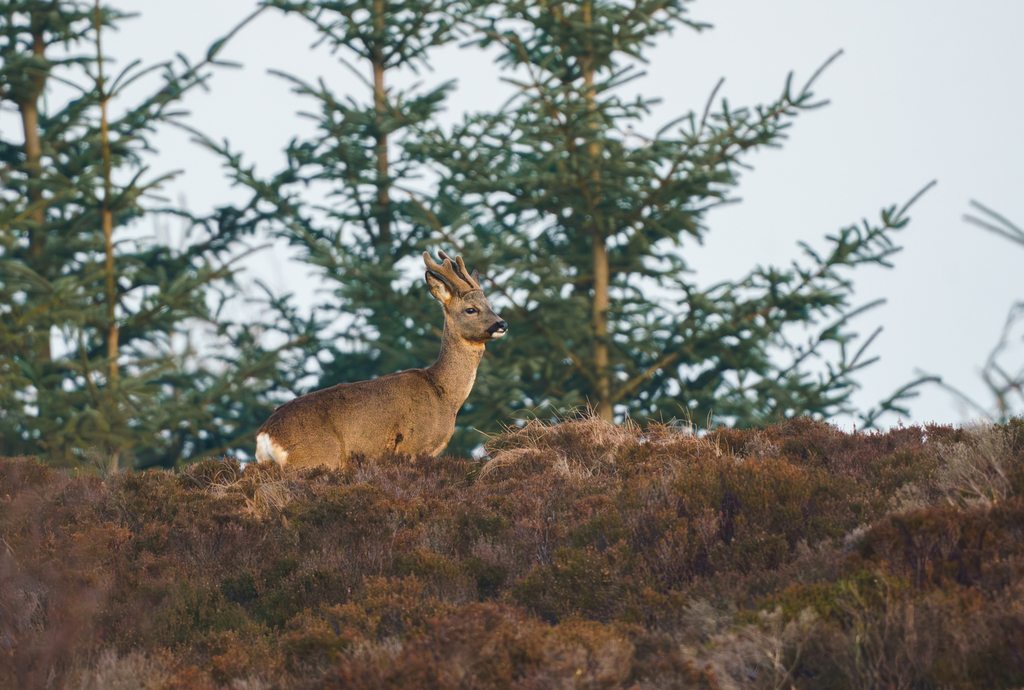
A British wood holds everything from everyday red foxes (Rare tier) to stag beetles and tawny owls (Epic) to the intensely shy pine marten (Legendary). The species you find depend on the woodland type, the time of day, and whether you are willing to be there at first light. This guide maps six Kaught catalog species to the habitat, with when and where to look for each.
British woodland is one of the most productive habitats for wildlife observation in the UK. It is also one of the most misread. Most people walk through at noon and see almost nothing, because nearly everything with a heartbeat is either sheltering in the canopy, hidden in the understory, or waiting for dusk.
The species below are all drawn from the Kaught catalog's woodland-type cluster: animals whose primary or secondary type puts them in the forest biome, or whose habitat firmly grounds them in trees and the ground beneath them. Each entry includes the Kaught rarity tier, which reflects real observation frequency from open biodiversity records.
Red Fox
The fox is woodland's most versatile resident. It dens in banks and hollows, hunts along rides and field margins, and caches food in shallow scrapes under the roots. It is largely crepuscular, most active at dawn and dusk, but in summer with cubs to feed it can be out through much of the night. The white-tipped tail is the field mark at distance, picking up the last light as it trots away between the trees. Rare tier: widespread but rarely seen clearly at close range.
Roe Deer
The roe deer is a browser, not a grazer, so it needs the woodland understory. Look for the russet coat and cream rump patch at the field edge in first light. In late June the rut is approaching: bucks begin to mark territories more aggressively, and the rasping grunt of a buck moving through the trees becomes audible on still mornings. Read the full roe deer guide for identification tips and rut timing. Rare tier: crepuscular and quick to take cover.
Red Squirrel
The red squirrel needs continuous canopy and is most abundant in Scots pine and mixed conifer forest in northern England and Scotland. It is diurnal and active in the canopy from early morning, which makes it one of the easier Epic-tier species to actually watch if you are in the right location. The ear tufts are in full growth through winter but moult back by midsummer. Read how to tell it from a grey squirrel before your visit. Epic tier: a real find anywhere outside its strongholds.
Stag Beetle
The stag beetle spends up to six years as a larva in dead wood before emerging as an adult for just a few short weeks in June and July. Males fly at dusk on warm evenings, the antler-like mandibles angled forward, searching for females near old stumps and rotting roots. They are most common in south-east England but old parkland and veteran-tree sites across England hold populations. The adults do not eat, so their brief above-ground life is entirely about reproduction. Epic tier: unmistakable once found, but tightly tied to old rotting wood.
Tawny Owl
The tawny owl is the voice of the British wood at night, but seeing one rather than just hearing it is a different matter. It roosts motionless against a trunk during the day, cryptic in bark-patterned brown. At dusk it drops from a perch to take small mammals detected by sound alone, with asymmetrically placed ears that allow pinpoint triangulation in total darkness. The classic "twit-twoo" is a duet between a female's "ke-wick" and a male's "hoo-hoo". Look for the round head and no ear tufts (unlike the long-eared owl). See our nocturnal spotting guide for the best approach at dusk. Epic tier: common acoustically, genuinely rare visually.
Pine Marten
The pine marten is the rarest woodland resident in the Kaught catalog: Legendary tier, four diamonds. Chocolate-brown with a cream-yellow bib, nocturnal and intensely shy, it is found mainly in Scottish Highland forests and a small number of reintroduced populations in Wales and parts of northern England. The chance of a sighting on any given woodland walk is genuinely low. It hunts squirrels, voles and birds through the canopy after dark, using semi-retractable claws to grip bark at speed. The most realistic approach is a motion-triggered camera trap set near a known territory, or a specialist wildlife hide at a site where martens are regularly seen at a bait station. Read the full pine marten guide for field craft advice. Legendary tier: the highest rarity in the catalog.
When to visit, and how to approach it
The single most effective rule is timing. Dawn is best for mammals, the hour between first light and full sunrise in June and July when roe deer and foxes are still active and red squirrels have just started moving. Dusk works well for stag beetles (flight time in warm, still evenings) and tawny owls (first calls around sunset). Midday is the dead zone for most species.
Approach matters too. Walk slowly along the woodland edge rather than through the interior, pause for two or three minutes every fifty metres, and listen before you look. Most woodland sightings come from animals that heard you arrive and froze before you noticed them. Move quietly, give it time, and let the wood come to you.
For a ranked guide to rarity across all habitat types, see the full UK rarity tier ranking.
British woodland animals: frequently asked questions
What animals live in British woodland?
British woodland holds roe deer, red foxes, red squirrels (mainly northern forests), tawny owls, stag beetles and, at the rare end, pine martens. Common finds at the field edge in good light; rarer species require the right woodland type, the right time of day, and patience.
What is the rarest woodland animal in the UK?
Among catalog species, the pine marten is the rarest woodland animal by observation frequency: Legendary tier in Kaught, four diamonds. Nocturnal, shy, and found mainly in Scottish Highland forests and a few reintroduced populations in Wales and England.
When is the best time to visit a woodland for wildlife?
Dawn and dusk are most productive. The hour after first light in June and July sees roe deer, red foxes and red squirrels active. For tawny owls, listen at dusk from late summer onward. For stag beetles, warm still evenings in June and July near old woodland are best.
Where can I find red squirrels in the UK?
Mainly large conifer and mixed forests in northern England (Northumberland, Cumbria), Scotland, the Isle of Wight and Northern Ireland. They need continuous canopy to travel and are absent from most of lowland England.
How does the Kaught rarity tier work for woodland species?
Kaught's rarity reflects how often a species is actually recorded in the wild, not its population status. In woodland: fox (Rare) is seen more often than red squirrel (Epic), which is seen more often than pine marten (Legendary). The tier is a realistic guide to the odds of a sighting, built from open observation records.
The next thing you see could be
your first catch.
Kaught is live on the App Store and Google Play. Free to start, and your first catch is one photo away.
Free to start · Live on the App Store and Google Play
Species data, type, rarity tier and measurements, is drawn from the Kaught catalog, built on open biodiversity records from GBIF and iNaturalist. Rarity reflects how often a species is observed in the wild, not its conservation status.