
Evolution story
Why kangaroos have pouches: a newborn the size of a jellybean explains it
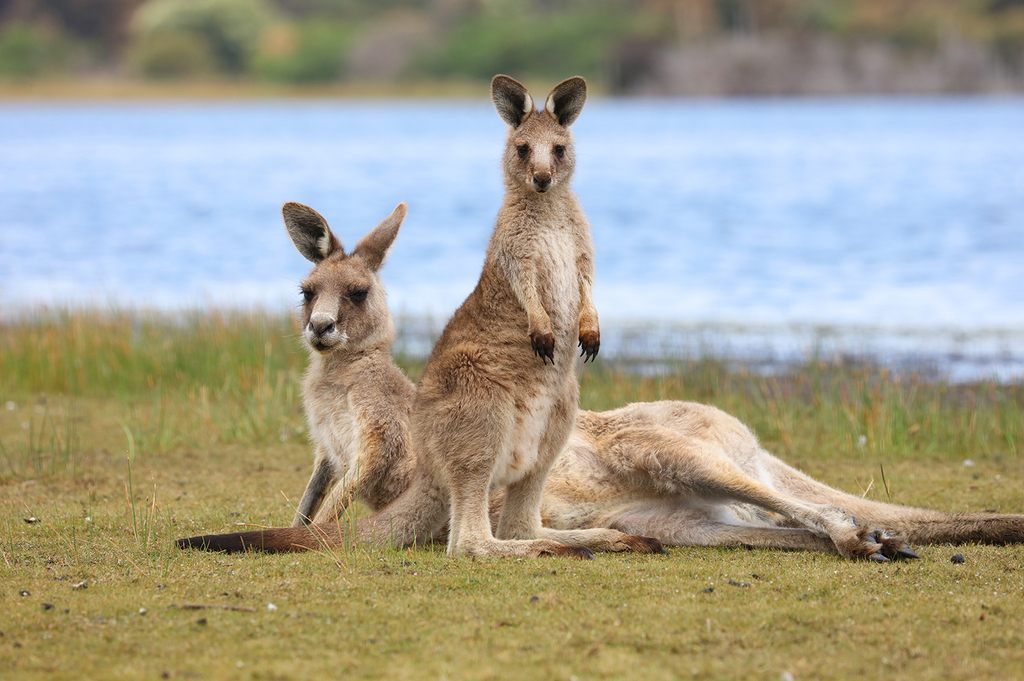
Kangaroos are marsupials: pregnancy lasts only about a month, so a joey is born the size of a jellybean, blind, hairless and barely formed. It crawls unaided into the pouch and clamps onto a teat for months. The pouch isn't the strange part, the impossibly short pregnancy that makes it necessary is.
A newborn eastern grey kangaroo weighs less than a gram. It is blind, hairless, and roughly the size of a jellybean. And yet, minutes after birth, it performs one of the more remarkable feats in the animal world: an unassisted climb through its mother's fur to a pouch it has never seen, where it will spend most of the next year. The pouch gets all the attention, but it's really a solution to a much stranger problem: why does a kangaroo give birth to something so unfinished in the first place?
Born the size of a jellybean
An eastern grey kangaroo's pregnancy lasts around 34 to 36 days, one of the shortest gestation periods of any mammal its size. What arrives at the end of it looks nothing like the animal it will become: about 2 cm long, under a gram in weight, pink, hairless and blind, with hind legs that are barely more than buds. The only limbs doing any real work are the tiny, clawed forelimbs, already developed enough to grip and pull.
The climb to the pouch, unaided and unrepeatable
There is no help coming. The newborn hauls itself through its mother's belly fur using a slow, swimming motion of those forelimbs, guided by gravity, by the direction of the fur's grain, and by scent along a trail the mother licks clean beforehand. The climb covers only a few centimetres but takes about three minutes, an enormous distance for an animal that size with no working eyes and no working legs. If it loses its grip, it dies. There is no second attempt.
A teat that won't let go
Reaching the pouch is only half the job. Inside, the joey must find and latch onto one of four teats unaided. Once it does, the teat swells inside its mouth, locking the joey in place for the next three to four months of permanent attachment. From here the pouch functions as an external womb: constant warmth, constant milk, and protection the joey's own body still can't provide. It will keep returning to the pouch, on and off, until it leaves for good at around 10 to 11 months old, and keeps nursing outside it for months after that.
Why go with a pouch instead of finishing the job internally?
The marsupial and placental (eutherian) lineages split from a common ancestor somewhere around 140 to 160 million years ago, and the two groups solved pregnancy in opposite ways. Placental mammals, like us, built a chorioallantoic placenta that can sustain a fetus through to a fully developed birth. Marsupials kept a simpler yolk-sac placenta, one that can only support a fetus for a few weeks before it runs out of capacity, which is exactly why the pregnancy has to end so early.
That looks like a limitation, but for a kangaroo living through Australia's unpredictable droughts and booms it works like a hedge. A month-long pregnancy is cheap: if conditions turn bad, a female can abandon it and try again almost immediately, rather than losing a much larger investment the way a nine-month placental pregnancy would. The real work of raising the young simply moves from the womb to the pouch, where it can be paused, sped up or abandoned in response to how much food is actually on the ground. The giant seahorse solves the cost of pregnancy from the opposite direction, by handing the entire job to the male, but the underlying logic, spreading reproductive risk rather than concentrating it, is the same kind of evolutionary bet.
Pregnant, nursing, and about to give birth, all at once
Kangaroos are famous for a reproductive trick called embryonic diapause: a female mates again within days of a joey entering the pouch, but the resulting embryo develops only to a hollow ball of cells and then stalls, held dormant by hormones triggered by the older joey's suckling. Only when that joey stops nursing, or is lost, does the paused embryo resume development and eventually get born. In red kangaroos this means a female can genuinely be carrying a dormant embryo, feeding a joey permanently in the pouch, and nursing an older joey at foot, all at the same time, drawing two chemically different milks from two separate teats to match. Eastern grey kangaroos share the biological machinery for diapause, but use it far less consistently than red kangaroos do; most eastern grey joeys are simply raised one at a time, in sequence.
How rare is the eastern grey kangaroo in the Kaught catalog?
In the Kaught catalog the eastern grey kangaroo sits at the Common tier, one diamond out of four. As always in Kaught, that's a measure of how often a species is actually recorded in the wild, not a statement about its conservation status. Eastern grey kangaroos live in visible, grazing mobs across open forest and grassy plains from Queensland to Tasmania, so encountering and recording one is straightforward almost anywhere in its range.
The pouch is one solution among several that animals have evolved to buy a developing body more time outside a parent. The Mexican caecilian takes a stranger route, with hatchlings that scrape and eat their mother's skin. For a mammal that reproduces almost the opposite way, with a single, fully internal pregnancy, the golden jackal's story shows how much DNA evidence has reshuffled what we thought we knew about a familiar animal's family tree. And for another member of the same order as the kangaroo, one built for the slowest possible pace of life instead of a hopping sprint, the koala appears in our ranking of the slowest animals in the world.
Why kangaroos have pouches: frequently asked questions
Why do kangaroos have pouches?
Kangaroos are marsupials, mammals whose pregnancy lasts only about a month. The joey is born before it is developed enough to survive alone, so the pouch takes over as an external womb, holding it against a milk-producing teat until it can cope outside.
How big is a newborn kangaroo?
About the size of a jellybean. A newborn eastern grey kangaroo is roughly 2 cm long and weighs under a gram, blind, hairless, and with only its tiny forelimbs properly formed.
How does a joey get into the pouch?
It crawls there itself. Using a swimming motion with its forelimbs and guided by scent and gravity, the newborn climbs unaided through its mother's fur to the pouch opening, a journey of about three minutes that she does not assist with.
How long does a joey stay in the pouch?
An eastern grey kangaroo joey stays permanently attached to a teat for around three to four months, then continues living in and out of the pouch until it leaves for good at roughly 10 to 11 months old, still nursing for months afterward.
Can a kangaroo be pregnant and nursing at the same time?
Red kangaroos routinely can, holding a dormant embryo, a pouch joey and an older joey at foot simultaneously, and producing two different milks from separate teats. Eastern grey kangaroos can do this too, but the dormant-embryo trick is far less common in this species.
Why did marsupials evolve a short pregnancy instead of a placenta like ours?
A marsupial's yolk-sac placenta can only support a fetus for a few weeks, so investment per pregnancy stays low. A female can abandon a failing pregnancy cheaply and rebreed almost immediately, a useful hedge in Australia's unpredictable boom-and-bust climate.
How rare is the eastern grey kangaroo in the Kaught catalog?
It sits at the Common tier, one diamond out of four. That reflects how often the species is actually recorded in the wild, not conservation status: eastern grey kangaroos gather in large, visible mobs across eastern Australia and are recorded constantly.
The next thing you see could be
your first catch.
Kaught is live on the App Store and Google Play. Free to start, and your first catch is one photo away.
Free to start · Live on the App Store and Google Play
Species data, type, rarity tier and measurements, is drawn from the Kaught catalog, built on open biodiversity records from GBIF and iNaturalist. Rarity reflects how often a species is observed in the wild, not its conservation status.