
Superlative ranking
Deepest-diving animals in the world: 6 record-holders ranked
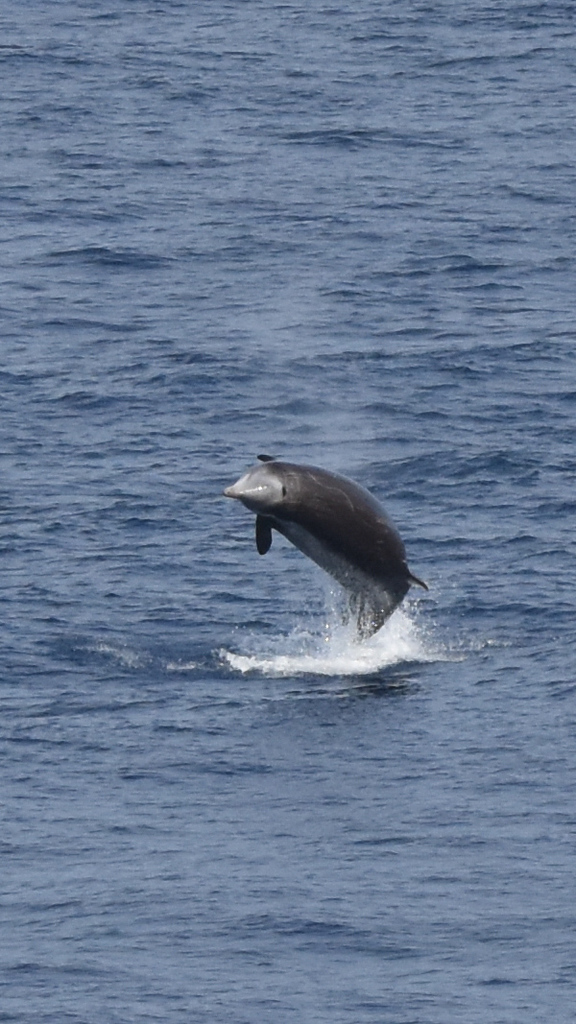
The deepest-diving animal on confirmed record is the Cuvier's Beaked Whale, which reached 2,992 m in a single dive lasting over two hours. Second is the Southern Elephant Seal at 2,388 m. The Emperor Penguin holds the bird record at 535 m. All six record-holders appear in the Kaught catalog.
The open ocean is three-dimensional in a way land never is. Most of what lives in it is not at the surface but somewhere in the 3,800 m of darkness below. These six animals carry the confirmed records for depth, each backed by electronic tracking data from the last three decades of deep-sea research.
All figures are confirmed depths from published research or peer-reviewed tagging studies. Depth record, not average dive. The Kaught catalog rarity tier is included for each entry, built from iNaturalist observation frequency.
1. Cuvier's Beaked Whale
Depth record: 2,992 m
In 2014, a tagged Cuvier's Beaked Whale off the California coast completed a dive that reached 2,992 m and lasted 137 minutes, the deepest and longest confirmed dive by any animal with a backbone. It is not an outlier: this species routinely dives past 1,500 m on every foraging trip.
The secret is silence. Beaked whales use echolocation clicks only near the seafloor, where predators are rare. On the descent and ascent they stay completely quiet, which reduces the risk of attracting killer whales. Their blood carries oxygen at three times the concentration of human blood, and their hearts slow to fewer than 10 beats per minute on the way down.
2. Southern Elephant Seal
Depth record: 2,388 m
A tagged female Southern Elephant Seal reached 2,388 m with blood-oxygen levels so depleted they would render a human unconscious in seconds. Males, which are considerably larger (up to 3,500 kg), almost certainly dive deeper, but the records come from females that are easier to instrument on the breeding beaches of South Georgia.
These seals spend roughly 90 percent of their ocean time underwater. They dive nearly continuously, surfacing for as little as two minutes between dives, and rest on the surface only when they must. A typical foraging trip lasts 20 hours of diving per day, for months.
3. Sperm Whale
Depth record: ~2,250 m (reliably confirmed)
The Sperm Whale is the largest toothed animal alive and the producer of the ocean's loudest sound, clicking at up to 230 decibels in water to echolocate at extreme depth. Its regular hunting dives push past 1,000 m in pursuit of giant squid; the deepest reliably tracked dive is approximately 2,250 m, though acoustic evidence suggests individuals explore even deeper.
The square spermaceti organ filling most of the forehead is not just a sound projector: its waxy contents change phase from liquid to solid as the whale descends into cold water, altering the whale's buoyancy and helping it sink without muscular effort. See our article on the loudest animals in the world for more on the sperm whale's extraordinary sound production.
4. Leatherback Sea Turtle
Depth record: 1,280 m
Every other sea turtle has a rigid bony shell. The Leatherback has a flexible carapace made of cartilage and connective tissue, reinforced by thousands of tiny bone fragments rather than solid plates. This matters at depth: a rigid air space would collapse catastrophically under pressure, but the leatherback's body simply compresses, like a squeeze toy, and re-expands on ascent.
It dives after jellyfish, which congregate at depth during the day before rising toward the surface at night. The leatherback follows that vertical migration, reaching 1,280 m in tagged individuals. It is the most widely distributed reptile on Earth, found in waters from subarctic Norway to the tropics.
5. Weddell Seal
Depth record: ~600 m
The Weddell Seal is the world's most southerly mammal, spending its entire life within and beneath the permanent Antarctic sea ice. It dives under the ice to hunt notothenioid fish and squid, navigating back to the same breathing hole in pitch-black water using echolocation clicks, a behaviour almost unique among seals.
Dives regularly reach 400 to 600 m and last up to 80 minutes. The seal gnaws and maintains its breathing holes through winter sea ice using its teeth, which wear down significantly over a lifetime of ice maintenance.
6. Emperor Penguin
Depth record: 535 m
No bird on Earth dives as deep or holds its breath as long. A single Emperor Penguin dive can exceed 535 m and last over 20 minutes. At the bottom of the dive, the bird's blood oxygen reaches near zero: it is working almost entirely on the oxygen stored in its muscles (myoglobin), which is present at five times the density of a human athlete's.
The Emperor Penguin's bones are denser than those of flying birds, providing ballast rather than buoyancy. Its air sacs compress on descent to prevent the buoyancy that would push a lighter-boned animal back to the surface. When it surfaces after a record dive, it typically rests for under two minutes before going again.
The Narwhal also deserves mention: it reaches around 1,500 m on deep ice-diving forays. For a full guide to the Narwhal, see our narwhal article. For the ocean's apex predators, see our orca guide.
What all six have in common
Three biological traits make extreme depth possible across all six:
- High-capacity oxygen stores. Haemoglobin and myoglobin concentrations far above human norms. Deep divers carry between two and five times as much oxygen per kilogram as we do.
- Collapsible gas spaces. Lungs, air sacs and rib cages that compress under pressure without rupturing, rather than holding rigid air pockets that would implode.
- Extreme bradycardia. Heart rate slows to 10 to 20 percent of resting rate on descent, cutting oxygen consumption and extending the available supply.
For the animals that hold the speed records rather than depth records, see our fastest animals in the world guide. For raw power, see the strongest animals in the world ranking.
Deepest-diving animals: frequently asked questions
What is the deepest-diving animal in the world?
Cuvier's Beaked Whale, confirmed at 2,992 m in 2014. It spent over two hours underwater, using echolocation only near the seafloor to avoid drawing predators, and carries blood oxygen at three times human concentration.
How deep can a sperm whale dive?
Sperm whales regularly hunt at 1,000 to 2,000 m. The deepest reliably tracked dive is approximately 2,250 m. They click at up to 230 dB in water to echolocate squid at extreme depth, and spermaceti wax in the forehead shifts phase on descent to help the whale sink without muscular effort.
How deep can an Emperor Penguin dive?
The record is 535 m, lasting over 20 minutes. The Emperor Penguin achieves this through dense pressurised bone, collapsible air sacs, and myoglobin stores five times denser than a human athlete's. It surfaces for under two minutes between record dives.
How do deep-diving animals survive the pressure?
Collapsible gas spaces that compress without rupturing, very high blood oxygen stores (two to five times human levels), and extreme heart-rate reduction (bradycardia) on descent that cuts oxygen consumption. The combination allows some species to function for over two hours without breathing.
What is the deepest-diving seal?
The Southern Elephant Seal, confirmed at 2,388 m. It stores oxygen in blood at roughly twice human concentration and dives nearly continuously for up to 20 hours per day during months-long ocean foraging trips.
The next thing you see could be
your first catch.
Kaught is live on the App Store and Google Play. Free to start, and your first catch is one photo away.
Free to start · Live on the App Store and Google Play
Species data, type, rarity tier and measurements, is drawn from the Kaught catalog, built on open biodiversity records from GBIF and iNaturalist. Rarity reflects how often a species is observed in the wild, not its conservation status.