
Record holders
Fastest animals in the world: 7 record-holders ranked by speed
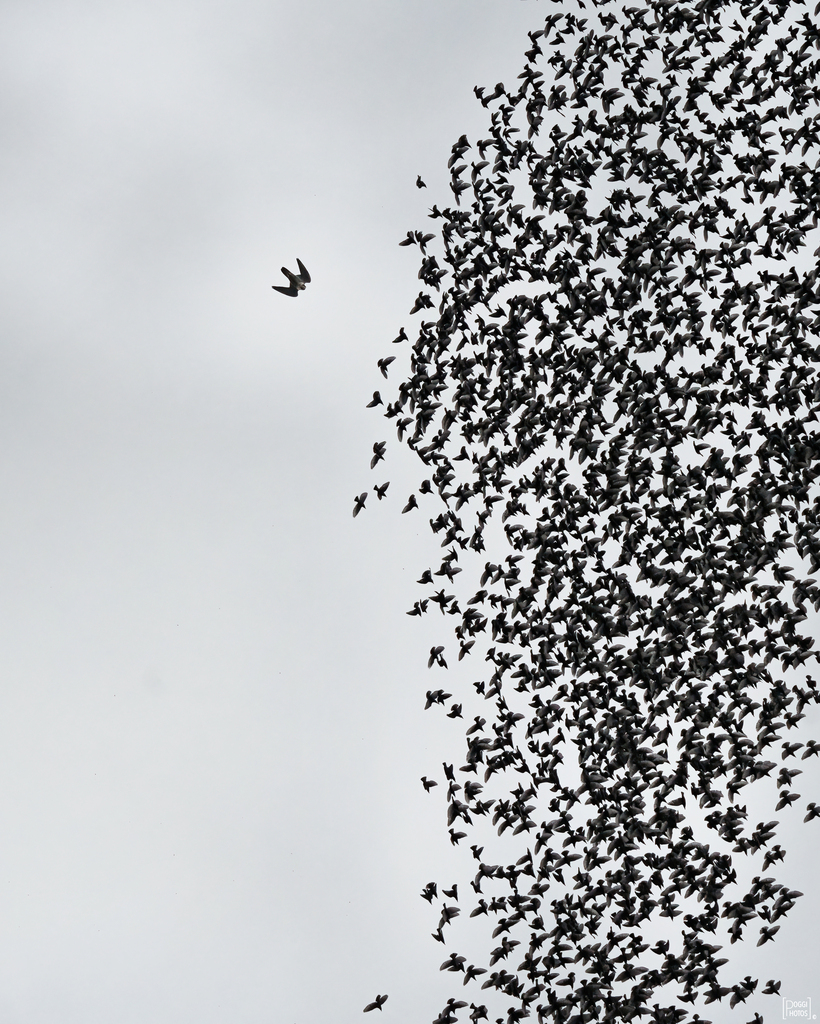
The Peregrine Falcon is the fastest animal on Earth at roughly 389 km/h in a diving stoop. The White-throated Needletail holds the powered-flight record at around 170 km/h. The Cheetah tops land at 120 km/h. The Pronghorn wins sustained speed. The Yellowfin Tuna leads in water. Every entry on this list is a real, catalog-verified species with its rarity tier.
Speed records in the animal world require context. A Peregrine Falcon at 389 km/h is in a dive assisted by gravity. A Cheetah at 120 km/h is sprinting for under a minute before overheating. A Pronghorn at 88 km/h can hold that pace for kilometres. Each of the seven animals below holds a genuine record in its category, from the air to the water to the open plain. All appear in the Kaught catalog with their observation-derived rarity tier.
1. Peregrine Falcon, 389 km/h
The fastest measured speed of any animal belongs to the Peregrine Falcon. During a stoop, the hunting dive in which the bird folds its wings and drops on a target from height, it reaches approximately 389 km/h. This figure comes from data loggers attached to trained falcons, not estimates.
The stoop is not pure freefall. The falcon maintains precise control throughout, adjusting its angle and tracking a moving target. To prevent the airstream from damaging its lungs at these speeds, it has nasal tubercles inside each nostril that baffle incoming air and reduce pressure. The impact on prey at the bottom of a stoop is delivered by the clenched foot, not the beak, and is often lethal immediately.
Peregrines are found on every continent except Antarctica and nest on cliffs, quarry faces, and city buildings. In the Kaught catalog they are Common, one diamond. Despite the extraordinary capability, seeing one at close range is genuinely common in urban areas where they breed on tall structures.
2. White-throated Needletail, ~170 km/h
Remove gravity from the equation and the White-throated Needletail takes the title. Recorded at speeds exceeding 170 km/h in horizontal powered flight, it is the fastest bird moving under muscle power alone, without a dive to assist.
It is a swift, the largest of the family Apodidae, and it rarely if ever lands voluntarily outside of its nesting site. It feeds, drinks, and apparently even sleeps in flight, crossing from Siberian breeding grounds to Australia each winter over thousands of kilometres. In the Kaught catalog it sits at Legendary, four diamonds: very rarely observed in any fixed location because it never stops moving.
3. Golden Eagle, ~240 km/h (stoop)
The Golden Eagle is the largest and one of the fastest raptors in the Northern Hemisphere. In a full stoop, tracking prey such as a hare or grouse, it reaches around 240 km/h, somewhat slower than the Peregrine but from a much larger and heavier body. Its vision is roughly eight times sharper than a human's and it can spot a rabbit-sized animal at over 3 kilometres.
Pairs defend the same territory for decades across Scotland, Scandinavia, the Alps, Central Asia and North America. The Kaught catalog rates it Legendary, four diamonds, consistent with its elusive mountain habitat and relatively low observation count despite its large range.
4. Cheetah, 120 km/h
The fastest land animal, and it is not a close contest. A cheetah accelerates from a standing start to 100 km/h in around three seconds, faster than most production sports cars. Top speed is approximately 120 km/h. Its semi-retractable claws grip the ground like running spikes, and its flexible spine compresses and extends like a spring with each stride, lengthening the effective reach of its legs.
The sprint is short. A cheetah runs hot: after a chase of more than 400 to 500 metres it must stop and rest to let its core temperature fall before it can eat, or another predator will steal the kill. It is a Legendary-tier species in the catalog, reflecting its restricted range across sub-Saharan Africa and very low observation density per unit of habitat.
5. Pronghorn, 88 km/h sustained
The Pronghorn is not the single fastest land animal, but it is the best-sustained fast runner alive. It can hold 88 km/h over several kilometres, a feat the cheetah cannot match by a long way. Its windpipe, heart and lungs are proportionally much larger than those of other animals its size, giving it an enormous aerobic capacity.
Biologists believe this stamina evolved to escape Pleistocene-era predators in North America, including a now-extinct cheetah-like cat. The pronghorn has outlasted its predators and now runs fast in a landscape that no longer requires it to. Common in the Kaught catalog, one diamond: pronghorn herds in the American West are large and frequently observed.
6. Yellowfin Tuna, ~74 km/h
In water, the speed hierarchy changes entirely. The Yellowfin Tuna reaches burst speeds of approximately 74 km/h, among the fastest of any bony fish. Its body is a near-perfect torpedo: a crescent-shaped lunate tail generates thrust with minimal drag, and it is one of the few fish classified as warm-blooded. Elevated muscle temperature sustains the power output required for high-speed pursuit.
The tuna is constantly moving: it must swim to ventilate its gills. It ranges across tropical and subtropical oceans worldwide, forming large schools near the surface and pursuing prey fish and squid. Common in the catalog, one diamond, reflecting abundant ocean populations and frequent observation records.
7. Golden-ringed Dragonfly, ~50 km/h
Insects are not usually thought of as speed record-holders, but dragonflies are exceptional. The Golden-ringed Dragonfly, Britain's longest dragonfly at around 7.4 cm body length, is reliably recorded at speeds close to 50 km/h in pursuit of prey. Its four independently controlled wings can beat in different planes simultaneously, allowing it to accelerate, brake, hover and reverse in ways no vertebrate can match in flight.
It is a predator of other large insects, including bumblebees and smaller dragonflies, and its larvae develop in stream gravels for up to five years before emerging. Common in the catalog, one diamond: it is widely distributed across European upland streams and actively observed throughout summer.
What actually determines animal speed?
The fastest animals in each medium share some structural solutions: powerful muscles attached to long limb bones or tails, a streamlined body profile, and some form of heat management (the cheetah must stop; the tuna keeps warm). But the numbers are environment-dependent. A Peregrine's 389 km/h requires altitude and gravity. Strip those away and it is a 70 km/h bird. A Cheetah's 120 km/h is sustainable for roughly 30 seconds. The Pronghorn at 88 km/h for kilometres may be a more demanding biological achievement than the cheetah's peak.
For the full strength picture, the strongest animals list applies the same approach to raw power records.
Fastest animals: frequently asked questions
What is the fastest animal in the world?
The Peregrine Falcon (Falco peregrinus) at approximately 389 km/h in a hunting stoop. This is a measured figure from data loggers on trained falcons, not an estimate. It remains the highest verified speed of any animal.
What is the fastest bird in level flight?
The White-throated Needletail (Hirundapus caudacutus), exceeding 170 km/h in horizontal powered flight. Unlike the Peregrine's dive, this is achieved through muscle power without gravity assisting, making it the more demanding biological achievement.
What is the fastest land animal?
The Cheetah, reaching 120 km/h over short distances. For sustained speed, the Pronghorn of North America holds 88 km/h over several kilometres, far longer than a cheetah can maintain a sprint before overheating.
What is the fastest fish?
The Yellowfin Tuna is among the fastest verified, at approximately 74 km/h in bursts. Its warm-blooded physiology and lunate tail design minimise drag and support sustained high-speed swimming.
Why is the Peregrine Falcon so fast?
The stoop combines wing shape, body density and a steep gravity-assisted angle. Special nasal tubercles baffle the airflow and protect the lungs from pressure damage at high speed. The falcon also maintains full control and target-tracking through the descent.
What is the fastest insect?
The Golden-ringed Dragonfly is the fastest reliably recorded in Britain at around 50 km/h. Its four independently controlled wings give unmatched aerobatic capability, including the ability to hover, reverse and accelerate from a standing start.
The next thing you see could be
your first catch.
Kaught is live on the App Store and Google Play. Free to start, and your first catch is one photo away.
Free to start · Live on the App Store and Google Play
Species data, type, rarity tier and measurements, is drawn from the Kaught catalog, built on open biodiversity records from GBIF and iNaturalist. Rarity reflects how often a species is observed in the wild, not its conservation status.