
Exotic spotlight
Gaboon Viper: the African snake with the longest fangs and the most patient ambush on Earth
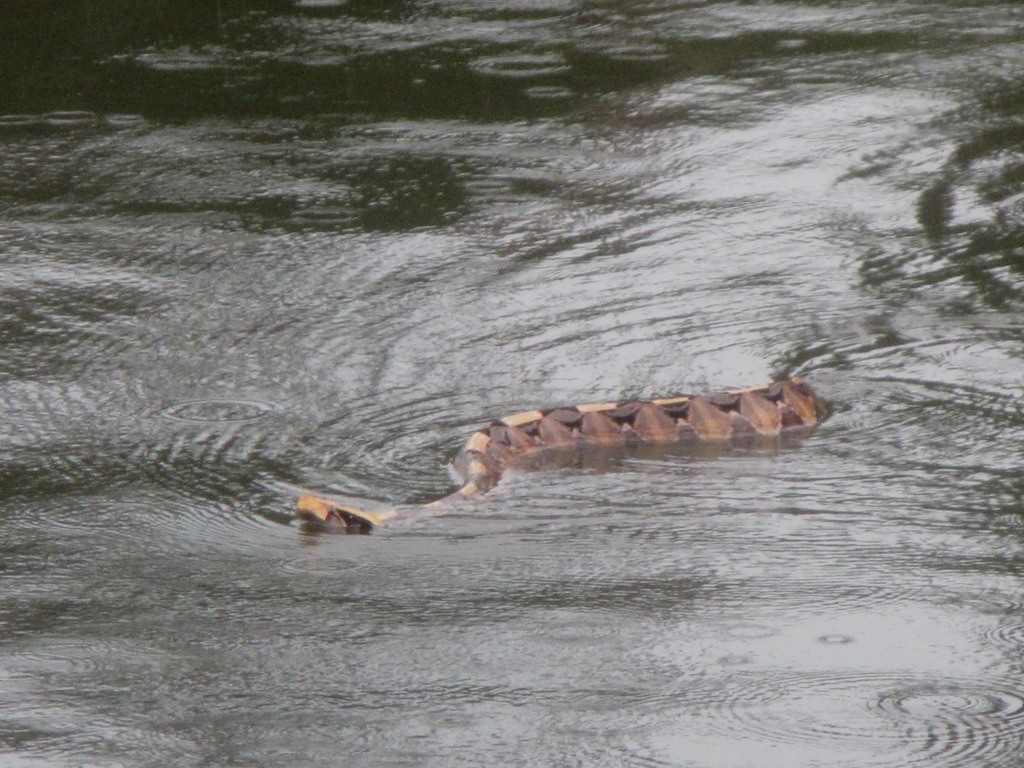
The Gaboon Viper (Bitis gabonica) is Africa's heaviest viper, found in the rainforests of Central and West Africa. It has fangs up to 5 cm long (the longest of any venomous snake) and delivers more venom per bite than any other snake species. It is exceptionally docile, sitting motionless for days in perfect camouflage, striking only when directly disturbed.
Somewhere on a patch of forest floor in Cameroon or the Democratic Republic of the Congo, a snake is lying completely still. It arrived at that exact spot sometime last week. It has not moved since. It does not need to. Everything it needs will walk past eventually.
The Gaboon Viper is built around patience, camouflage and one explosive moment of lethal precision. Understanding each of those three elements explains why it carries equipment that looks extravagant for an animal that rarely uses it.
How to identify a Gaboon Viper
The pattern is striking in photographs, invisible in the field. A geometric mosaic of rectangles and triangles in brown, black, cream and pale purple, arranged in perfect bilateral symmetry along the body. This is not coincidence: the pattern matches the random, irregular geometry of dead leaves on a forest floor so precisely that researchers standing within a metre of a coiled specimen have walked straight past it.
Additional field marks:
- Head: very broad and flat, almost triangular, with two small horns at the tip of the snout, unique to this species among African vipers.
- Body: extremely heavy-set for a snake of its length, up to 8 kg in large females, which makes it the heaviest viper in Africa.
- Eyes: vertical pupils set in a patterned head, nearly invisible until the snake's outline is resolved.
- Scale texture: strongly keeled scales that break up the outline and prevent specular reflection (the bright glint that gives most snakes away in sunlight).
The fangs: the longest of any venomous snake
When a Gaboon Viper opens its mouth, two white objects unfold from the roof of the upper jaw. At full extension, these solenoglyphous (hollow, folding) fangs reach up to 5 cm in large adults, the longest fangs of any venomous snake species on Earth. They fold flat against the palate when the mouth is closed, rotating 90 degrees on a hinged maxilla to lie alongside the roof of the mouth, and erect to strike position only in the final milliseconds of a strike.
Long fangs serve a specific purpose: depth of penetration. Most of the snake's preferred prey, medium to large mammals and ground-nesting birds, have thick fur, feathers, muscle and fat between the skin surface and the vessels where venom has maximum effect. Five centimetres of fang reach those vessels reliably where shorter fangs would not.
Venom: quantity over toxicity
The Gaboon Viper is not the most toxic snake per milligram of venom: the inland taipan, black mamba and forest cobra have higher per-milligram lethality. What distinguishes the Gaboon Viper is volume. A single defensive bite delivers up to 9.7 ml of venom, the largest yield per strike recorded for any snake species. This is partly a consequence of the enormous paired venom glands, which run well back into the neck and account for much of the snake's characteristic head width.
The venom is primarily hemotoxic and cytotoxic: it attacks the blood coagulation system and destroys tissue locally at the bite site. A serious untreated bite causes uncontrolled internal bleeding, massive swelling, and tissue necrosis over a wide area. Antivenom is available and effective when administered promptly.
Despite this arsenal, the Gaboon Viper almost never bites people. It is exceptionally docile. When disturbed, it typically hisses and inflates the body rather than striking. The majority of bites on record occurred when someone stepped directly on an invisible snake in the dark.
The hunting strategy: absolute patience
The Gaboon Viper is a completely passive ambush predator. It does not pursue prey, does not actively search for it, and does not shift position to intercept movement. It finds a spot on a game trail or at the edge of a clearing, coils, and waits. Waiting periods of several weeks in the same position have been recorded. The snake feeds perhaps once a month.
When prey walks within range, the strike is fast enough to be practically invisible, roughly 0.25 seconds from trigger to full extension. The fangs puncture the prey, the full dose of venom is delivered, and the snake immediately releases, stepping back. It does not hold on. It waits a few minutes and follows the scent trail of the dying animal to its body.
Where to find one (if you want to)
The Gaboon Viper lives in lowland and montane rainforest, gallery forest and moist savanna woodland across a wide band of Central and West Africa: Guinea, Sierra Leone, Liberia, Ghana, Nigeria, Cameroon, Gabon, DRC, Uganda, Tanzania. Within that range, it favours undisturbed primary forest with deep leaf litter on the floor.
The Epic tier in the Kaught catalog reflects genuine rarity of encounter: only 309 iNaturalist observations exist for a species with a large range. The reason is the camouflage. This snake is seen when it chooses to be visible, or when someone nearly stands on it.
For Africa's other large ambush predators, see our guide to the Nile Crocodile. For the world's most venomous animals ranked, see our most venomous animals guide. For the African species behind the most snakebite deaths, see the deadliest snakes in the world. For another Central African rainforest heavyweight, see the Water Monitor Lizard.
Gaboon Viper: frequently asked questions
What is the Gaboon Viper?
Africa's heaviest viper, found in Central and West African rainforests. It holds two records: longest fangs of any venomous snake (up to 5 cm) and largest venom yield per bite (up to 9.7 ml). Despite its equipment, it is docile and rarely strikes unless directly disturbed.
How long are Gaboon Viper fangs?
Up to 5 cm, the longest of any venomous snake. They fold flat against the roof of the mouth and erect only at the moment of the strike. Long fangs allow deep penetration through thick fur and muscle to reach blood vessels reliably.
Is the Gaboon Viper the most venomous snake in Africa?
It has the largest venom volume per bite of any African snake (up to 9.7 ml), but not the highest potency per milligram. The Forest Cobra and Black Mamba have more toxic venom per milligram. The Gaboon Viper's danger comes from volume: it injects far more venom per bite than other species.
Is the Gaboon Viper aggressive?
No. It is unusually docile. It relies on camouflage rather than threat, and most bites in the wild occur when people accidentally stand on a snake they cannot see. When threatened, it typically hisses and inflates its body first.
Where does the Gaboon Viper live?
Lowland and montane rainforest floors in Central and West Africa: from Guinea and Sierra Leone east through the DRC to Tanzania. It prefers primary forest with deep leaf litter, where its geometric camouflage pattern makes it nearly invisible.
How is the Gaboon Viper rated in Kaught?
Epic tier, three diamonds. Despite a large range across Central and West Africa, only 309 iNaturalist observations exist, reflecting how rarely this species is spotted in the wild. Its camouflage is the reason: it is seen when it chooses to be, or when accidentally found.
The next thing you see could be
your first catch.
Kaught is live on the App Store and Google Play. Free to start, and your first catch is one photo away.
Free to start · Live on the App Store and Google Play
Species data, type, rarity tier and measurements, is drawn from the Kaught catalog, built on open biodiversity records from GBIF and iNaturalist. Rarity reflects how often a species is observed in the wild, not its conservation status.