
Record holders
Best Hearing in the Animal Kingdom: 6 Ranked
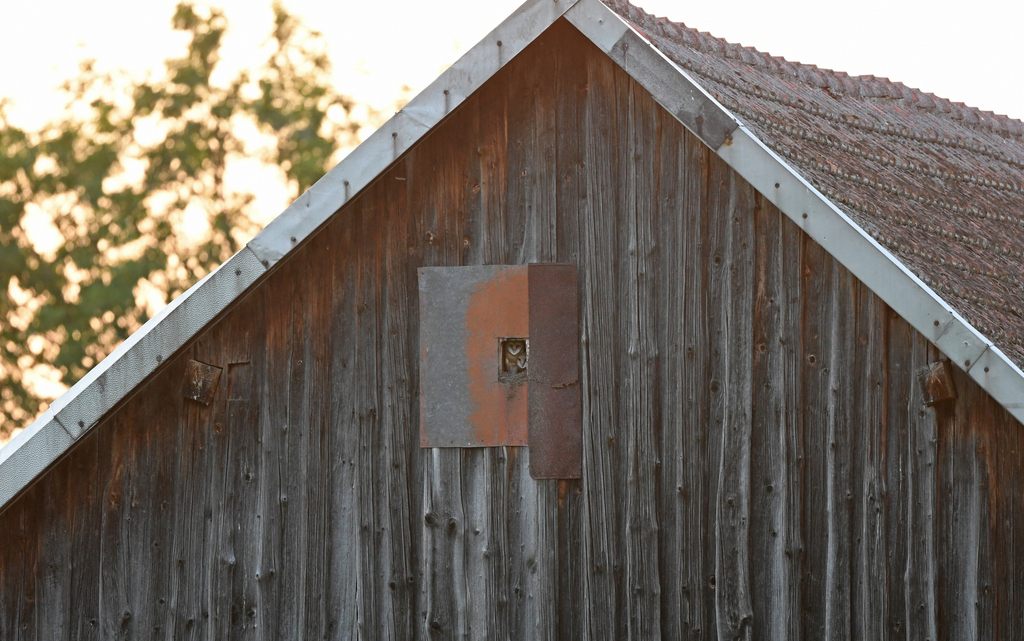
No single winner: a Western Barn Owl locates prey to within one degree of hearing alone in total darkness, an African Savanna Elephant hears rumbles from ten kilometres away, and a humble Atlantic Menhaden can hear a hunting dolphin's sonar coming. Six real hearing records, ranked.
Smell and eyesight both resolve to something measurable on a shared scale, kilometres, receptor counts. Hearing is stranger: the same basic sense splits into completely different specialties depending on what an animal needs to survive. One species needs pinpoint accuracy, another needs enormous range, another needs to tune out everything except one narrow frequency. Line up the real record-holders and there is no single "best," just six different, genuinely extraordinary solutions to the same problem: turning sound into information fast enough to matter. Every animal below is in the Kaught catalog with its observation-derived rarity tier.
1. Western Barn Owl, the most accurate sound localization ever measured
A barn owl hunts almost entirely by ear, and it does it in conditions where sight is useless: a pitch-black barn, a field under heavy cloud, the dead of night. Classic experiments first run in the 1970s showed an owl can strike a scurrying mouse it never saw at all, guided purely by the sound of its footsteps and rustling. What makes that possible is a piece of genuinely strange anatomy: the owl's left ear opening sits slightly higher on its skull than the right. That tiny asymmetry means a sound reaches each ear at a subtly different time and volume depending on its exact height as well as its direction, and the owl's brain resolves the difference into a location accurate to within roughly one degree, in both the horizontal and vertical plane. No other animal tested, including humans, localizes sound that precisely.
The heart-shaped facial disc does the collecting: stiff, sound-reflective feathers form a dish that funnels noise toward those mismatched ears, the same principle as a satellite dish aimed by feathers instead of a motor. Epic in the catalog, three diamonds: it is widespread across open country on five continents, but strictly nocturnal and easy to miss unless you know to check a barn rafter or a hollow tree at dusk.
2. African Savanna Elephant, calls that carry ten kilometres through the ground
Where the barn owl's record is precision, the elephant's is range. Elephants communicate with deep, rumbling calls in the roughly 14 to 35 Hz band, well below the lower edge of human hearing at about 20 Hz. In cool, still air, the kind that settles over a savanna at dawn or dusk, those infrasonic rumbles can travel an estimated ten kilometres before fading below the noise floor, letting scattered family groups coordinate movement and warn of danger across a landscape too vast to cross in time otherwise.
The signal does not stop at the air. Part of each rumble's energy also travels as a seismic wave through the ground itself, and elephants appear to pick that up too, through dense fatty pads in their feet and sensitive tissue in the trunk tip pressed to the earth. It gives a herd two overlapping channels for the same message, air and ground, doubling the odds a distant relative hears the warning in time. Epic in the catalog, three diamonds, reflecting how much of that ten-kilometre range runs through country where an elephant is genuinely hard to approach.
3. Common Bottlenose Dolphin, hearing up to eight times higher than a human
Human hearing tops out around 20 kHz. A bottlenose dolphin hears tones up to roughly 150 to 160 kHz, with its sharpest sensitivity concentrated between 40 and 100 kHz, a range built to serve its own biosonar. The dolphin's echolocation clicks peak in almost exactly that same band, broadband bursts loud enough to bounce off a fish thirty metres away and return an echo the dolphin can parse in microseconds.
Sound in water travels roughly four times faster than in air, and a dolphin's jaw, packed with fat channels, conducts the returning echo straight to the inner ear rather than relying on an external opening at all. Paired with a fatty "melon" that focuses the outgoing click into a tight beam, the result is a working sonar system precise enough to distinguish a coin-sized object from a similarly shaped decoy at several metres, entirely by sound, underwater, in the dark. Common in the catalog, one diamond, it ranges through coastal and open ocean on every temperate and tropical coastline.
4. Greater Horseshoe Bat, hearing tuned to a single frequency like a zoom lens
Most bats sweep across a broad range of frequencies as they echolocate. A greater horseshoe bat does the opposite: it emits a long, steady call locked to almost exactly 83 kHz, and a disproportionate share of its auditory neurons, researchers call the cluster an "acoustic fovea", are tuned to a narrow window just above that, around 83.0 to 84.5 kHz. It is the auditory equivalent of a telephoto lens fixed on one exact distance.
The problem with staying fixed on one frequency is that flight itself shifts the pitch of a returning echo, the same Doppler effect that changes a passing siren's tone. So the bat constantly retunes its own outgoing call, lowering or raising the pitch it sends out to cancel that shift and keep the echo landing precisely inside its narrow zone of peak sensitivity. The payoff is the ability to detect something almost nothing else can: the faint, rhythmic flutter of a moth's or beetle's wingbeats folded into the returning echo, even against cluttered foliage. Common in the catalog, one diamond, roosting communally in caves, tunnels and old stone buildings.
5. Sable, hunting prey it can neither see nor smell
The other five records on this list are about frequency, range or precision measured in a lab. The sable's is purely functional: in the depths of a Siberian winter, with the forest floor buried under snow and every scent locked beneath a frozen crust, a sable can still hear a vole or other small rodent moving under as much as 30 cm of packed snow, and strike through the drift to catch it.
That is hearing doing a job sight and smell cannot, working through a physical barrier that would defeat most predators outright. It is also why the sable stays one of the hardest wild mammals on Earth to actually see: it is a solitary, crepuscular hunter across a vast, thinly populated boreal range, and it is doing most of its hunting under conditions built to keep every other sense blind. Legendary in the catalog, four diamonds, exactly as rare as that description suggests.
6. Atlantic Menhaden, a fish that can hear a dolphin's sonar coming
Fish hearing has a reputation for being unremarkable, and for most species that reputation is fair: typical fish hearing tops out somewhere around 1 to 4 kHz. The Atlantic menhaden's own herring group breaks that rule dramatically. It belongs to Alosinae, a subfamily of herrings that includes the American shad, whose hearing has been measured detecting ultrasound up to 180 kHz, a range that overlaps directly with the echolocation clicks of a hunting dolphin.
The mechanism is a specialised bony extension called the auditory bulla, a direct physical link between the inner ear and the gas-filled swim bladder that turns the whole bladder into an eardrum for ultrasonic frequencies. Most researchers read it as an early-warning system evolved specifically against echolocating predators: a menhaden that can hear a dolphin's sonar approaching gets a head start no ordinary fish ear would provide. Common in the catalog, one diamond, moving through Atlantic coastal waters in the dense schools that make it one of the most important forage fish on the eastern seaboard.
Why "best hearing" depends on the job
Set these six records side by side and the pattern is the same one that shows up every time a sense gets pushed to its limit: there is no abstract maximum, only whatever solves the actual problem in front of the animal. The barn owl needs to strike accurately at prey it cannot see at all. The elephant needs to reach family members it cannot see either, just much farther away. The dolphin needs a full sonar system for a medium where light barely travels. The horseshoe bat needs to isolate one signal from acoustic clutter. The sable needs to punch hearing straight through a barrier that blinds every other sense. The menhaden needs an early warning against a predator that hunts with sound instead of sight.
The same pattern runs through the best eyesight in the animal kingdom ranking, where the record depends on light and distance rather than sound, and the best sense of smell ranking that covers the third of the animal kingdom's headline senses. For more on how two of this list's specialists turn sound into a working sonar system, see the how bats echolocate and how barn owls hunt in darkness guides, and for a broader tour of extreme senses beyond hearing alone, the animals with extreme senses roundup.
Best hearing: frequently asked questions
What animal has the best hearing in the animal kingdom?
There is no single winner. A barn owl localizes sound to within about one degree in total darkness, the most accurate of any animal tested. An African savanna elephant detects infrasound rumbles from roughly ten kilometres away. A bottlenose dolphin hears frequencies up to eight times higher than a human. Each solves a different hearing problem.
How accurate is a barn owl's hearing?
A barn owl can pinpoint a sound source to within about one degree in both the horizontal and vertical plane, accurate enough to strike a mouse it cannot see at all. Its left ear sits slightly higher than its right, and that small asymmetry is what lets its brain triangulate a sound's exact height as well as its direction.
How far away can an elephant hear another elephant?
African savanna elephants communicate with rumbling calls between about 14 and 35 Hz, far below human hearing. In cool, still air, typically at dawn or dusk, those calls can carry roughly ten kilometres. Elephants also detect the vibrations through the ground using sensitive receptors in their feet and trunk.
Can fish really hear ultrasound?
Most fish cannot; typical fish hearing tops out around 1 to 4 kHz. But herrings in the Alosinae group, close relatives of the Atlantic menhaden, detect ultrasound up to 180 kHz through a unique link between the inner ear and swim bladder, likely evolved to hear an echolocating dolphin approaching.
How does a horseshoe bat's hearing differ from other bats?
A greater horseshoe bat tunes its hearing to an extremely narrow band around 83 kHz, called an acoustic fovea, and constantly adjusts its own call pitch to compensate for Doppler shift as it flies. That precision lets it detect the faint wingbeat flutter of a moth in the returning echo.
Why can a sable hunt prey it cannot see or smell?
A sable's hearing is sensitive enough to detect a vole or other small rodent moving under as much as 30 cm of packed snow. In the depths of a Siberian winter, when sight and scent are blocked by snow cover, hearing becomes the only sense that still works.
The next thing you hear could be
your first catch.
Kaught is live on the App Store and Google Play. Free to start, and your first catch is one photo away.
Free to start · Live on the App Store and Google Play
Species data, type, rarity tier and measurements, is drawn from the Kaught catalog, built on open biodiversity records from GBIF and iNaturalist. Rarity reflects how often a species is observed in the wild, not its conservation status.