
Seasonal
Woolly Bear Caterpillar: the Bug That "Predicts" Winter by Freezing Solid
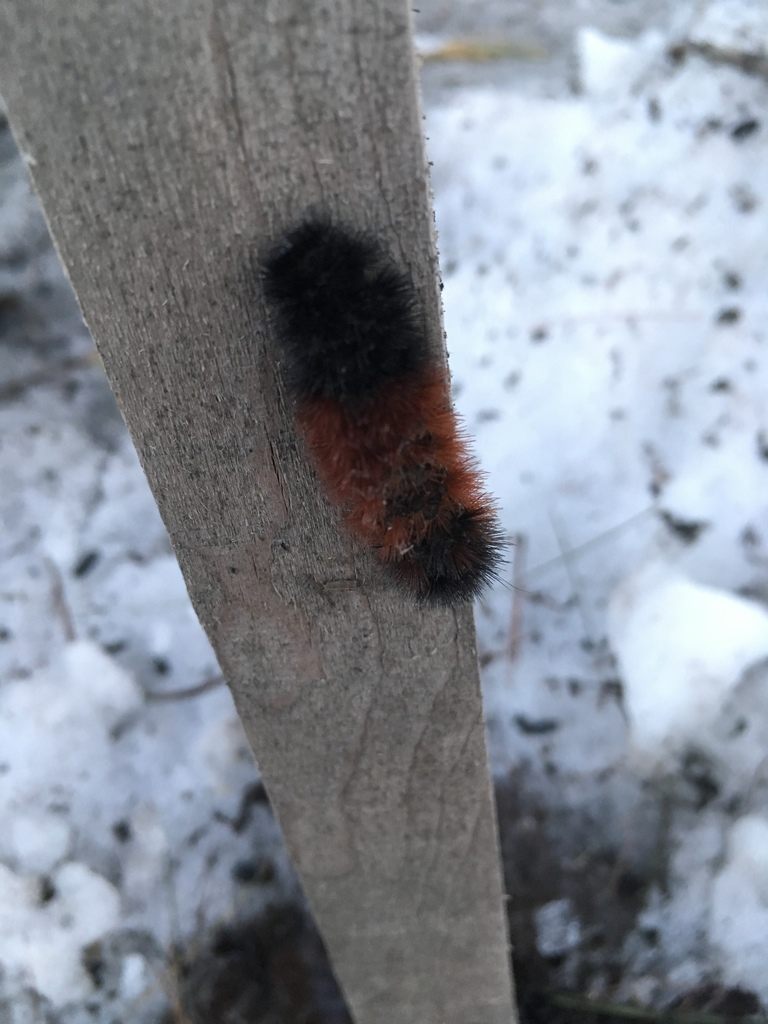
The woolly bear caterpillar (Pyrrharctia isabella), larva of the Isabella tiger moth, cannot predict winter. That folklore rests on a single small 1948 study; its rust-orange band actually reflects the caterpillar's age, not the future. What it really does is stranger: it survives winter by freezing solid, protected by its own antifreeze.
Every autumn, the same fuzzy black-and-orange caterpillar shows up crossing driveways, trails and porches across the United States and Canada, and every autumn, someone asks the same question: does its banding really tell you how bad the coming winter will be? The honest answer is no. But the true story of how a woolly bear caterpillar gets through winter is a better one than the myth.
What is a woolly bear caterpillar?
The woolly bear is the larval stage of the Isabella tiger moth, a common, harmless moth found almost anywhere plants grow in North America. The caterpillar itself is unmistakable: a dense coat of stiff bristles running the length of its 13-segment body, black at the head and tail with a band of rust-orange across the middle. The exact split between black and orange shifts as the caterpillar grows and moults, so two woolly bears hatched from the same egg batch can look noticeably different.
By late summer it has finished feeding on low plants like plantain, dandelion, clover and grasses, and by early autumn it is on the move, no longer eating, just searching for somewhere to spend the winter.
Does the woolly bear caterpillar really predict winter?
This is the question that made the woolly bear famous, and the answer is no, at least not in the way the folklore claims. The idea says a narrow orange band means a harsh winter ahead, a wide band means a mild one. It traces back to 1948, when Dr. C. H. Curran, an entomologist at the American Museum of Natural History, measured the bands on just 15 caterpillars at Bear Mountain, New York, and compared them to that year's weather. A newspaper picked up the story, and the "forecast" became an annual tradition, festivals included.
No controlled study since has found a real link between band width and the severity of the winter that follows. What band width does correlate with is the caterpillar's own recent past: older caterpillars that have moulted more times tend to show a wider orange band, and the amount of moisture and food available during the growing season affects how far along a given caterpillar is by autumn. In other words, the band is a record of the summer just gone, not a forecast of the winter still to come.
How does a woolly bear caterpillar survive freezing solid?
Here is the part that is genuinely remarkable. Rather than avoiding the cold, the woolly bear caterpillar lets most of its body freeze. As temperatures drop in autumn, it produces large amounts of glycerol, a natural antifreeze compound, inside its tissues. When ice does form in the body, the glycerol keeps it confined to the spaces between cells rather than inside them, which is what would otherwise shred cell membranes and kill the animal.
The freeze happens in a set order: the heart stops first, then the gut, then the blood, and finally the rest of the body solidifies. Woolly bears have been recorded surviving temperatures as low as -90°F in this state, occasionally overwintering literally frozen inside a block of ice, then thawing out again as temperatures rise in spring with no lasting harm.
It is not the only insect that pulls off this trick, but it is one of the best studied, and it explains why the caterpillar does not bother burrowing deep underground: it does not need to escape the cold, it has simply stopped needing to.
Where and when to find a woolly bear caterpillar
Woolly bears turn up across almost the entire United States and Canada, in gardens, meadows, roadside verges and woodland edges, anywhere their food plants grow. The best time to spot one is exactly now, September and October, when well-fed larvae abandon their feeding plants and go looking for shelter, tucking themselves under loose bark, inside log piles or deep into leaf litter. That search is why so many appear crossing open ground, trails and roads all at once in early autumn: they are not migrating anywhere in particular, just hunting for a hiding place before the freeze sets in.
From caterpillar to moth: the woolly bear's life cycle
Once spring arrives and the caterpillar thaws, it feeds again only briefly before spinning a loose cocoon and pupating. It emerges as the adult Isabella tiger moth: dull yellowish-orange, with small black spots lining each segment of the abdomen and a wingspan of roughly 4 to 5 cm. The adult moth does not feed; its only job is to mate and lay eggs, often more than a hundred in a batch. In the southern part of its range there is time for a second generation to hatch, feed and grow before autumn arrives again, while further north there is only one generation a year, and it is that generation's larvae that overwinter as the caterpillars everyone recognises.
Is a woolly bear caterpillar dangerous to touch?
No. The bristly hairs, called setae, are not connected to venom glands and cannot sting or bite. In people with sensitive skin they can cause mild, short-lived irritation similar to a brush against fibreglass insulation, simply from the stiff hair tips, but there is no toxin involved. It is entirely safe to gently pick one up to look at it, though it is polite to put it back roughly where you found it so it can carry on its search for a winter shelter.
How rare is the woolly bear caterpillar in Kaught?
In the Kaught catalog it sits at the Common tier, one diamond out of four. That is a statement about how often the species is actually recorded, not about its status. Woolly bears are widespread, active in daylight, and unusually easy to see precisely because autumn sends them wandering across open ground in search of shelter, which makes confirmed sightings frequent rather than scarce.
Three things you didn't know about the woolly bear caterpillar
- Folklore holds that the caterpillar's 13 body segments correspond to the 13 weeks of winter, a tidy number that has nothing to do with the actual science.
- A distant Arctic relative, the Arctic woolly bear moth, takes freeze tolerance even further: its larvae can spend up to seven years frozen through the short Arctic summers before finally pupating.
- The original 1948 "forecast" was based on such a small sample that Dr. Curran himself treated it as an entertaining publicity exercise for the American Museum of Natural History rather than serious science.
A caterpillar that cannot see the future but can survive being frozen solid is exactly the kind of animal worth a second look next time it crosses your path. Cold survival shows up across the animal kingdom in very different forms: the wolverine relies on frost-resistant fur and huge food caches rather than freezing itself, the European hedgehog escapes the cold through true hibernation instead, and the polar bear depends on layered fat and fur built for Arctic seas. The woolly bear's answer is the strangest of the lot: stop fighting the ice, and let it happen safely.
Woolly bear caterpillar: frequently asked questions
Does the woolly bear caterpillar really predict winter?
No. The idea traces to a single 1948 study of just 15 caterpillars at Bear Mountain, New York. A wide rust-orange band does not forecast the future; it mainly reflects the caterpillar's age and how wet the previous growing season was, both look backward, not forward.
What does a woolly bear caterpillar look like?
A fuzzy caterpillar about 3.8 cm long with 13 body segments: black bristles at both ends and a rust-orange band across the middle. The exact width of that band varies even between siblings hatched from the same egg batch.
How does a woolly bear caterpillar survive freezing solid?
It floods its tissues with glycerol, a natural antifreeze, before winter. As temperatures drop, its heart stops, then its gut, blood and the rest of its body freeze in sequence, with ice forming only between cells. It has been recorded surviving temperatures as low as -90°F, then thawing unharmed in spring.
What does a woolly bear caterpillar turn into?
An Isabella tiger moth: a dull yellowish-orange moth with a roughly 4 to 5 cm wingspan and small black dots lining each abdominal segment. It emerges in spring, mates, lays over 100 eggs, and in warmer regions can produce a second generation before autumn.
Is a woolly bear caterpillar dangerous to touch?
No, but handle it gently. Its bristly hairs (setae) are not venomous, though they can irritate sensitive skin, a little like fine fibreglass. It cannot sting or bite; the worst outcome is mild, short-lived itching.
Why do you see so many woolly bear caterpillars crossing paths in autumn?
In September and October, well-fed larvae leave their food plants and travel, sometimes surprising distances, to find shelter such as loose bark or leaf litter to overwinter in. That search for a hiding spot is what puts so many caterpillars out in the open at once.
Why is the woolly bear caterpillar "Common" in Kaught?
Kaught's rarity tier reflects how often a species is actually recorded, not its conservation status. Woolly bears are widespread, active by day, and highly visible while wandering in autumn, so confirmed sightings are frequent, placing it at the Common tier, one diamond out of four.
The next thing you see could be
your first catch.
Kaught is live on the App Store and Google Play. Free to start, and your first catch is one photo away.
Free to start · Live on the App Store and Google Play
Species data, type, rarity tier and measurements, is drawn from the Kaught catalog, built on open biodiversity records from GBIF and iNaturalist. Rarity reflects how often a species is observed in the wild, not its conservation status.