
Adaptation explainer
Arctic Ground Squirrel Hibernation: the Mammal Whose Blood Gets Colder Than Ice
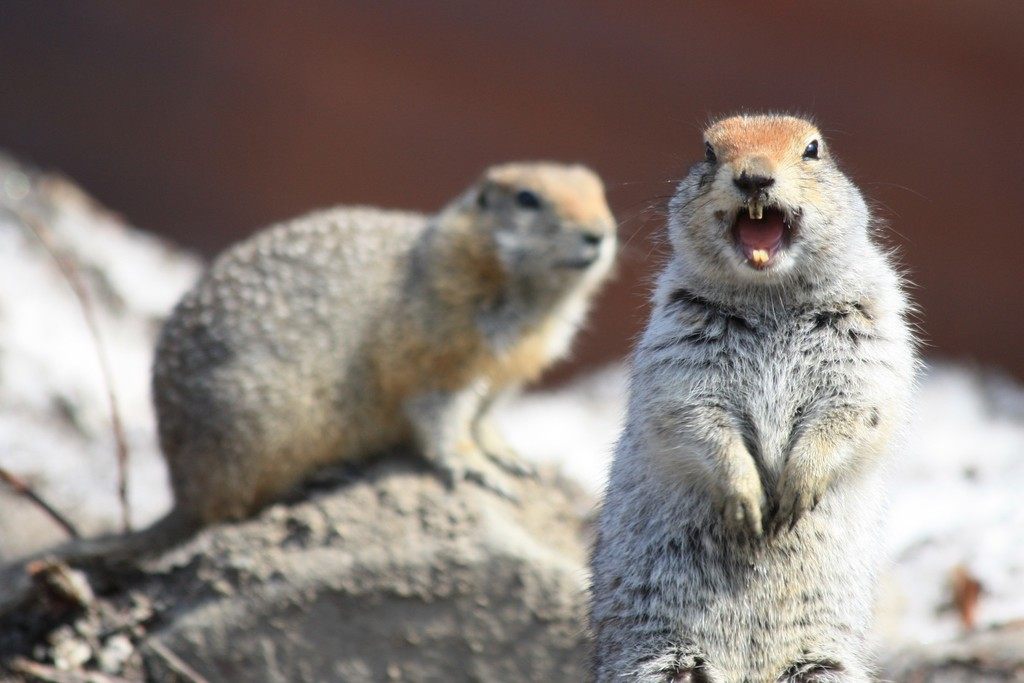
The Arctic ground squirrel (Urocitellus parryii) hibernates up to 8 months a year, letting its core body temperature fall to about -2.9C, the coldest ever recorded in a mammal. Its blood stays liquid through supercooling, and it wakes every few weeks to shiver itself warm again.
Most hibernators get through winter by lowering their body temperature a few degrees and slowing everything down. The Arctic ground squirrel does something stranger: deep in its burrow, below the frost line of Alaska or Siberia, its core temperature drops past the freezing point of water and keeps going, and its blood does not turn to ice. Right now, across the tundra and taiga of the far north, thousands of these animals are several weeks into a hibernation season that will not end until spring. Here is how that works, and why it matters well beyond one small rodent.
How arctic ground squirrels survive winter
An Arctic ground squirrel spends the short northern summer eating almost constantly, packing on fat until it may weigh nearly twice its spring body weight. By late summer or early autumn, it retreats into a burrow dug into a well-drained mound or riverbank, plugs the entrance, and settles into a hibernation season that can run 7 to 8 months, among the longest of any mammal on Earth. For comparison, a collared pika sharing the same alpine terrain does not hibernate at all; it stays active under the snowpack all winter on stored food. The ground squirrel takes the opposite strategy entirely, shutting down almost completely and living off fat alone.
How cold does its body actually get?
During each bout of deep torpor, the squirrel's core body temperature falls below 0C and has been recorded as low as about -2.9C, the lowest body temperature ever measured in a mammal. Its heart rate and breathing slow to a fraction of normal, and metabolism drops accordingly. Its head and brain are kept slightly warmer than the rest of the body, closer to the freezing point itself rather than below it, likely protecting neural tissue that would be damaged by the same extreme cooling the core can tolerate.
Supercooling: how blood stays liquid below its own freezing point
Water below 0C does not automatically turn to ice; it needs a particle to start the process, an ice nucleator, around which the first crystal can form. The Arctic ground squirrel's blood and body fluids are kept remarkably free of these nucleating particles, which lets them stay liquid in an unstable, supercooled state several degrees below their normal freezing point. This is a completely different survival strategy from the one used by the woolly bear caterpillar, which deliberately lets ice form in the spaces between its cells and tolerates the freeze. For the ground squirrel, ice forming anywhere in its tissue would be lethal, so its whole strategy is freeze avoidance, keeping ice out entirely, rather than freeze tolerance.
Does it wake up during hibernation?
Repeatedly, and expensively. A single bout of deep torpor lasts roughly two to three weeks, then the squirrel rouses itself and shivers hard for anywhere from several hours to about a day, driving its body temperature back up to a near-normal mammalian 37C before dropping back into torpor. These periodic arousals burn through a large share of the fat reserves spent across the entire winter, even though the squirrel is not torpid during them, and researchers still debate exactly why they are necessary at all. Leading explanations include repairing cell membranes, restoring immune function, or simply paying off an accumulated sleep debt that torpor itself cannot satisfy.
Where do arctic ground squirrels live?
Arctic ground squirrels are found across tundra and open taiga in Alaska, Yukon, the Northwest Territories and northeastern Siberia, always close to the northern treeline or beyond it. Permafrost, ground that stays frozen year-round just below the surface, makes most of this landscape impossible to burrow into safely, so colonies concentrate on well-drained river bluffs, eskers and gravelly mounds where the active, unfrozen soil layer runs deep enough for a den. Above ground in summer, they are highly social and vigilant, posting sentries that give sharp alarm calls at the approach of foxes, wolverines or raptors, the predators most likely to catch one away from its burrow.
Why does any of this matter beyond one rodent?
Because almost nothing else in the mammal world does this. The combination of hibernation, deliberate supercooling and rapid, repeated rewarming makes the Arctic ground squirrel one of the most closely studied hibernators in cold-climate physiology. Researchers working with the species, much of it out of Alaska, look to its biology for clues relevant to human medicine: protecting organs during transplant storage, limiting tissue damage after a stroke or cardiac arrest, and understanding how a mammal's brain tolerates conditions that would otherwise cause lasting harm in minutes. None of that comes from the squirrel itself volunteering for research; it comes from a species that solved a problem human medicine is still working on.
How rare is the arctic ground squirrel in Kaught?
In the Kaught catalog the Arctic ground squirrel sits at the Rare tier, two diamonds out of four. That reflects how often the species is actually confirmed in the wild, not its conservation status. Its entire range lies in remote, thinly visited country, and for most of the year it is not even above ground to be seen at all, sealed into a burrow through a winter most observers never spend nearby. A clear summer sighting on open tundra is realistic for anyone who makes the trip, but it is a genuinely uncommon one overall, which is exactly what the Rare tier is meant to capture.
Three things you didn't know about the arctic ground squirrel
- Its recorded body temperature of about -2.9C is the coldest ever measured in a living mammal, colder than any other hibernator on Earth.
- It can nearly double its body weight in fat over a single Arctic summer, then spend most of that reserve just paying for its own periodic rewarming all winter.
- Permafrost shapes where entire colonies can live; a burrow has to reach unfrozen ground, so squirrels cluster on specific mounds and riverbanks rather than spreading evenly across the tundra.
Arctic ground squirrel: frequently asked questions
How do arctic ground squirrels survive winter?
They hibernate for up to 7 to 8 months a year in an underground burrow, the longest hibernation season of any mammal. During deep torpor their core body temperature drops below freezing while fat reserves built up in autumn supply the energy to survive the whole winter underground.
How cold does an arctic ground squirrel's body get during hibernation?
Its core body temperature can fall to about -2.9C, the lowest body temperature ever recorded in a mammal. Its head and brain stay closer to 0C, slightly warmer than the rest of the body, which likely protects neural tissue from damage.
How does its blood stay liquid below freezing?
Through supercooling. Its blood and body fluids lack the particles that normally seed ice crystals, so they can stay liquid in an unstable state below their usual freezing point. If ice ever did form inside its cells, it would be lethal, so this is freeze avoidance, not freeze tolerance.
Do arctic ground squirrels wake up during hibernation?
Yes, repeatedly. Every two to three weeks they rouse from torpor and shiver violently for up to a day, burning stored fat to push their body temperature back up to a near-normal 37C, before dropping into torpor again. These arousals use up most of the energy spent all winter.
Where do arctic ground squirrels live?
Tundra and open taiga across Alaska, Yukon, the Northwest Territories and northeastern Siberia. They den in colonies on well-drained, frost-free mounds and riverbanks, where a burrow can be dug deep enough to escape the permafrost layer.
How long do arctic ground squirrels hibernate?
Typically from late summer or early autumn through to spring, roughly 7 to 8 months depending on latitude and sex. That is among the longest hibernation periods recorded in any mammal on Earth.
Why is the arctic ground squirrel "Rare" in Kaught?
Kaught's rarity tier tracks how often a species is actually confirmed in the wild, not its conservation status. Arctic ground squirrels live in a remote, thinly visited range and spend most of the year sealed underground, so a confirmed sighting is genuinely uncommon. That places it at the Rare tier, two diamonds out of four.
The next thing you see could be
your first catch.
Kaught is live on the App Store and Google Play. Free to start, and your first catch is one photo away.
Free to start · Live on the App Store and Google Play
Species data, type, rarity tier and measurements, is drawn from the Kaught catalog, built on open biodiversity records from GBIF and iNaturalist. Rarity reflects how often a species is observed in the wild, not its conservation status.
More winter survival and Arctic wildlife: Wolverine · Do pikas hibernate? · Polar bear · Woolly bear caterpillar