
Fun facts
5 weirdest animal mating rituals in the wild
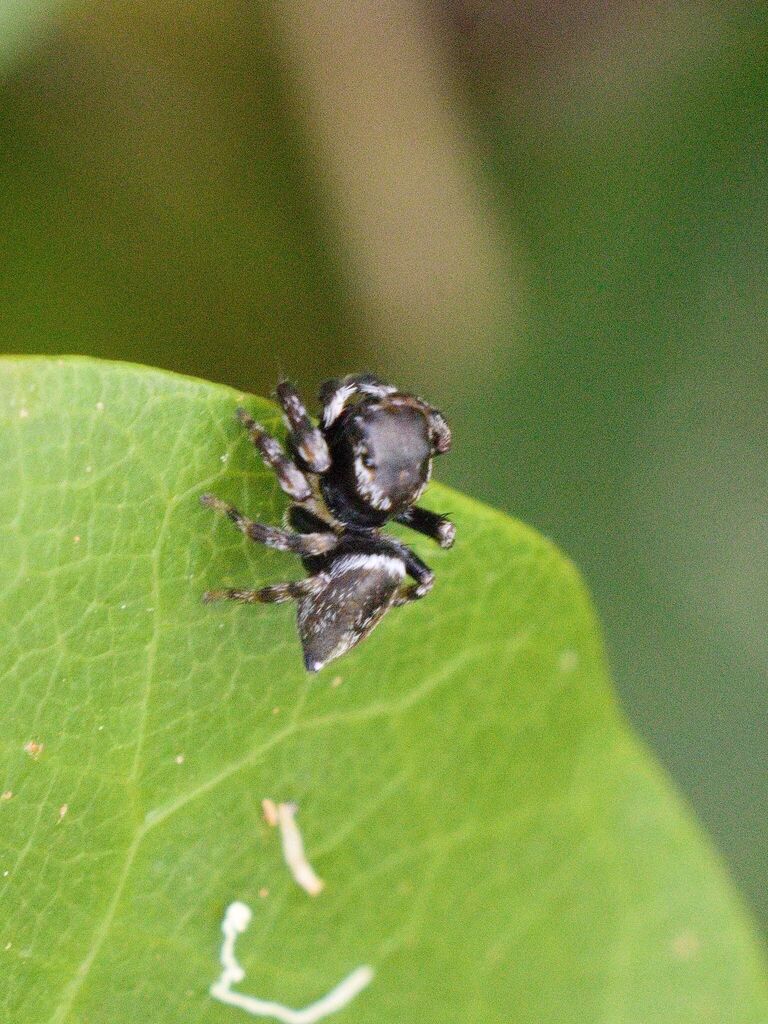
Animal courtship ranges from flamboyant display to outright self-sacrifice. A peacock spider dances inches from a mate who could kill him, a male argonaut octopus leaves part of his body behind and dies, and a single garter snake can draw a hundred suitors at once.
Animal courtship rarely stops at a nice song or a flash of colour. Across the animal kingdom, the same evolutionary pressure, convince a mate you're worth the risk, produces some of the weirdest animal mating rituals in the wild: dances performed within biting range, a bird obsessed with one colour, a mass of snakes untangling into a single winner, and a mate who leaves part of his body behind. All five are grounded in real research, not internet folklore.
1. Peacock spider: dancing within striking range
Peacock spiders (genus Maratus) are a group of tiny jumping spiders found mostly in Australia, and the males are famous for one of the most elaborate courtship dances in the animal kingdom. He raises his abdomen and unfurls a pair of flap-like extensions fringed with iridescent scales, fans them into a circular, rainbow-coloured display, waves a pair of boldly banded third legs, and drums out vibratory signals through whatever surface he's standing on. The whole performance happens within easy striking distance of a female who is both the audience and, if she's unimpressed, a predator.
Kaught's catalog carries a rare-tier member of this genus, the White Garland House Hopper (Maratus scutulatus), found on tree bark and foliage in the moist forests of eastern Australia. Peacock spiders are also one of science's best examples of citizen science in action: dozens of Maratus species have been formally described since 2005, and most were first spotted not by arachnologists but by amateur macro photographers who stumbled onto one in the leaf litter. You can see the same jumping, multi-eyed family at a much larger, harmless scale in Kaught's jumping spiders taxon guide.
2. Satin bowerbird: building a house to get rejected in
The male satin bowerbird builds something no other bird bothers with: a structure that isn't a nest. Two parallel walls of sticks, arranged into a short avenue on the forest floor, exist purely as a stage for courtship and are abandoned the moment breeding is over. What makes the bower work is decoration, and the satin bowerbird is almost fanatical about one colour: blue. Parrot feathers, flowers, snail shells, and, wherever humans leave litter nearby, blue clothes pegs, bottle caps and drinking straws, all get arranged around the avenue entrance. Blue objects are genuinely rare in the Australian bush, so a bower loaded with them is a believable signal of a male who is a skilled forager, a successful thief (most blue items are stolen from rival males' bowers), or both.
A visiting female tours several bowers before choosing, and she's less likely to get spooked mid-display by a male whose bower carries more blue. One twist rewards patience: males don't get their glossy blue-black adult plumage until around age seven. For years they look just like females, a disguise young males use to practise building and stealing decorations without getting attacked as a rival.
3. Atlantic sand fiddler crab: the claw that does the talking
Walk a sandy Atlantic beach at low tide and you might see hundreds of small crabs waving one oversized claw in near-unison, like a tiny stadium crowd. That's a colony of fiddler crabs, and in males of the Atlantic sand fiddler crab the single enlarged, bright claw exists almost entirely for signalling. Each species waves in its own rhythm and pattern, letting females tell a potential mate of their own species apart from a similar-looking rival sharing the same mudflat.
A female touring the colony reads the wave, inspects the burrow behind it, and if both check out, follows the male underground to mate. The claw isn't just decorative. If a male loses it to a predator or a fight, he regrows a new major claw, but on the opposite side of his body, switching which hand does the waving for the rest of his life.
4. Garter snake: the weirdest mating ritual in the reptile world
Garter snakes have the widest range of any snake in North America, reaching further north into Canada than any other species on the continent, and nowhere is their spring emergence more dramatic than Manitoba's Narcisse Snake Dens. Tens of thousands of red-sided garter snakes, a subspecies of the common garter snake, overwinter together in limestone sinkholes and surge out within days of each other every April. A single newly emerged female can draw a "mating ball" of up to 100 males at once, all coiling around her simultaneously, each trying to be the one that mates.
The stranger twist is what some males do to survive that cold snap. A snake that emerges from hibernation before it has warmed up can start producing the same pheromone females use, tricking rival males into forming a warming mating ball around him instead of a real female. Researchers call the tactic a "she-male" strategy; it fades once the impostor's body temperature rises, usually within a day, at which point he goes back to competing for mates the usual way. It's a similar logic, if a very different execution, to the sexual deception covered in why mantises sometimes eat their mates.
5. Greater argonaut: the husband who leaves his arm behind
Few mating strategies look as one-sided as the greater argonaut's. The female is a free-swimming relative of the octopus that builds her own thin, papery shell as an adult, the only mollusc known to do this, and uses it to trap an air bubble for buoyancy control as she drifts through the open ocean. She can reach roughly 30 cm of shell and over 40 cm overall. The male never gets a shell and never gets anywhere near that size: he's roughly a tenth of her length, small enough that early naturalists classified him as a separate, parasitic species before realising what he actually was.
To mate, the male detaches his own modified arm, called the hectocotylus, which carries his sperm, and leaves it lodged inside the female's mantle cavity. He dies shortly afterward. Mature females have been found carrying several detached arms left by different males at once, stored until she's ready to fertilise her eggs. It's an extreme version of a pattern that shows up elsewhere in the catalog too: male seahorses carrying the pregnancy instead of females in the giant seahorse's male pregnancy, or clownfish changing sex entirely to fill a vacancy in the group. Reproduction only has to work, not look familiar.
Weirdest animal mating rituals: frequently asked questions
What is the weirdest animal mating ritual in the world?
There's no single winner, but the greater argonaut is a strong contender: the male detaches his own mating arm inside the female and dies shortly after, while she drifts the open ocean inside a shell she built herself. Peacock spiders, fiddler crabs and garter snakes all have equally strange routines of their own.
Why does the male peacock spider dance?
To survive courtship. The male fans iridescent abdominal flaps, waves banded legs and drums the ground with vibrations, all within striking range of a female who can kill and eat him if she's unimpressed. The display has to prove he's a mate worth not eating.
Why do male argonaut octopuses die after mating?
The male's mating arm, the hectocotylus, detaches inside the female and stays there to release sperm later; once it's gone he has no way to recover, and he dies shortly after. Females can carry several detached arms from different males at once.
What is a garter snake mating ball?
When thousands of garter snakes emerge from a shared den in early spring, a single newly emerged female can attract up to 100 males at once, all coiling around her simultaneously to compete for the chance to mate. The largest known gathering is Manitoba's Narcisse Snake Dens.
Why do fiddler crabs wave their claws?
Male fiddler crabs grow one claw into an oversized, brightly coloured signal and wave it in a rhythm specific to their species, advertising burrow quality and fitness to females touring the colony. The display also helps warn off rival males.
Why do satin bowerbirds collect blue objects?
The male builds a stick avenue purely for courtship and decorates it almost entirely with blue items, feathers, flowers, even stolen clothes pegs, because blue objects are genuinely rare in the bush. A well-stocked bower signals quality to a visiting female.
The next thing you see could be
your first catch.
Kaught is live on the App Store and Google Play. Free to start, and your first catch is one photo away.
Free to start · Live on the App Store and Google Play
Species data, type and rarity tier are drawn from the Kaught catalog, built on open biodiversity records from GBIF and iNaturalist. Rarity reflects how often a species is observed in the wild, not its conservation status.