
Exotic spotlight
Clown Frog: the Toad That Carries the Same Poison as a Pufferfish
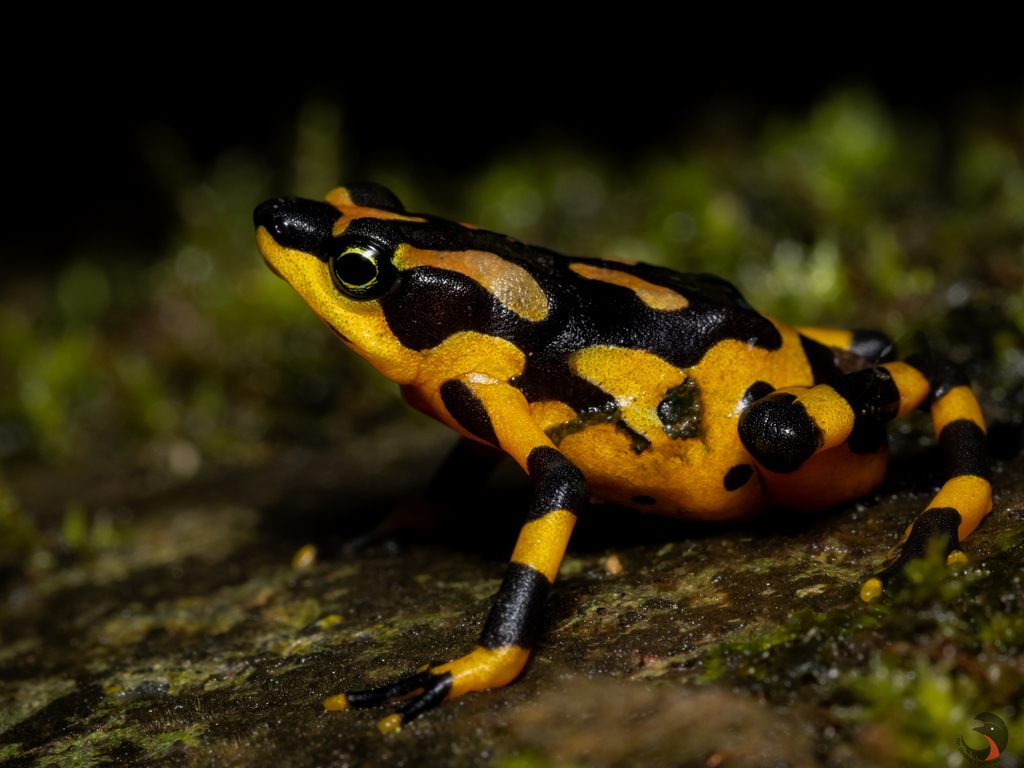
The clown frog (Atelopus varius) is a small, boldly patterned toad from the forest streams of Costa Rica and western Panama. Its skin can be marked in black with green, yellow, orange or red, and carries tetrodotoxin, the same potent toxin pufferfish use. Despite the name, it's a true toad, not a frog.
Most toads lean on dull, mottled brown to disappear into leaf litter. The clown frog does the opposite: it sits out in the open, in daylight, painted in a pattern bright enough to see from across a stream, and it barely bothers to move when you get close. That's not recklessness. It's a warning label, and the chemistry behind it is one of the more famous poisons in nature.
How to identify a clown frog
A clown frog is small, roughly 41 mm long in males and up to about 60 mm in females, with a slim build and long, slightly webbed toes built for gripping wet rock rather than swimming. The field mark that actually matters is the pattern, not any single colour: a black or dark brown base broken up by irregular patches of bright green, yellow, orange or red, with the underside often streaked in pale cream, orange or red. No two populations look quite alike, which is exactly why "varius" ended up in its scientific name.
The other tell is behaviour. Confronted with a potential predator, a clown frog mostly just stays put, slow and deliberate rather than quick and evasive. An animal that doesn't need to flee is usually telling you something about what happens if you eat it anyway.
Wait, is a clown frog actually a frog?
No. It's a true toad, placed in the family Bufonidae alongside the cane toad and the common toad, in its own striking genus, Atelopus. "Frog" and "toad" were never formal scientific ranks, just common-language shorthand, so the same genus gets called "clown frogs" in some field guides and "harlequin toads" in others without any disagreement about what the animal actually is. Its full lineage runs Amphibia › Anura › Bufonidae › Atelopus, the order Anura it shares with every other tailless amphibian, the family Bufonidae that marks it specifically as a toad.
The poison that keeps it safe
A clown frog's skin carries tetrodotoxin (TTX), a potent neurotoxin that blocks sodium channels in nerve and muscle tissue and is best known from pufferfish. Researchers first confirmed TTX in an amphibian's skin in this species back in 1975, making it one of the earliest known frog or toad sources of the compound. Current research suggests the frog may not even make its own TTX, symbiotic bacteria living on its skin are thought to play a role, the same theory used to explain TTX in pufferfish. On top of that, like most true toads it likely also produces its own bufadienolide toxins from skin glands, a second, separate chemical defence layered on top of the first.
Worth being precise about the word: this is a poison, not a venom. A clown frog has no fangs, stingers or any way to inject its toxin, it has to be touched, licked or eaten for the chemistry to matter. That's the same poison-versus-venom line covered in Kaught's most poisonous animals in the world ranking, and the clown frog's bright, variable pattern is a textbook example of aposematism, colour doing the advertising so the toxin rarely has to.
Where clown frogs live
Clown frogs are restricted to humid lowland and foothill forest in Costa Rica and western Panama, and within that range they stick close to one specific feature: fast-moving streams. By day they perch on rocks, logs or inside damp crevices right in the spray zone of the water. It's a genuinely poor swimmer, and outside of breeding it depends on wet rock surfaces for moisture rather than entering the stream itself, a very different strategy from the water-bound life of amphibians like the paradoxical frog, which spends its whole early life submerged.
How clown frogs breed
Breeding happens at the stream too. A male clasps a female in amplexus, the mating grip typical of frogs and toads, and in this species that grip has been recorded lasting as long as 32 days, among the longest mating embraces documented in any amphibian. While paired, the female lays 30 to 75 eggs in long strings directly into shallow, moving water, and the male fertilises them as they're released. The timing shifts by location: egg-laying in Monteverde, Costa Rica runs roughly October through December, while paired adults have turned up in Santa Fe, Panama as early as June.
How rare is the clown frog in Kaught?
In the Kaught catalog the clown frog sits at the Legendary tier, four diamonds out of four, Kaught's top rarity rating. That reflects how often the species is actually confirmed in the wild, not its conservation status. A clown frog's entire life plays out along a narrow band of forest stream within a genuinely small range, it rarely strays from the rock it's already sitting on, and it survives by staying still rather than by moving or hiding. Put those together and a confirmed sighting, even for someone standing in exactly the right habitat, is a rare thing to log.
Clown frog: frequently asked questions
What is a clown frog?
The clown frog (Atelopus varius) is a small, strikingly patterned toad from the forest streams of Costa Rica and western Panama. Its black skin carries bold patches of green, yellow, orange or red that vary from one individual to the next, and despite the name, it's a true toad, not a frog.
Is the clown frog poisonous?
Yes. Its skin carries tetrodotoxin, the same potent neurotoxin pufferfish are famous for, plus toad-type bufadienolide toxins of its own. It's a poison delivered through contact or ingestion, not an injected venom, and the bold colouring is the warning label.
Is a clown frog actually a frog?
No. It belongs to the family Bufonidae, the true toads, alongside the cane toad and the common toad. "Frog" and "toad" aren't formal scientific categories, so names like clown frog and harlequin toad get used for the same genus, Atelopus, depending on who's talking.
Where do clown frogs live?
Along fast-moving streams in humid lowland and foothill forest in Costa Rica and western Panama, usually perched on wet rocks, logs or in crevices within the spray of the water. It's a poor swimmer and rarely enters the stream itself outside of breeding.
How long do clown frogs mate for?
Males have been recorded clasping a female in amplexus for as long as 32 days, among the longest mating embraces known in any amphibian, before she lays 30 to 75 eggs in long strings in shallow, moving water.
Why is the clown frog "Legendary" in Kaught?
Kaught's rarity tier reflects how often a species is actually confirmed in the wild, not its conservation status. The clown frog lives only along specific forest streams within a narrow range, rarely strays from the rock it's sitting on, and relies on stillness rather than movement, so a confirmed sighting is genuinely uncommon.
The next thing you see could be
your first catch.
Kaught is live on the App Store and Google Play. Free to start, and your first catch is one photo away.
Free to start · Live on the App Store and Google Play
Species data, type, rarity tier and measurements, is drawn from the Kaught catalog, built on open biodiversity records from GBIF and iNaturalist. Rarity reflects how often a species is observed in the wild, not its conservation status.