
Adaptation explainer
The Wolverine: built to survive winters that would kill almost anything else
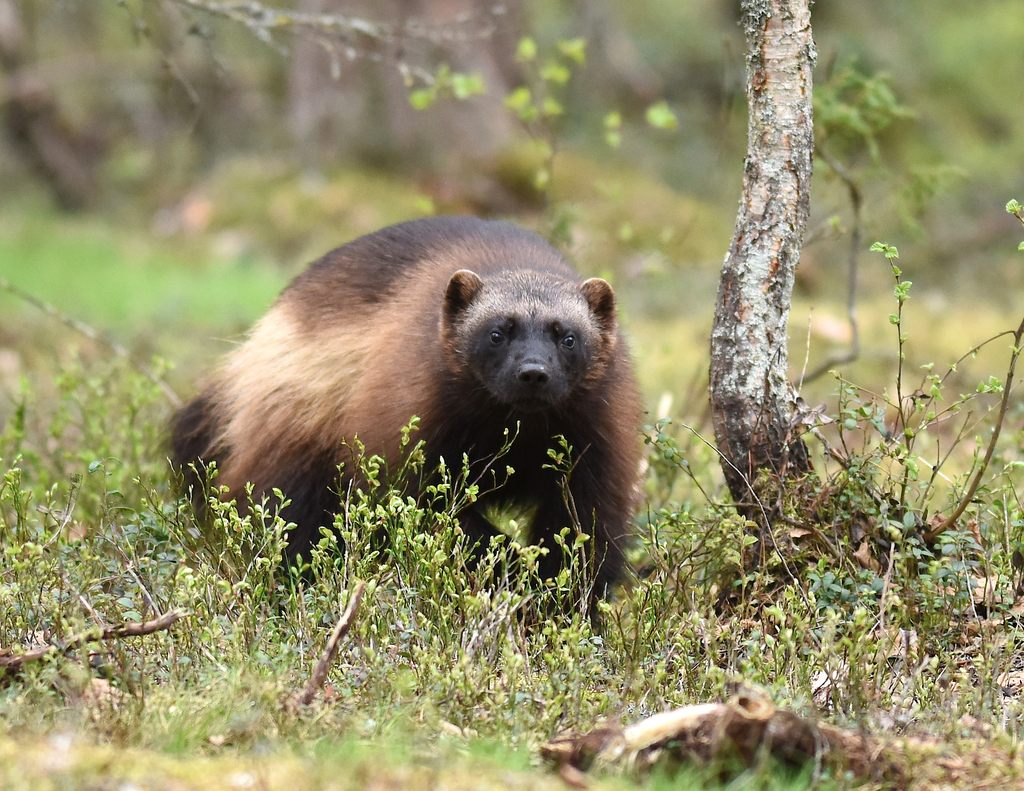
The wolverine (Gulo gulo) is the largest land mustelid, built to survive brutal cold: snowshoe paws, frost-resistant fur, and jaws strong enough to crush frozen bone. Solitary and wide-ranging across the Arctic and boreal north, it stands its ground against wolves and bears at a kill.
Most animals cope with an Arctic winter by leaving, sleeping through it, or shrinking their ambitions until spring. The wolverine does none of that. It stays active through the coldest, darkest months across some of the harshest terrain on the planet, and it does it on a body plan that looks, at first glance, like nothing special: a stocky, shaggy, low-slung mammal about the size of a mid-sized dog. Everything that makes it work is underneath the fur. Here's how to identify one, where it actually lives, and what makes it one of the toughest animals you could ever spot.
How to identify a wolverine
The wolverine looks like it was assembled from spare parts of other animals, and in a sense it was, it's the largest land-dwelling member of the weasel family, scaled up toward bear proportions:
- Build: stocky and bear-like, with short powerful legs, but the elongated body and bushy tail give away its true mustelid lineage.
- Coat: shaggy, blackish-brown fur with a pale tan stripe running from each shoulder along the flanks to the base of the tail, sometimes meeting across the rump.
- Face and feet: small rounded ears set low on a broad head, and large, five-toed paws with semi-retractable claws built for digging, climbing and crossing deep snow.
- Size: a body length of 65 to 107 cm plus a 17 to 26 cm tail, weighing 9 to 25 kg, with males noticeably larger than females.
Tracks in snow are the more likely clue: a loping five-toed print, often in a bounding, almost otter-like gait, crossing distances that would exhaust most predators its size.
Where do wolverines live?
The wolverine holds on in the coldest, most remote habitat left on Earth: boreal forest and open tundra across the circumpolar north, through Alaska, northern Canada, Scandinavia and Siberia, with a small, hard-won population clinging to the high Rockies of the contiguous United States. It needs deep, stable spring snowpack for denning, females dig maternal dens into snowdrifts that stay cold and structurally sound well into the season, insulating kits from the worse cold outside.
It is also relentlessly solitary. A single male's territory can stretch several hundred square kilometres, among the largest home ranges of any land mammal relative to body size, and neighbouring wolverines mostly avoid one another. That combination, remote habitat plus enormous, thinly populated territories, is exactly why a real sighting is such a rare event even where the species is doing fine.
How does a wolverine survive the cold?
Three separate adaptations carry it through winter. The fur comes first: dense, oily guard hairs resist frost so completely that Arctic peoples have long lined parka hoods and ruffs with wolverine pelts, because unlike almost any other fur, it doesn't ice up from the condensation of a person's own breath. Then the paws: broad and five-toed, they spread the wolverine's weight over snow the way a snowshoe does, letting it move efficiently across drifts that would leave a heavier predator floundering. Finally, the den itself: a female excavates deep into packed snow rather than the ground, using the snowpack's own insulating properties to keep newborn kits safe from temperatures that would kill them in the open.
What does a wolverine eat, and how it gets through the lean season?
A wolverine will eat almost anything: berries and roots in summer, small mammals and birds' eggs when it can get them, and, especially through winter, whatever carcasses it can find or claim. Its teeth do the heavy lifting here. An upper molar is rotated roughly 90 degrees toward the back of the mouth, letting the wolverine crunch through frozen bone and frozen meat that would stop most other scavengers cold. When food is abundant it caches the surplus across its territory, then relies on an exceptional sense of smell to relocate each stash later, sometimes digging down through metres of snow to reach it.
That appetite for anything, and the sheer nerve it takes to defend a kill, earned it the old nickname "glutton," and a musky scent gland used to mark caches and territory earned it a second one, "skunk bear." A wolverine will stand its ground at a carcass against wolves or even a bear many times its size, not through raw strength but through pure, uncompromising aggression, and it usually wins the standoff.
Is a wolverine dangerous to humans?
In practice, no. Wolverines are intensely shy of people and live at such low density across such remote country that an unprovoked encounter is rare, and there is no meaningful history of wolverines attacking people. The animal that will fight off a bear over a carcass is not looking for a confrontation with someone on a trail; it wants distance, not trouble. The one situation worth respecting is a wolverine actively feeding on or guarding a kill, which is when its bite and claws come out, so give it a wide berth and never approach.
How rare is the wolverine in Kaught?
In the Kaught catalog the wolverine sits at the Common tier, one diamond out of four. That might read as surprising for an animal this hard to actually encounter, but the tier reflects the volume of confirmed records across the wolverine's full circumpolar range, not the odds of any single person crossing paths with one. Across Alaska, Canada, Scandinavia and Siberia combined, sightings accumulate steadily even though each individual wolverine is holding an enormous, thinly used territory, which is exactly the gap between "recorded often, somewhere" and "easy to actually see."
Three things you didn't know about the wolverine
- Its fur is so frost-resistant that it has been the traditional choice for lining Arctic parka hoods for generations, precisely because it doesn't ice up from breath.
- One upper molar sits rotated nearly 90 degrees in the jaw, an adaptation purpose-built for crushing frozen bone that other scavengers simply can't process.
- A male's territory can run several hundred square kilometres, one of the largest home ranges of any land mammal for an animal that size.
Wolverine: frequently asked questions
What does a wolverine look like?
A stocky, low-slung mustelid with a shaggy blackish-brown coat and a pale tan stripe running from each shoulder back along the flanks to a bushy tail. Built somewhere between a small bear and an oversized weasel, it measures 65 to 107 cm in body length, plus a 17 to 26 cm tail.
Where do wolverines live?
Boreal forest and tundra across the circumpolar north: Alaska, northern Canada, Scandinavia and Russia, with a small remnant population in the northern US Rockies. Each animal is solitary and needs an enormous territory, so even where wolverines are present, an actual sighting is genuinely hard to come by.
How does a wolverine survive the Arctic winter?
Dense, oily guard fur resists frost so well that Arctic peoples have long used it to line parka hoods, because it doesn't ice up from breath condensation. Large, five-toed paws spread its weight like natural snowshoes over deep snow, and females den their kits in stable snowdrifts that insulate against the cold outside.
What does a wolverine eat?
Almost anything: berries, small mammals, birds' eggs and, especially in winter, scavenged carcasses. A rotated upper molar lets it crush frozen bone and meat other scavengers can't touch, and it caches surplus food across its territory, relocating each stash later by smell alone.
Is a wolverine dangerous to humans?
Not in practice. Wolverines are extremely shy, avoid people, and live at such low density across such remote terrain that unprovoked encounters are rare and attacks on people essentially unheard of. If one is defending a kill or a cornered position it can bite and claw hard, so give any wild wolverine space.
Why is the wolverine "Common" in Kaught?
Kaught's rarity tier reflects the volume of confirmed records across a species' full range, not how likely any one person is to see it. The wolverine is recorded steadily across a huge circumpolar range, which places it at the Common tier, even though its remote habitat makes a personal sighting genuinely uncommon.
The next thing you see could be
your first catch.
Kaught is live on the App Store and Google Play. Free to start, and your first catch is one photo away.
Free to start · Live on the App Store and Google Play
Species data, type, rarity tier and measurements, is drawn from the Kaught catalog, built on open biodiversity records from GBIF and iNaturalist. Rarity reflects how often a species is observed in the wild, not its conservation status.
More Arctic and boreal wildlife: Polar bear adaptations · Sable · Pine marten · Eurasian lynx