
Species spotlight
Raccoon: the backyard mammal that reads the world through its hands
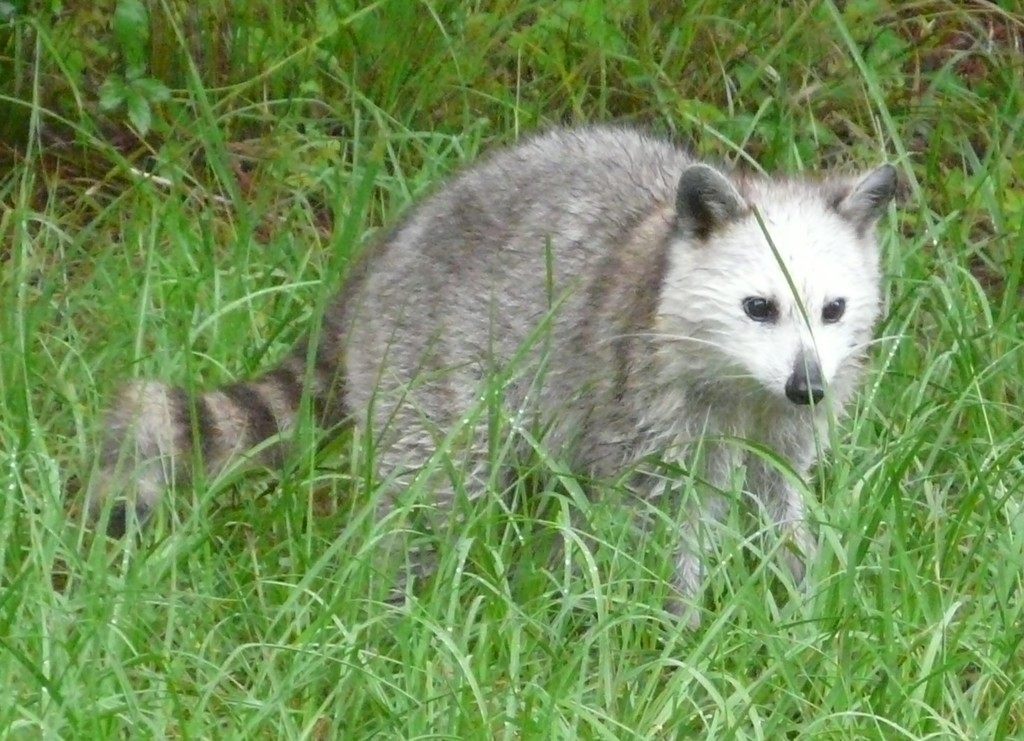
The raccoon (Procyon lotor) is a stocky North American mammal with a black face mask, ringed tail and extraordinarily sensitive front paws. Mostly nocturnal and omnivorous, it thrives from wetlands to city rooftops, solves multi-step puzzles, and is essentially harmless to people who leave it alone.
Most nocturnal mammals get by on smell or hearing. The raccoon gets by on touch. Its front paws carry so many nerve endings that a large share of its brain is devoted to interpreting what they feel, and almost everything distinctive about the animal, the dunking, the lock-picking, the reputation for cleverness, traces back to that one adaptation. Here's how to identify one, where it actually lives, and what the science says about how smart it really is.
How to identify a raccoon
The silhouette is unmistakable once you've seen it:
- The mask: a black patch across the eyes, sharply bordered in white, the single most recognisable field mark.
- Colour: grizzled grey-brown fur over a stocky, low-slung body, darker toward the legs and feet.
- The tail: bushy, with four to seven alternating dark and pale rings, always ending in a dark tip.
- Gait: flat-footed like a bear rather than up on its toes like a fox or dog, which gives it a distinctive, slightly shuffling walk and lets it rear up easily on its hind legs.
Adults measure roughly 40 to 70 cm in body length, plus a 20 to 40 cm tail, and weight varies enormously with season and food supply, from around 5 kg on a lean individual to over 20 kg on a well-fed suburban animal loading up for winter.
Where do raccoons live?
The raccoon is native to North America, from southern Canada down through the United States and Mexico into Panama, wherever there is water nearby: wetlands, river corridors, woodland edges and farmland. It dens in tree hollows, rock crevices, abandoned burrows, and, increasingly, in whatever a town or city offers instead: storm drains, chimneys, attic spaces and gaps under decking.
It hasn't stayed put. Fur farms in Germany released and lost animals in the 1920s and 1930s, and the descendants of those escapees now range across much of central Europe and into the Caucasus. A separate introduction, mostly through the pet trade, established wild populations in Japan. In every one of these places, the same trait explains its success: a raccoon will eat almost anything, so it rarely needs to look far.
Females den alone to raise a litter of two to five kits after a pregnancy of roughly 65 days, most born in spring. Kits stay with their mother through the first autumn, learning to forage and den-hop before splitting off to find their own territory. A wild raccoon typically lives a handful of years, though individuals have been recorded reaching 12 to 16 years old.
What raccoons eat, and why they "wash" their food
The diet is genuinely omnivorous: crayfish, frogs, insects, mice, bird eggs, fruit, nuts and, in any town, whatever a bin gives up. The behaviour most people know a raccoon for, dunking food in water before eating it, looks like washing but isn't. Raccoon paws carry roughly four to five times the mechanoreceptors of a typical mammal's, and about two-thirds of the raccoon's entire sensory cortex is given over to interpreting the signals those receptors send, a higher share than in any other mammal studied. Wetting the skin sharply increases how responsive those receptors are, so dunking an item in water lets a raccoon feel its exact shape, texture and edibility in far more detail than dry paws allow. Captive raccoons that have never seen another raccoon do it too, and they'll douse food that is already perfectly clean, which is how researchers ruled out actual cleaning as the explanation.
How smart is a raccoon really?
Cognitive ecologists have tested this directly with multi-latch puzzle boxes set out for genuinely wild raccoons, not captive ones. In one field study, roughly a quarter of the raccoons that engaged with the box learned to open at least three of its different latch types, and individuals settled into their own distinct sequences for working through them, not identical strategies copied from one another. Recall lasted: one raccoon retested a year later still remembered how to work the horizontal latch, and related research has documented raccoons recalling a learned solution up to three years afterward. It is exactly the kind of flexible, individual, touch-driven problem-solving you'd expect from an animal whose paws do so much of its thinking.
Is a raccoon dangerous?
To a person who leaves it alone, a healthy raccoon is not aggressive and will typically retreat rather than confront. The real risk isn't teeth, it's disease. Raccoons are a recognised rabies vector species across much of North America, and a bite or scratch from an infected animal can transmit the virus to people or unvaccinated pets. Their droppings can also carry raccoon roundworm, so latrine sites near a home are worth clearing carefully rather than handling directly.
The practical rules are simple: never approach, feed or handle a wild raccoon, keep dogs and cats current on rabies vaccination, and treat any raccoon that is out in broad daylight acting disoriented or unafraid as a sign to keep well back and call animal control rather than investigate.
How rare is the raccoon in Kaught?
In the Kaught catalog the raccoon sits at the Common tier, one diamond out of four. That's a read on how often the species is actually confirmed in the wild, not a comment on population health. Raccoons are bold around people, active on the edges of nearly every town in their range, and turn up constantly on doorbell cameras and camera traps, so a confirmed sighting is genuinely easy to come by, a real contrast with a shy forest specialist like the pine marten, which sits at the opposite end of the same scale.
Three things you didn't know about the raccoon
- About two-thirds of its sensory cortex is dedicated to processing touch from its front paws, a larger share than any other mammal studied, human hands included.
- Despite the bear-like flat-footed walk, its closest relatives are the coati and the kinkajou; raccoons belong to their own family, Procyonidae, entirely separate from bears and dogs.
- Individual raccoons develop their own distinct problem-solving styles on identical puzzles, a level of behavioural individuality researchers usually associate with primates.
Raccoon: frequently asked questions
What does a raccoon look like?
A stocky, dog-sized mammal with grizzled grey-brown fur, a black face mask bordered in white, and a bushy tail ringed with four to seven dark bands. It stands low on flat-footed paws and typically measures 40 to 70 cm long, not counting the tail.
Where do raccoons live?
Raccoons are native to North America, from southern Canada to Panama, in woodland, wetland and farmland near water. They are also one of the most successful urban mammals alive, denning in attics, chimneys and storm drains, and introduced populations are now established across central Europe, the Caucasus and Japan.
Why do raccoons "wash" their food?
They are not cleaning it. A raccoon's front paws carry roughly four to five times the touch receptors of a typical mammal paw, and wetting the skin sharply increases how sensitive those receptors are. Dunking food in water lets a raccoon feel its texture and shape far more precisely before eating.
How smart are raccoons really?
Studies using multi-latch puzzle boxes found wild raccoons can learn to open several different lock types, and about a quarter of tested individuals opened at least three. One raccoon retested a year later still remembered the solution, and other research has shown recall lasting up to three years.
Are raccoons dangerous to humans or pets?
A healthy raccoon avoids people and is not usually aggressive. The real risk is disease: raccoons are a recognised rabies vector species in North America, and their droppings can carry raccoon roundworm. Keep pets vaccinated, never handle a raccoon, and treat one that is active in daylight and behaving oddly with caution.
Why is the raccoon "Common" in Kaught?
Kaught's rarity tier reflects how often a species is actually recorded in the wild, not conservation status. The raccoon is bold, active around people, and turns up constantly on camera traps and doorbell cameras across an enormous range, so confirmed sightings are frequent. That places it at the Common tier.
The next thing you see could be
your first catch.
Kaught is live on the App Store and Google Play. Free to start, and your first catch is one photo away.
Free to start · Live on the App Store and Google Play
Species data, type, rarity tier and measurements, is drawn from the Kaught catalog, built on open biodiversity records from GBIF and iNaturalist. Rarity reflects how often a species is observed in the wild, not its conservation status.
More backyard and nocturnal mammals: Red fox guide · European badger · Nocturnal animals you can spot · Smartest animals in the world