
Adaptation explainer
White-nest Swiftlet: the bird whose spit is worth more than silver
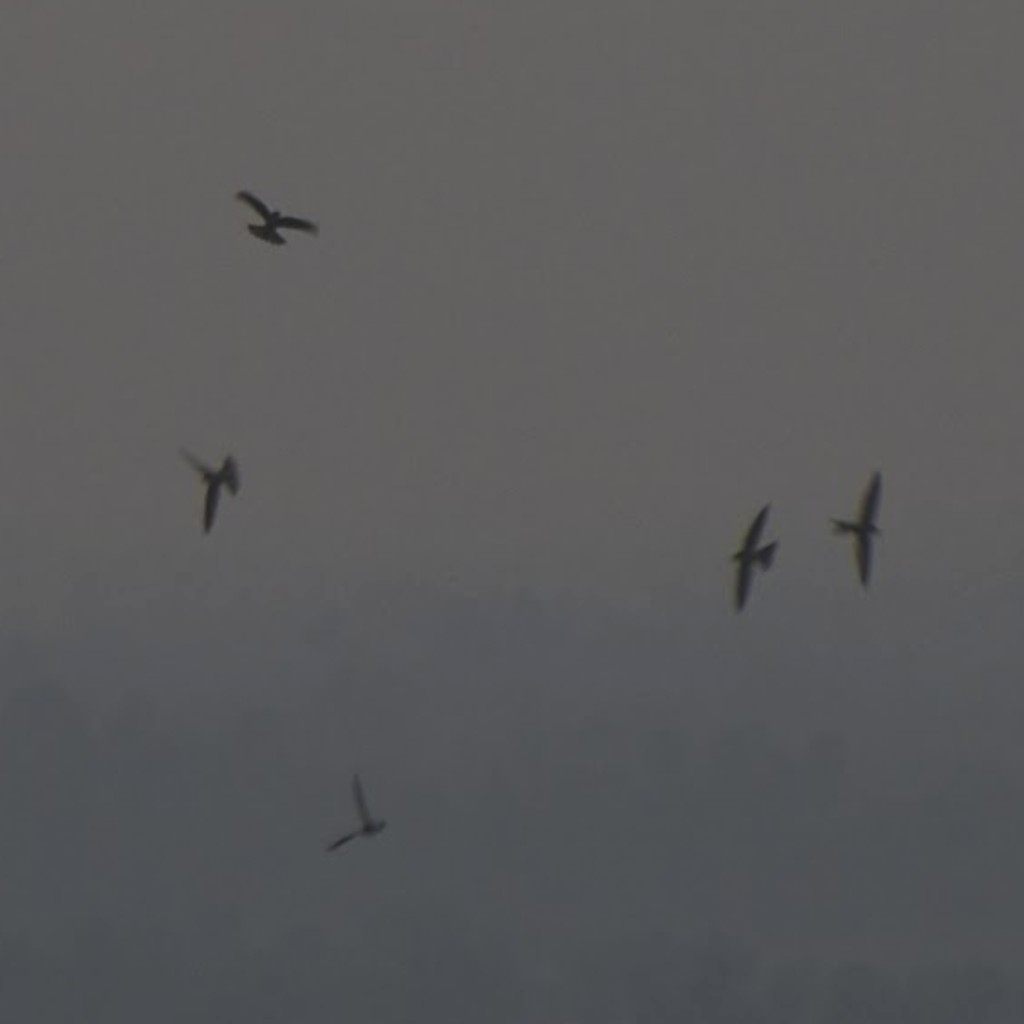
The white-nest swiftlet (Aerodramus fuciphagus) builds its nest purely from hardened saliva, laid down in thin layers on a cave wall. It finds those pitch-black caves by echolocation, like a bat. Dried, the nest is prized as bird's nest soup and can sell for thousands of dollars a kilogram.
Most birds build a nest from whatever is lying around: twigs, moss, mud, a stray strand of plastic. The white-nest swiftlet, also known as the edible-nest swiftlet, builds its nest from nothing but itself. No sticks, no lining, no stolen fur. Just saliva, whipped and dried into a shelf glued to a cave wall, a nest so prized by people that it can be worth more than its own weight in silver.
What is a white-nest swiftlet?
It's a small, dark bird of the swift family, native to the coasts and limestone caves of Southeast Asia, from the Andaman and Nicobar Islands across Malaysia, Thailand, Indonesia and the Philippines. At around 14 cm long and 15-18 g, it's built like most swifts: blackish-brown above, long narrow wings swept into a crescent in flight, a short notched tail and legs too short and weak for perching on a branch. It barely needs to. A swiftlet spends almost its entire waking life on the wing, snatching flying insects out of the air over forest, farmland and open water.
Where it differs from an ordinary swift is what happens when breeding season starts and it returns to a cave.
How does the swiftlet build a nest entirely from saliva?
During breeding season, a pair of salivary glands under the swiftlet's tongue swell dramatically. Clinging to a vertical cave wall in total darkness, the bird whips that thickened saliva back and forth with its tongue, laying it down stroke by stroke in thin ribbons that harden on contact with air. Layer builds on layer over as long as 40 days, until the result is a pale, translucent, bracket-shaped shelf cemented to the rock: about 6 cm across, 1.5 cm deep, and around 14 g once finished, just enough of a ledge to hold two small white eggs.
What makes the white-nest swiftlet's version unusual is its purity. Most swiftlet species bind their saliva with feathers, moss or plant fibre for extra strength. This one doesn't need to. Its nest is close to 100% hardened saliva, which is exactly why it's called the "white nest", and exactly why it's the grade collectors and chefs want most.
Why is this nest worth more than silver?
Cleaned, dried and simmered down, the nest becomes bird's nest soup, a delicacy that has held prestige status in Chinese cuisine for centuries. The nest itself has almost no flavour; what people are paying for is texture, rarity and tradition, not taste. And they pay a lot: white and black-nest grades typically sell for $5,000 to $6,000 per kilogram, and the rarest "red nests" can reach $10,000 a kilogram, several times the price of silver by weight, in an industry now estimated to be worth billions of dollars a year.
That value created an entire legal industry built around farming the birds rather than just raiding wild caves. Across Indonesia, Malaysia and Thailand, purpose-built concrete "swiftlet houses" (or converted shophouses) are fitted with speakers playing recordings of swiftlet calls to lure colonies in to nest, then licensed harvesters collect the nests on a managed schedule. It's a strange, genuinely modern twist on an ancient trade: a bird farmed not for eggs or meat, but for its spit.
How does it navigate a pitch-black cave?
Building a nest you can't see requires finding your way in the dark, and the white-nest swiftlet solves that the way a bat would: echolocation. It fires off rapid double-clicks, a sound loud and low enough for humans to actually hear, in the 2 to 8 kHz range, then reads the returning echoes to navigate the cave and locate its own nest among thousands of identical neighbours. It's a genuinely rare trick in birds. Echolocation has evolved independently in the bird world only twice, once in the swiftlets and once in South America's oilbird, compared with the dozens of times it's evolved across bats and toothed whales. For how that compares to true bat biosonar, see our explainer on how bats echolocate.
In caves shared with its close relative the black-nest swiftlet, the two species avoid competing by splitting the space: white-nest swiftlets cluster near the cave entrances, black-nest birds nest deeper inside, and the two even stagger their breeding months to use the colony at different times. Two echolocating species, same cave, running on a careful timeshare.
How rare is the white-nest swiftlet in Kaught?
In the Kaught catalog the white-nest swiftlet sits at the Epic tier, three diamonds out of four. That's a measure of how often it's actually confirmed in the field, not a statement about its numbers overall. Millions live and breed in farmed colonies inside purpose-built houses, but those are managed structures, not a sighting in the wild. Spotting, identifying and photographing one of these fast, near-identical little birds wheeling over its natural sea cave is a different task altogether, and a genuinely uncommon one. It belongs in good company alongside other birds whose everyday abilities read like fiction in our list of animal abilities that sound impossible, and among the stranger entries in our weirdest animals in the world.
White-nest swiftlet: frequently asked questions
How does the white-nest swiftlet build its nest?
Entirely from its own saliva. During breeding season its salivary glands swell, and it whips the secretion with its tongue into thin layers cemented to a cave wall. Over up to 40 days those layers harden into a pale, bracket-shaped shelf about 6 cm across, with no feathers, moss or mud mixed in.
Why is the swiftlet's nest worth so much money?
Cleaned and dried, the nest is the main ingredient in bird's nest soup, a delicacy prized in Chinese cuisine for centuries. White and black-nest grades typically sell for $5,000 to $6,000 a kilogram, and the rarest red nests can reach $10,000, several times the price of silver by weight.
How does the swiftlet find its way in a pitch-black cave?
By echolocation. It fires off rapid double-clicks you can actually hear, between 2 and 8 kHz, and reads the echoes to navigate and find its own nest in total darkness. Among birds, only swiftlets and South America's oilbird are known to echolocate at all.
Is bird's nest soup really made from a bird's nest?
Yes, literally. The nest is soaked, cleaned of any feathers or debris, and simmered until it dissolves into a gelatinous, faintly sweet broth. It carries almost no flavour of its own; its entire value is prestige, texture and scarcity, not taste.
What's the difference between a white-nest and a black-nest swiftlet?
Both build nests from saliva, but the white-nest swiftlet's is nearly pure hardened saliva. A close relative, the black-nest swiftlet, binds its saliva with its own feathers, producing a darker nest that needs far more cleaning before it reaches the pot.
Why is the white-nest swiftlet "Epic" in Kaught?
Kaught's rarity reflects how often a species is actually recorded, not its conservation status. Huge farmed colonies exist in purpose-built houses, but a confirmed sighting of a wild swiftlet in its natural sea cave, caught mid-flight and correctly identified, is a genuinely uncommon encounter.
The next thing you see could be
your first catch.
Kaught is live on the App Store and Google Play. Free to start, and your first catch is one photo away.
Free to start · Live on the App Store and Google Play
Species data, type, rarity tier and measurements, is drawn from the Kaught catalog, built on open biodiversity records from GBIF and iNaturalist. Rarity reflects how often a species is observed in the wild, not its conservation status.