
Record holders
Best Swimmers in the Animal Kingdom: 6 Ranked
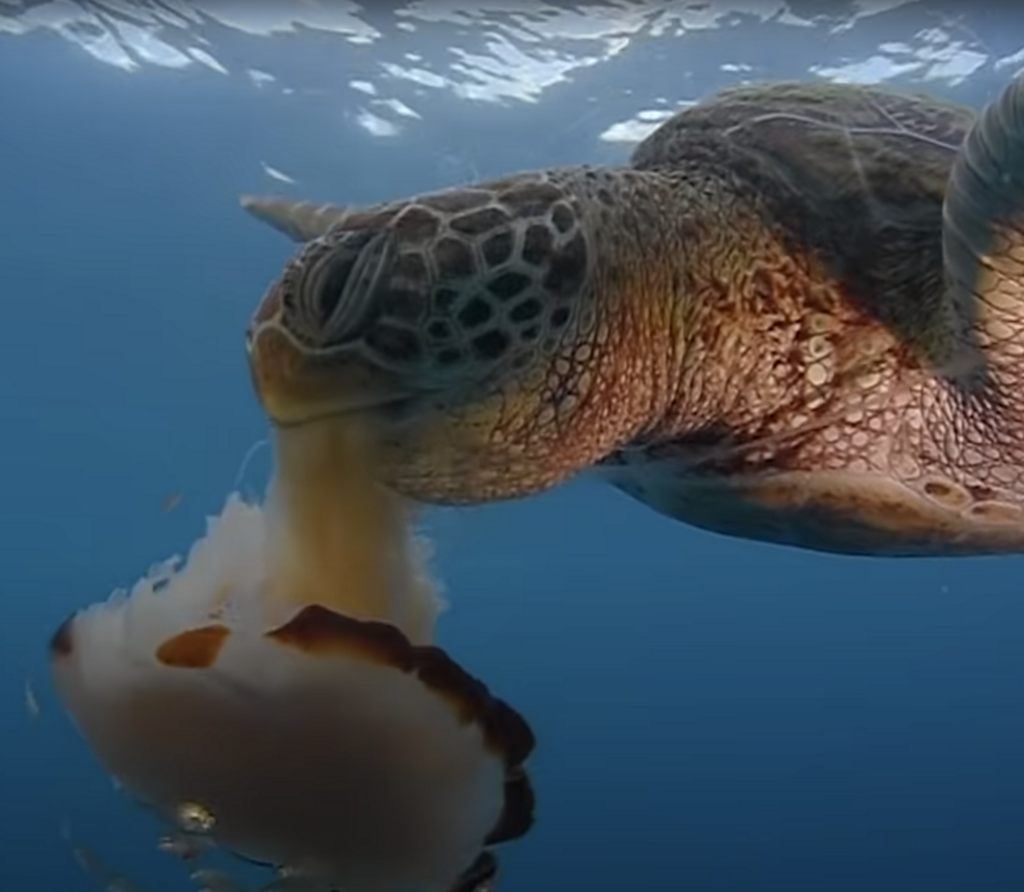
"Best swimmer" splits by measure: the green sea turtle swims the longest migrations, the common loon has a body built almost like a submarine, and the great diving beetle, barely 3 cm long, out-paddles fish many times its size. Six real catalog species, ranked below.
Swimming is not one skill. A sea turtle crossing an ocean basin and a beetle rowing across a garden pond are solving completely different problems, distance versus power-to-weight, and nature has reached for a different toolkit every time: paddles, jets, oars, fins, even bones that trade flight for buoyancy control. The six animals below each hold a genuine, documented swimming adaptation, and all six are in the Kaught catalog with their observation-derived rarity tier.
1. Green Sea Turtle, the longest swimming migration
A green sea turtle's shell is flattened and smoothed into a hydrodynamic wing shape, and its front flippers work like a pair of oars rather than legs, giving it a slow, efficient cruising stroke built for distance rather than speed. That efficiency is the point: adults regularly cross entire ocean basins between feeding grounds and the exact beach where they hatched, a round trip that can run well over 1,000 km each way.
Females return to nest every two to five years, navigating by what researchers believe is the magnetic signature of their natal shoreline, a built-in compass no GPS can match. Common in the catalog, one diamond, reflecting how often it turns up in coastal waters worldwide despite that epic travel record.
2. Common Loon, a body built like a submarine
Most birds have hollow, air-filled bones to stay light for flight. The common loon evolved denser, nearly solid bones instead, a direct trade of easy flight for better diving control. Its legs are also set unusually far back on its body, awkward for walking on land but ideal for powerful underwater propulsion chasing fish.
The trade-off shows up at takeoff too: a loon needs a long open-water runway, sometimes 100 metres or more, to build enough speed to get airborne, and can become stranded if it mistakes a wet road or small pond for open water. Rare in the catalog, two diamonds.
3. Humboldt Squid, jet propulsion at speed
A Humboldt squid swims by forcing water out of its mantle cavity through a narrow, flexible funnel, pure jet propulsion with no fins doing the real work. It can redirect that funnel almost instantly to change direction, firing off fast bursts of speed to chase prey or escape a predator mid-pursuit.
Fishers nicknamed it the "red devil" for the way its skin flashes red and white in rapid pulses when hunting or agitated, a fast colour change produced by muscles around thousands of individual pigment cells. Common in the catalog, one diamond, though its powerful offshore schools are rarely seen from land.
4. Dogtooth Tuna, the fish that never stops
Like other tuna, the dogtooth tuna must keep swimming forward to force water over its gills, a technique called ram ventilation, since it cannot pump water the way most fish do. Constant motion also keeps its core muscles running warmer than the surrounding sea, unusual among fish and part of why it swims with such sustained power.
Unlike most tuna it does not school. A single dogtooth tuna typically patrols the same stretch of reef alone for years, ramming baitfish against the reef wall to stun them, since it has no hands to grab anything with. Epic in the catalog, three diamonds, a solitary reef hunter that is easy to miss even where it is known to live.
5. Atlantic Blue Crab, the "beautiful swimmer"
Most crabs can only walk or dig. The Atlantic blue crab's last pair of legs is flattened into paddle-shaped swimming fins, letting it swim sideways through open water as easily as it scuttles across the seabed, a genuine rarity among crabs.
Its scientific name, Callinectes sapidus, translates roughly to "savory beautiful swimmer," one of the few species named directly for the ability that sets it apart. Common in the catalog, one diamond, abundant in the estuaries it calls home.
6. Great Diving Beetle, the pound-for-pound champion
Measured against body size, the best swimmer on this list might be the smallest. A great diving beetle, barely 24 to 35 mm long, rows through the water with hind legs fringed by stiff hairs that act like paddle blades, folding flat on the forward stroke and fanning open on the backstroke for extra thrust, the same basic mechanic as a human swimmer's cupped hand.
An air store tucked under its wing cases lets it stay submerged on long hunting dives, strong enough to tackle prey far larger than itself, including small fish and tadpoles, pinning them with sickle-shaped mandibles. Epic in the catalog, three diamonds, a pond predator most people walk past without ever noticing.
Why "best swimmer" depends on what you're measuring
Line these six up by a single ruler and the ranking falls apart immediately. The green sea turtle wins on distance, the dogtooth tuna wins on endurance, the Humboldt squid wins on acceleration, and the great diving beetle wins pound for pound against animals many times its size. They are not competing on the same axis at all.
The same logic runs through the fastest animals in the world, where the record also depends on the medium: air, land or water. For the animals that take swimming to crushing depths instead of long distances, see the deepest-diving animals in the world, including a dolphin with no dorsal fin at all. And for the same "it depends how you measure it" problem applied to a different skill entirely, see the best jumpers in the animal kingdom.
Best swimmers: frequently asked questions
What is the best swimmer in the animal kingdom?
There is no single winner. The green sea turtle swims the longest migrations, the common loon has a body built almost like a submarine, and the great diving beetle, barely 3 cm long, out-paddles fish many times its size. Each wins by a different measure.
Why does the common loon have solid bones?
Most birds have hollow, air-filled bones to stay light for flight. The common loon (Gavia immer) evolved denser, nearly solid bones instead, trading easy flight for the extra weight that helps it dive deep and stay submerged chasing fish.
How does the great diving beetle swim underwater?
Its hind legs are fringed with stiff hairs that act like paddle blades, folding flat on the forward stroke and fanning open on the backstroke to row it through the water, the same basic mechanic as a human swimmer's cupped hand.
Why is the Atlantic blue crab called a "beautiful swimmer"?
Its scientific name, Callinectes sapidus, translates roughly to "savory beautiful swimmer." Its last pair of legs is flattened into paddle-shaped fins, letting it swim sideways through open water, unlike most crabs, which can only walk or dig.
How fast can a Humboldt squid swim?
It swims by jet propulsion, forcing water out of its mantle through a narrow funnel it can redirect almost instantly to change direction. That gives it fast, powerful bursts of speed it uses to chase prey or escape predators.
Does the dogtooth tuna ever stop swimming?
Almost never. Like other tuna, it must keep moving forward to force water over its gills, a technique called ram ventilation. Constant motion also keeps its core muscles warmer than the surrounding sea, unusual for a fish.
How far can a green sea turtle swim on migration?
Green sea turtles regularly cross entire ocean basins between feeding grounds and the exact beach where they hatched, a migration that can run well over 1,000 km each way, powered by a flattened, hydrodynamic shell and long front flippers.
The next thing you see could be
your first catch.
Kaught is live on the App Store and Google Play. Free to start, and your first catch is one photo away.
Free to start · Live on the App Store and Google Play
Species data, type, rarity tier and measurements, is drawn from the Kaught catalog, built on open biodiversity records from GBIF and iNaturalist. Rarity reflects how often a species is observed in the wild, not its conservation status.