
Identify safely
Texas Brown Tarantula: the big, harmless spider wandering gardens each fall
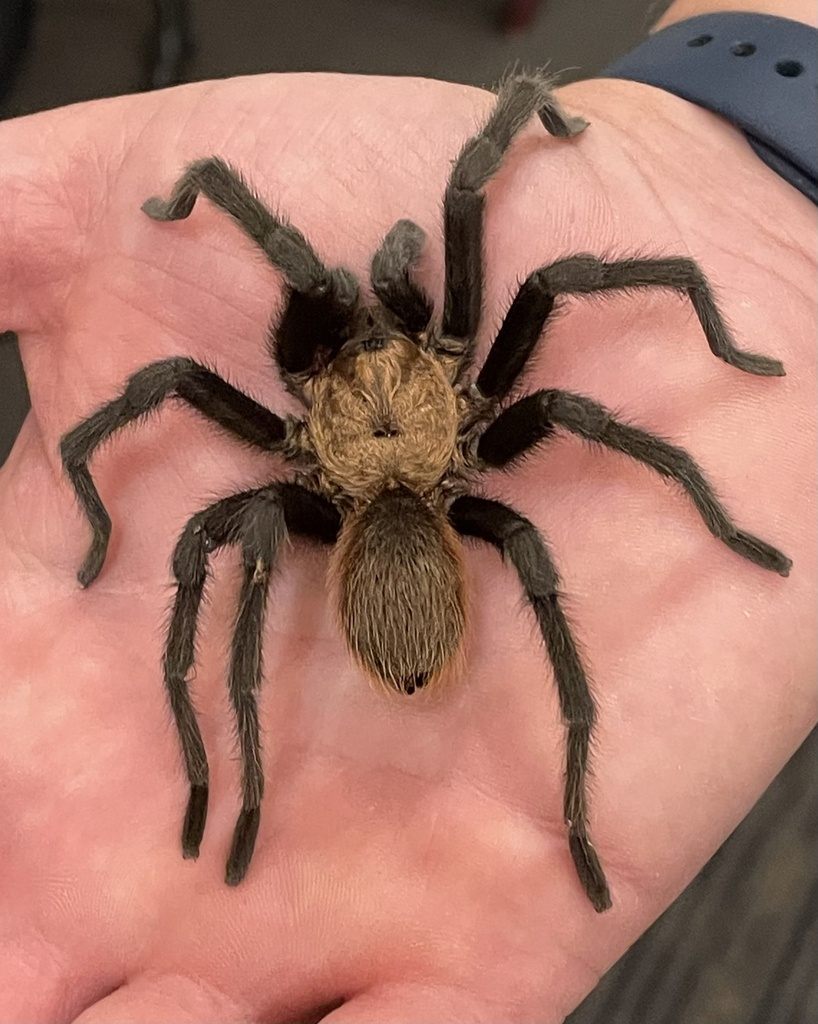
The Texas brown tarantula (Aphonopelma hentzi) is a large, hairy arachnid native to the south-central United States. Is a tarantula dangerous? Not really: it is docile and its bite is only mildly painful. The bigger hazard is the barbed defensive hairs it can kick off its abdomen. Most sightings happen in autumn, when wandering males leave their burrows to find a mate.
Every autumn, gardens and roadsides across Texas and its neighbouring states fill with a spider most people have never seen the rest of the year: a fist-sized, furred tarantula walking in the open, in daylight, like it owns the place. It looks like the start of a horror movie. It is actually one of the most harmless animals you could meet. Here is how to identify a Texas brown tarantula, what its bite really does, and why it suddenly seems to be everywhere each fall.
How to identify a Texas brown tarantula
Also known as the Oklahoma brown or Missouri tarantula, this is one of the most common tarantula species in North America, and one of the easiest to recognise:
- Size: a stocky body with a leg span that can top 10 cm (4 in), among the larger spiders most people will ever encounter outside a pet shop.
- Colour: uniform dark brown to tan across the body and legs, with no bold stripes, bands or an hourglass marking.
- Build: thick, hairy legs and a dense covering of short setae over the whole body, giving it a velvety rather than glossy look.
- Movement: a slow, deliberate walk rather than the fast scuttle of a wolf spider or huntsman, pausing often to test the ground with its front legs.
Where do Texas brown tarantulas live?
This species is native to grassland, scrub and desert edge across Texas, Oklahoma, Louisiana, Arkansas, Kansas, Missouri and New Mexico. For most of the year it lives a quiet, underground life in a silk-lined burrow, often a rodent hole it has taken over and reinforced, sealing the entrance with a thin silk trapdoor. It is almost entirely nocturnal in this phase, sitting at the burrow mouth after dark to ambush passing insects, which is why it goes largely unnoticed for months at a time.
Is a tarantula bite actually dangerous?
Not in any serious way. The venom is built to subdue insects, not people, and a bite from a Texas brown tarantula typically causes brief, sharp pain with redness and mild swelling, broadly comparable to a bee or wasp sting. There is no documented human death from this species' bite. It is also genuinely reluctant to bite at all: this is a docile, slow-moving spider that would rather hold still, retreat into its burrow, or deploy its other defence before it ever strikes with its fangs.
The bigger risk: urticating hairs, not the bite
That other defence is the real reason to handle this species with respect. Like most tarantulas native to the Americas, the Texas brown tarantula carries a patch of fine, barbed urticating hairs on its abdomen. When seriously threatened, it turns its back and uses its hind legs to brush a cloud of these hairs toward the source of the threat. On skin they cause an itchy, sometimes burning rash; in the eyes, they can cause real, lasting irritation. A tarantula that feels cornered will reach for this option well before it bites, so the sensible response to one in the open is simple: watch, do not touch.
Why are there so many tarantulas wandering in autumn?
The sudden autumn surge in sightings is not a population boom, and despite the word people often reach for online, it is not a true migration either. It is a one-way walkabout by mature males. After reaching adulthood, a male Texas brown tarantula abandons the burrow it has lived in for years and sets out on foot, sometimes covering long distances, searching for a receptive female's burrow. Once he finds one, he drums on the ground outside to announce himself before approaching to mate. That walk, repeated by thousands of males across the same few weeks each year, is the entire explanation for why a spider that spent a decade underground and unseen is suddenly crossing driveways in broad daylight.
How long do tarantulas live, and is there a male vs female difference?
A striking one. Female Texas brown tarantulas are slow-living by spider standards: they can reach 20 to 30 years old, continuing to grow and moult throughout adulthood. Males live a fraction of that. Most die within a year of their final moult into adulthood, often not long after they finally mate, their entire adult life compressed into that single autumn walkabout. You can tell the sexes apart on sight: males are more slender with proportionally longer legs and a small pair of hooked spurs on their front legs used to grip a female during mating, while females are bulkier, with a rounder abdomen and more uniform colouring.
How rare is the Texas brown tarantula in Kaught?
In the Kaught catalog this species sits at the Common tier, one diamond out of four. As always, that is not a statement about its conservation status, only about how often it is actually recorded. A wide range across the south-central United States, combined with that very visible autumn walkabout, means confirmed sightings add up quickly each year, which is exactly what keeps it at the Common tier rather than higher.
For other spiders that get far more fear than their biology deserves, the huntsman spider guide covers a huge, fast lookalike that is also essentially harmless, and the brown recluse spider guide tackles a reputation built mostly on misidentification. The black widow spider guide is the one lookalike situation where the caution is actually warranted, and how spiders spin silk explains the glands this burrow-dwelling hunter relies on far less than a web-spinner does.
Texas brown tarantula: frequently asked questions
Is a tarantula dangerous to humans?
Not in any meaningful sense. The Texas brown tarantula is docile, avoids confrontation, and its venom is built to subdue small insect prey, not people. A bite can happen, but it is not the biggest risk this spider actually poses.
Does a tarantula bite hurt?
A little, similar to a bee or wasp sting: brief sharp pain, redness and mild swelling that settles within a day or two. There is no documented human death from a tarantula bite, and bites are rare since the spider would much rather retreat or kick hairs than bite.
What are urticating hairs and why do tarantulas kick them?
Fine, barbed hairs on the tarantula's abdomen that it brushes off with its back legs toward a threat. They irritate skin and are especially painful if they reach the eyes, which makes them a bigger practical hazard than the bite itself.
Why are there so many tarantulas wandering in autumn?
Every autumn, mature male Texas brown tarantulas leave the burrow they have lived in for years and set out on foot, sometimes walking long distances, to find a female's burrow and mate. That walkabout, not any population boom, is why sightings spike each fall.
How long do tarantulas live?
Females can live 20 to 30 years and keep growing and moulting as adults. Males live far shorter lives: most die within a year of reaching maturity, often not long after mating.
How can you tell a male tarantula from a female?
Males tend to be more slender with proportionally longer legs and a pair of small hooked spurs on their front legs, used to grip a female during mating. Females have a bulkier abdomen and generally darker, more uniform colouring.
Why is the Texas brown tarantula "Common" in Kaught?
Kaught's rarity tracks how often a species is actually recorded in the wild, not how dramatic it looks. Thanks to a wide range across the south-central United States and a burst of visible activity every autumn, this tarantula is recorded often enough to sit at the Common tier.
The next thing you see could be
your first catch.
Kaught is live on the App Store and Google Play. Free to start, and your first catch is one photo away.
Free to start · Live on the App Store and Google Play
Species data, type, rarity tier and measurements, is drawn from the Kaught catalog, built on open biodiversity records from GBIF and iNaturalist. Rarity reflects how often a species is observed in the wild, not its conservation status.