
Adaptation explainer
How do spiders spin silk? The biology of the strongest material in nature
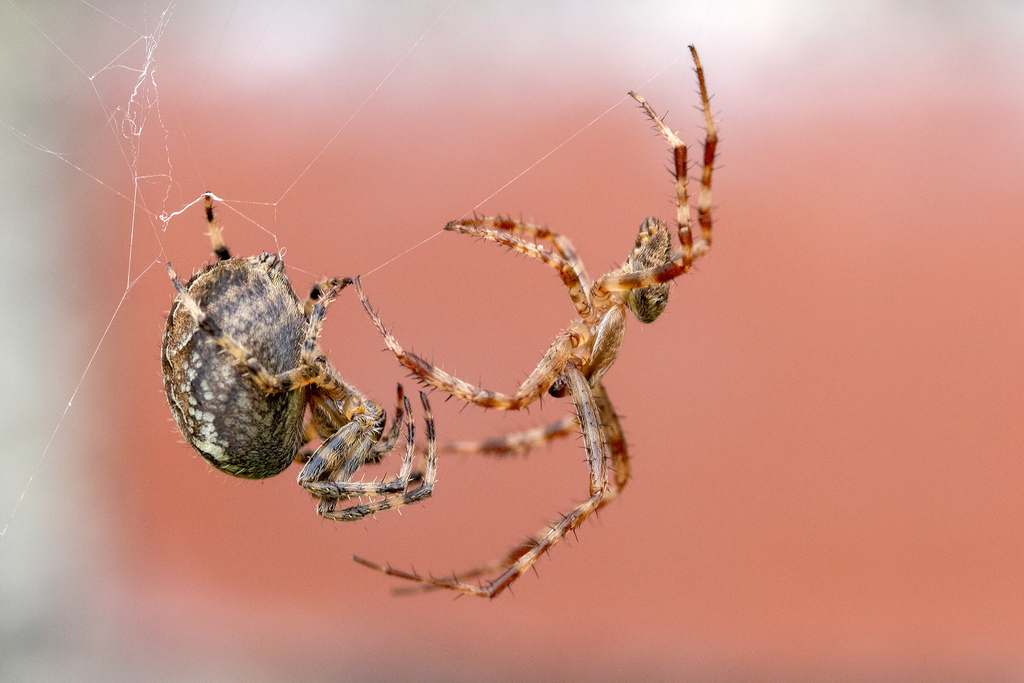
Spiders produce silk as a liquid protein inside abdominal glands and push it through narrow ducts called spinnerets. As the protein passes through the duct, a change in pH and ion concentration causes the protein chains to fold and crystallise into a solid fibre. One garden spider produces up to seven distinct silk types, each from a different gland and each optimised for a specific task. Dragline silk is stronger by weight than high-grade steel.
The garden spider sitting in the centre of a dew-covered web on a September morning is performing what might be the most impressive feat of materials science in the animal kingdom. The web it built overnight is stronger by weight than steel, more elastic than nylon, and assembled without heat, pressure or industrial chemicals from proteins the spider made itself.
Here is how it actually works.
The raw material: a liquid protein
Silk begins as a water-soluble protein called spidroin, stored as a concentrated liquid solution in specialised silk glands inside the spider's abdomen. Different glands produce different spidroins. The cross orbweaver (Araneus diadematus), the speckled garden spider found across Europe and North America, has up to seven pairs of glands, each producing a chemically distinct protein.
In storage, the spidroin is kept soluble by a combination of high water content, slightly alkaline pH, and ions that prevent the protein chains from sticking to each other prematurely. This is crucial: if the silk solidified inside the gland, the spider would be paralysed within hours.
The spinneret: where liquid becomes solid
Each gland drains through a long, tapering duct. As the liquid protein moves along this duct, conditions change systematically:
- pH drops from roughly 7.2 (neutral) at the gland to around 5.7 (acidic) at the exit.
- Ion concentrations shift: sodium ions are removed and replaced by potassium and phosphate ions.
- The duct narrows, increasing shear stress on the protein chains.
These three changes trigger a phase transition. The spidroin protein chains, previously kept apart, begin to fold. Specific regions of the protein, rich in a short repeating amino acid motif (polyalanine blocks), stack into tight crystalline beta-sheets. These crystals lock the fibre together. The remaining parts of the chain, rich in glycine, stay disordered and flexible, forming rubbery amorphous regions between the crystals.
The result is a composite material with crystalline regions providing tensile strength and amorphous regions providing extensibility. The spider then pulls the partially solidified protein out through the spinneret tip, and drawing it under tension completes the crystallisation and aligns the fibres. No spinning: the silk is pulled, not twisted, and self-assembles under tension into a solid thread.
Seven silks, seven jobs
The cross orbweaver does not produce one silk. It produces up to seven, from different glands, with different mechanical properties and different uses:
- Dragline silk (major ampullate): the strongest. Used for the web's outer frame, radial threads, and the safety line the spider drops from when threatened. Tensile strength roughly 1,000–1,500 MPa. This is the one stronger than steel by weight.
- Viscid silk (flagelliform): the elastic, stretchy spiral threads of the web that catch prey. Can extend to 200–270% of its resting length before breaking, far more elastic than dragline silk. Coated with sticky droplets from a third gland (aggregate).
- Tubuliform silk: used for the egg case. Tougher and more resistant to UV and desiccation than other silks; protects the eggs through winter.
- Aciniform silk: used to wrap and immobilise prey. Tough and resistant to tearing.
- Piriform silk: used for attachment discs, the anchors that fasten the web to a branch or wall. Extremely strong in adhesion; pulls the surface before the silk breaks.
- Aggregate silk (glue): liquid droplets applied to the viscid spiral to make it sticky.
- Minor ampullate silk: used for auxiliary frame lines during web construction and as a temporary scaffold.
Each of these silks has been selected by evolution for its specific mechanical task. Dragline needs stiffness; viscid spiral needs elasticity. Tubuliform needs to survive a winter outside. They share the same basic protein architecture but differ in the ratio of crystalline to amorphous regions and in the specific amino acid sequences of those regions.
Why dragline silk outperforms steel
Steel has a tensile strength of roughly 400 MPa in standard grades and up to around 2,000 MPa in the finest drawn wire. Dragline silk reaches 1,000–1,500 MPa, comparable. But steel has a density of roughly 7,800 kg per cubic metre. Dragline silk has a density of roughly 1,300 kg per cubic metre. By weight, silk beats steel by a factor of approximately 5.
More significantly, silk combines high strength with high elasticity. A material that is both strong and elastic absorbs a large amount of energy before breaking: engineers call this toughness. A strand of dragline silk can absorb roughly 150 MJ/m3 of energy before failure. Kevlar, a synthetic high-performance polymer, absorbs around 50 MJ/m3. Spider silk is three times tougher than Kevlar by this measure.
This combination is why a web does not shatter when a flying insect hits it. The sticky spiral stretches, absorbs the kinetic energy of the impact, and brings the insect to a stop without breaking.
Why spiders do not stick to their own webs
Three mechanisms prevent this. First, the radial threads and frame (the dragline silk) are not sticky: only the spiral viscid threads carry glue droplets. Spiders use the radial threads to move. Second, spiders coat their leg tarsi with an oily secretion that reduces adhesion to the sticky threads when they do touch them. Third, spiders move with deliberate precision, rarely touching the spiral threads at all. If a spider does land on a sticky thread, it pulls rather than pushes, which breaks the contact at a single glue droplet rather than spreading it.
The cross orbweaver as a research model
The cross orbweaver is one of the most studied arachnids in biomaterials research precisely because it is large enough to handle, produces substantial quantities of silk, and has all seven gland types. Its genome has been sequenced, its silk genes are well characterised, and the mechanical properties of each of its seven silks have been measured. Attempts to replicate spider silk synthetically using genetically engineered bacteria, yeast and silkworms have produced structurally similar proteins, but the mechanical properties fall short of the natural material. The precise ionic gradient, pH shift and drawing conditions inside the spider's duct have proved difficult to reproduce industrially.
The cross orbweaver itself is Common tier in the Kaught catalog, one diamond out of four, reflecting how frequently it is recorded: it is one of the most abundant and widely distributed spiders in the Northern Hemisphere, a familiar resident of every garden with enough structure to anchor an orb web. Despite that abundance, the material it produces in its abdomen has no engineering equivalent.
Spider silk: frequently asked questions
How do spiders spin silk?
Silk is produced as a liquid protein in abdominal glands and pulled through narrow ducts called spinnerets. A pH drop and ion shift in the duct causes the protein to fold and crystallise into a solid fibre under tension. The spider pulls the silk rather than spinning it; the thread self-assembles as it exits.
Is spider silk stronger than steel?
By weight, yes. Dragline silk has tensile strength of roughly 1,000–1,500 MPa and is about six times lighter than steel. Weight for weight, a silk thread can bear around five times more load than a steel wire before breaking, and is about three times tougher than Kevlar.
How many types of silk can a spider produce?
Up to seven distinct types in orb-weavers like the cross orbweaver: dragline (frame and safety line), viscid (sticky spiral), tubuliform (egg case), aciniform (prey wrapping), piriform (attachment discs), aggregate (glue droplets) and minor ampullate (scaffold lines). Each comes from a different gland and has different mechanical properties.
Why is spider silk elastic?
Silk fibres are a composite of crystalline beta-sheet blocks (providing strength) and disordered amorphous regions (providing elasticity). Under load, the amorphous regions unfold and absorb energy. This makes silk both strong and tough: it resists breaking and absorbs impact, which is why a web stops a fast-flying insect without shattering.
Why do spiders not get stuck in their own webs?
Spiders move on the non-sticky dragline frame threads, not the sticky viscid spiral. An oily secretion on their leg tips also reduces adhesion. When they do touch a sticky thread, they pull rather than press, releasing contact at one glue droplet at a time.
Can spider silk be made artificially?
Researchers have engineered bacteria, yeast and silkworms to produce spider silk proteins. The fibres are structurally similar but typically fall short of the mechanical properties of the real thing. Replicating the precise ionic gradient and pH change inside the spider's duct, the conditions that trigger self-assembly, has proved the limiting challenge.
What is the cross orbweaver?
The cross orbweaver (Araneus diadematus) is a common garden spider across Europe and North America, identifiable by a row of white spots forming a cross on the abdomen. It builds an orb web and is one of the most studied spiders in silk research. Common tier in the Kaught catalog, one diamond.
The next thing you see could be
your first catch.
Kaught is live on the App Store and Google Play. Free to start, and your first catch is one photo away.
Free to start · Live on the App Store and Google Play
Species data, type, rarity tier and measurements, is drawn from the Kaught catalog, built on open biodiversity records from GBIF and iNaturalist. Rarity reflects how often a species is observed in the wild, not its conservation status.