
Superlative
Most Poisonous Animals in the World: 6 Ranked
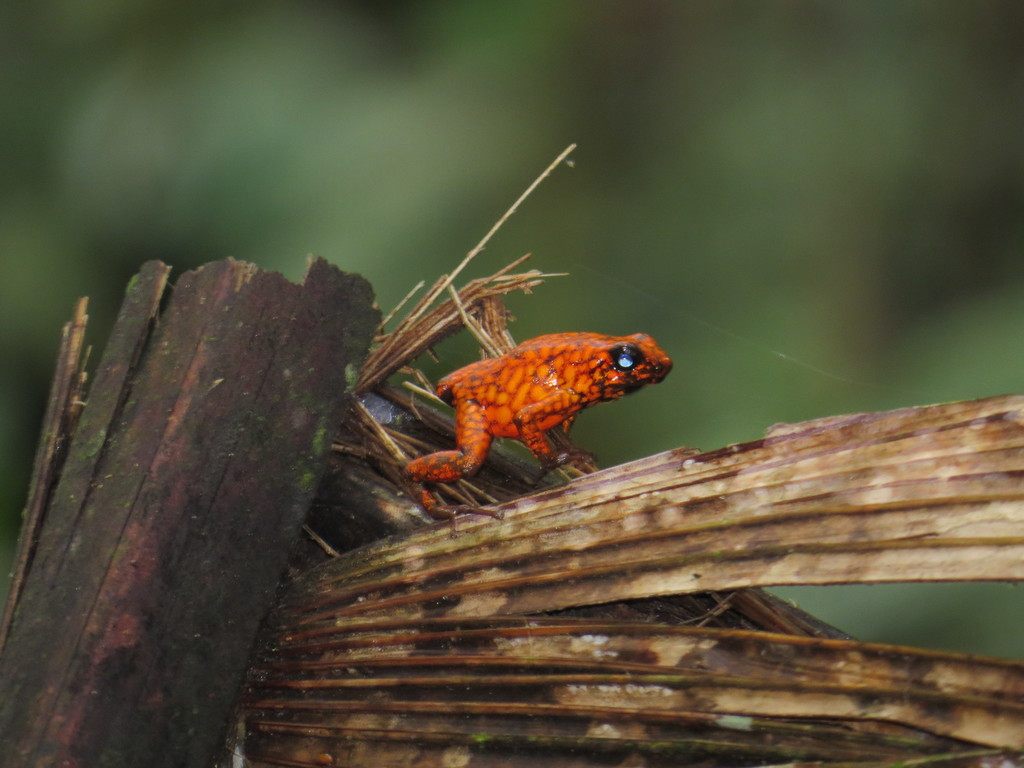
Poison and venom are different weapons: there's no single winner. A Little Devil Poison Frog and a Cane Toad are dangerous to touch; a Tiger Keelback does both; a Spur-winged Goose and a Black-spotted Boxfish are only dangerous once eaten, or once something else shares their water. Six species, ranked.
Ask for the most poisonous animals in the world and most lists quietly swap in venomous animals instead, cobras and scorpions that inject their toxin through a bite or sting. True poison works differently: the animal just carries it, in its skin, its blood or its meat, and something else has to eat, touch or taste it for the toxin to do anything. That's a narrower, stranger list, and it includes a few animals you'd never suspect. Every species below is in the Kaught catalog with its own observation-derived rarity tier.
1. Little Devil Poison Frog, skin toxic enough to need no bite at all
This frog doesn't bite, sting or chase anything. Its entire defence is the skin itself: alkaloid toxins absorbed from a diet of ants and mites, then concentrated into a coating potent enough to deter almost any predator that mouths it. The bright orange-and-black pattern isn't decoration, it's advertising, the same warning colouration shared across its family, the Dendrobatidae, which also includes the golden poison frog, the single most toxic frog known.
Remove it from that diet, as breeders do with captive-raised individuals, and the toxin never develops at all; it has to keep eating the right arthropods to stay dangerous. Epic in the catalog, three diamonds, restricted to a narrow strip of Ecuadorian rainforest most people will never visit.
2. Cane Toad, the amphibian that kills what tries to eat it
A cane toad's danger sits in two parotoid glands behind its eyes, swollen sacs that release a milky bufotoxin the moment the toad is bitten or squeezed. It doesn't need to do anything else; the toxin alone is strong enough to stop a dog or cat's heart if they mouth one, which is exactly how it keeps wiping out native predators and pets across Australia, where it was introduced in 1935 to control a beetle, and failed.
Unusually for an amphibian, it also tolerates brackish coastal water, a trait that shows up in its catalog secondary type. Common tier, one diamond: it is now one of the most widespread toads on the planet, for exactly the wrong reasons.
3. Tiger Keelback, poisonous and venomous at the same time
Most animals on this list are either poisonous or venomous. The tiger keelback is both. It hunts toxic toads and frogs across Japan, Korea, China and the Russian Far East, and instead of breaking down their bufadienolide toxins, it stores them unmetabolised in a row of nuchal glands running along the back of its neck, oozing the toxin out defensively if a predator grabs it there.
Separately, grooved rear fangs deliver a real venom when it bites, mild most of the time, but not always; a fatal 1974 schoolboy bite in Japan first alerted doctors to how serious it can be. Common tier, one diamond, for a snake running two completely different chemical defences at once.
4. Black-spotted Boxfish, a toxin it only releases under stress
A boxfish survives reef predators with armour, not speed, a rigid shell of hexagonal plates in place of a fast getaway. Its poison is a backup, not an everyday weapon: a skin toxin called pahutoxin, kept in reserve and released into the surrounding water only when the fish is stressed, injured or dying.
That makes it mostly harmless to a diver, but genuinely dangerous to anything sharing its water. Reef aquarium keepers know the rule well: a boxfish that dies unnoticed in a tank can release enough pahutoxin to kill every other fish inside before anyone finds the body. Common tier, one diamond, across reefs from the Red Sea to Hawaii.
5. Spur-winged Goose, harmless alive, dangerous cooked
Nothing about a live spur-winged goose is dangerous. It grazes on vegetation and seeds across African wetlands and happily eats blister beetles too, insects that carry a toxin called cantharidin and suffer no harm from it themselves. The goose doesn't metabolise that toxin either; it just accumulates, unchanged, in the bird's tissue.
Cooking doesn't break it down. In parts of West and Central Africa, the bird's meat is traditionally avoided or carefully tested, because eating enough of it can cause fatal cantharidin poisoning in a person, a genuinely dangerous animal that never has to touch you at all. Rare tier, two diamonds.
6. Monarch Butterfly, the toxic insect already in your backyard
The least threatening-looking animal on this list is still a genuinely poisonous one, just not to you. As a caterpillar, a monarch feeds exclusively on milkweed and sequesters its cardenolide toxins, carrying them straight through metamorphosis into the adult butterfly's tissue.
A bird that eats one quickly learns to associate the bright orange pattern with getting sick, and avoids every monarch afterward, which is also why the unrelated viceroy butterfly copies its colours for free protection. Common tier, one diamond: the most frequently recorded toxic animal on this entire list is probably drifting through a garden near you right now.
Poison versus venom: the difference that matters
Line these six up and the real pattern isn't toxicity, it's delivery. The frog and the toad are passive: touch them, mouth them, and the toxin does the rest without them doing anything extra. The goose and the boxfish are passive in a different way, dangerous only once something else, a diner or a tankmate, crosses a line they didn't set. The monarch is passive and aimed at one specific audience, birds, not people. Only the tiger keelback runs both systems at once, a passive poison and an active venom, in the same animal.
That distinction is also why this list and a most venomous animals ranking barely overlap. For the amphibian with the opposite trick, turning invisible instead of toxic, see the glass frog, and for the monarch's full 3,000-mile story, see its migration guide.
Most poisonous animals: frequently asked questions
What is the most poisonous animal in the world?
It depends on the definition. The golden poison frog, not in this catalog, holds the record for the most toxic skin secretion of any animal by weight. Among catalog species here, the Little Devil Poison Frog is the one most dangerous to simply touch.
What is the difference between poisonous and venomous?
Poison has to be eaten, touched or inhaled to work; the animal just carries it passively. Venom has to be injected, through a bite, sting or spine, by an animal actively attacking or defending. Some animals, like the tiger keelback, do both.
Is a cane toad dangerous to touch?
Yes, with care. Its parotoid glands release a milky bufotoxin when bitten or squeezed, enough to kill a dog or cat that mouths it. Human skin contact is lower risk, but wash hands afterward and keep the toxin away from eyes and cuts.
Can a tiger keelback snake poison you and bite you with venom?
Yes. It stores toad toxin in glands on the back of its neck and oozes it defensively if grabbed there, which makes it poisonous. It also delivers a mild venom from rear fangs when it bites, which makes it venomous too, a rare double threat.
Why is the spur-winged goose dangerous if it doesn't bite or sting?
Its live bite and vegetarian diet are harmless. The danger is cantharidin, a toxin from blister beetles it eats, which builds up unmetabolised in its tissue. Cooking does not break it down, so in parts of Africa its meat is traditionally avoided.
Is the monarch butterfly poisonous to humans?
To humans, no. Its cardenolide toxins, sequestered from milkweed as a caterpillar, are concentrated enough to sicken or kill a bird that eats it, which is the predator it evolved the defence against, not people.
Can a boxfish poison you if you touch it?
Only to other fish. A healthy boxfish poses little risk to a person, but when stressed, injured or dying it releases a toxin called pahutoxin into the water, strong enough to kill every other fish sharing its tank or tide pool.
The next thing you see could be
your first catch.
Kaught is live on the App Store and Google Play. Free to start, and your first catch is one photo away.
Free to start · Live on the App Store and Google Play
Species data, type, rarity tier and measurements, is drawn from the Kaught catalog, built on open biodiversity records from GBIF and iNaturalist. Rarity reflects how often a species is observed in the wild, not its conservation status.