
Superlative
Most dangerous insects in the world: 6 ranked by human impact
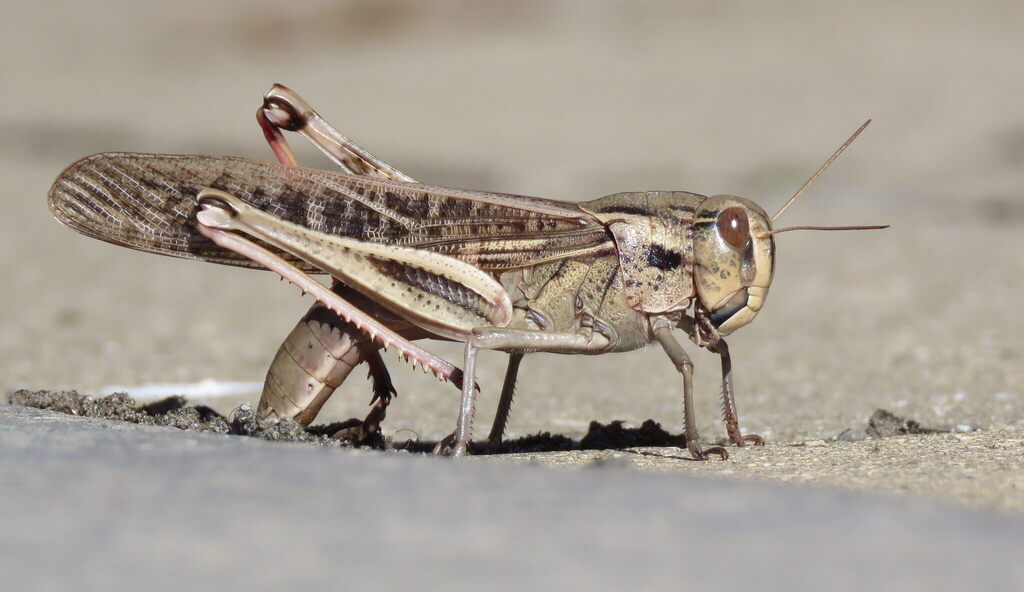
The most dangerous insects in the world, ranked by direct and indirect human harm, are led by three mosquito species responsible for hundreds of thousands of deaths a year, followed by the Red Imported Fire Ant, the Yellow-legged Hornet, and the Migratory Locust, which can strip food for tens of millions of people in a single season.
Insects outnumber every other group of land animals by orders of magnitude. Most are harmless or helpful. A small handful are the deadliest animals on Earth, not by size or venom potency alone, but by the sheer scale of their interaction with human life. This ranking uses recorded human deaths per year as the primary measure, with economic harm and food-system damage as a secondary criterion where direct fatalities are lower.
Each species below holds a card in the Kaught catalog. All rarity tiers are based on observed recording frequency, not how harmful the animal is: every mosquito here is Common in the catalog because sightings are routine, but that abundance is precisely what makes them so consequential.
1. Anopheles gambiae (Malaria Mosquito)
No animal kills more people. The WHO recorded around 249 million malaria cases and 608,000 deaths in 2023, with over 95% concentrated in sub-Saharan Africa. Anopheles gambiae is the primary vector: only the female bites, and she does so at night, drawn to the carbon dioxide and warmth of sleeping people. When she feeds, she can transfer Plasmodium falciparum, the most lethal of the malaria parasites, in under a minute.
Its iNaturalist observation count sits at fewer than 10 records globally, not because it is rare, but because tiny night-biting mosquitoes are almost never photographed in the wild. In the Kaught catalog its rarity tier is Common, reflecting reality on the ground in the regions where it lives.
2. Asian Tiger Mosquito (Aedes albopictus)
Dengue fever infects an estimated 400 million people each year, killing around 40,000. Aedes albopictus is one of its main vectors, and unlike most mosquitoes it is a day-biter, making it harder to avoid with conventional bed nets. It also transmits Zika, chikungunya and yellow fever.
The field ID is straightforward: a white stripe runs exactly down the midline of the thorax, and the legs are banded black and white. Spot those marks and you have a confirmed Asian Tiger Mosquito. Its eggs survive desiccation for months, which is why it spread globally via the used-tyre trade: a single container load of tyres holding a puddle is enough to seed a new population. It is now established on every inhabited continent.
3. Common House Mosquito (Culex pipiens)
The mosquito most people have swatted in a bedroom. Culex pipiens is the primary vector of West Nile virus across Europe and North America, where it has caused thousands of neurological cases since the virus arrived in New York in 1999. It also transmits lymphatic filariasis, the parasitic infection that causes elephantiasis, currently affecting around 120 million people worldwide.
It breeds in standing water of any quality, including drains, rain barrels and polluted ponds, and overwinters as a mated female in basements and outbuildings, emerging in spring to begin biting immediately. One of the most abundant mosquito species on Earth: there are very few populated places it has not reached.
4. Red Imported Fire Ant (Solenopsis invicta)
The fire ant's danger is collective. A single worker is small enough to stand on a coin, but a mound can hold 250,000 of them, and when disturbed they attack simultaneously: a person stepping on a mound receives hundreds of stings in seconds, each one injecting solenopsin alkaloid venom that produces an immediate, intense burning sensation and a raised pustule. In people with venom allergies the result can be anaphylaxis. Around 30 to 100 confirmed deaths occur in the United States each year, and the numbers across Asia and Australia are comparable.
Originally from South American wetland, Solenopsis invicta now covers the southern United States, large parts of Australia, China, Taiwan and is advancing in southern Europe. It costs the US economy an estimated 8 billion dollars per year in control, healthcare and agricultural damage. The species has one of the most remarkable flood-survival strategies in nature: workers link their bodies into a buoyant raft, carrying the queen and brood to safety for days at a time if needed.
5. Yellow-legged Hornet (Vespa velutina)
A single Yellow-legged Hornet hovering at a hive entrance can catch 30 or more forager bees per hour. A colony sends out teams to do exactly this, and a heavily attacked hive can collapse within weeks. The economic damage to European beekeeping, where Vespa velutina has spread from a single accidental introduction in France in 2004, now runs to tens of millions of euros a year.
For people, the risk comes from disturbing nests: the hornet defends aggressively, and multiple stings can cause anaphylaxis in sensitised individuals. Dozens of deaths are recorded annually across France, Spain and Asia. The nest itself is unmistakable: a large, grey paper sphere, often high in a broadleaved tree, sometimes under roof eaves. Field ID: dark body, distinctive yellow leg sections, and a thin yellow-orange terminal band on the abdomen. How hornets compare to the most venomous animals overall is a longer story.
6. Migratory Locust (Locusta migratoria)
The Migratory Locust kills indirectly, but at a scale no other insect approaches. In its solitary phase it is a green or brown grasshopper-like insect, unremarkable in the landscape, rated Rare in the Kaught catalog because it takes effort to record. Then population density crosses a threshold and something remarkable happens: the same species changes colour to yellow and black, changes behaviour from solitary to gregarious, and begins to aggregate into swarms that can cover 150 km² and hold up to 70 billion individuals.
A swarm of that size eats around 35,000 tonnes of vegetation per day, the equivalent food supply of 35,000 people. The East African outbreak of 2020, driven in part by unusually wet conditions that accelerated breeding, put the food security of an estimated 35 million people at risk across Ethiopia, Kenya, Somalia and beyond. Locust swarms are among the few natural events capable of triggering famines in a modern world with global food logistics.
The phase change itself is a remarkable piece of biology: crowding causes a surge in serotonin levels in the central nervous system, and that chemical signal alone is enough to trigger the full physical and behavioural transformation. For how insects compare to the most dangerous animals overall, the mosquito genus consistently tops the list by body count, with locusts as the most consequential exception in food-system terms.
What does rarity mean here?
It is worth pausing on a pattern in the catalog data: five of the six species in this ranking are rated Common and one Rare. No Epics, no Legendaries. Kaught's rarity tier reflects how often a species turns up in real-world wildlife observations, and these insects are abundant almost everywhere they occur. The danger does not come from scarcity. It comes from the opposite: scale, density, and the relentless overlap with human life. The deadliest snakes follow a similar pattern, with several common-tier species causing the highest human mortality because they share the same ground as farming communities.
Compare that with the strongest animals in the world, where rarity and power tend to correlate, and you see how the catalog's observation-derived tiers reveal genuinely different things about different rankings. An Anopheles gambiae is Common because it is everywhere. A Migratory Locust is Rare because a swarm is a transient event most people will never see in person. Neither rarity score says anything about conservation status.
Most dangerous insects: frequently asked questions
What is the most dangerous insect in the world?
By human deaths, the most dangerous insect is Anopheles gambiae, the malaria mosquito. It transmits Plasmodium falciparum, the parasite behind most of the roughly 600,000 malaria deaths each year, almost all in sub-Saharan Africa.
How many people do mosquitoes kill each year?
Mosquitoes as a group kill more people than any other animal. Malaria alone causes around 600,000 deaths per year. Dengue fever, spread primarily by Aedes mosquitoes, causes a further 40,000 or more deaths annually, with hundreds of millions of non-fatal infections.
Are fire ants dangerous to humans?
Yes. Red Imported Fire Ants attack in coordinated groups when a nest is disturbed, each worker stinging repeatedly and injecting solenopsin venom. Deaths from anaphylaxis occur every year, around 30 to 100 confirmed in the United States alone. The risk is highest for people with venom allergies.
What makes the Asian Tiger Mosquito so dangerous?
It bites by day, not just at dusk, making it harder to avoid. It efficiently transmits dengue, Zika, chikungunya and yellow fever. Originally from Southeast Asia, it has spread to every inhabited continent, carrying tropical diseases into regions with no prior exposure.
Do Yellow-legged Hornets kill people?
Yes. Multiple stings from Yellow-legged Hornets can cause anaphylactic shock, killing dozens of people per year across Europe and Asia. The hornet is also economically dangerous: it devastates honey bee colonies, costing European beekeepers millions of euros annually.
Why is the Migratory Locust on this list?
The Migratory Locust kills indirectly but at enormous scale. A large swarm can cover 150 km² and eat 35,000 tonnes of crops per day. The East African outbreak of 2020 threatened food security for around 35 million people across multiple countries.
The next thing you see could be
your first catch.
Kaught is live on the App Store and Google Play. Free to start, and your first catch is one photo away.
Free to start · Live on the App Store and Google Play
Species data, type, rarity tier and measurements, is drawn from the Kaught catalog, built on open biodiversity records from GBIF and iNaturalist. Rarity reflects how often a species is observed in the wild, not its conservation status.