
Superlative
Deadliest snakes in the world: 6 species ranked by human impact
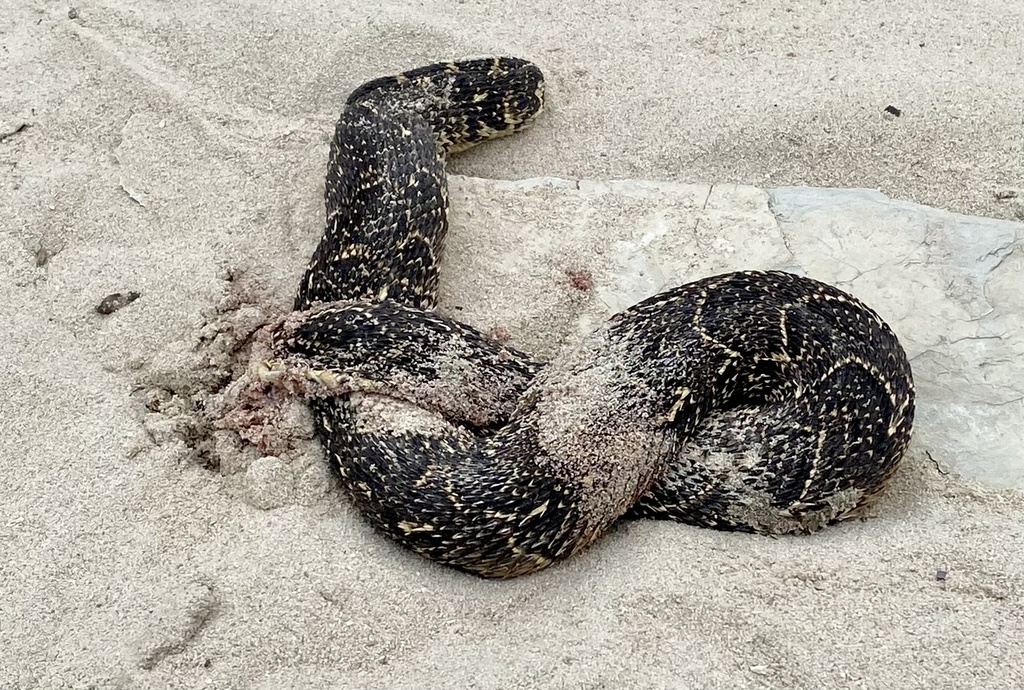
The snakes that kill the most people are not necessarily the ones with the most potent venom. Deadliness, by human mortality, comes from combining venom that works, a tendency to bite when disturbed, and a habit of living exactly where people farm, sleep and walk barefoot after dark.
Worldwide, snakebite kills an estimated 81,000 to 138,000 people per year, with several hundred thousand more suffering permanent disability. The burden falls almost entirely on rural communities in sub-Saharan Africa, South Asia and Southeast Asia. The species responsible are not the Australian taipans or sea snakes that dominate lists of "most venomous": those animals live in habitats and conditions that minimise human contact. The species below combine significant venom with a near-total overlap with dense human populations.
The ranking uses human mortality estimates, not venom LD50 values in mice.
1. Puff Adder Bitis arietans
The puff adder is responsible for more snakebite fatalities in sub-Saharan Africa than any other species. It is the most common cause of snakebite death across the continent. The reason is not exceptional venom potency but a constellation of behavioural and ecological factors that maximise human contact and minimise warning.
The puff adder is slow and cryptic. Where most vipers move away when a person approaches, the puff adder relies on camouflage and stillness. It sits motionless in leaf litter, on footpaths and in field margins, and strikes only when stepped on or very close. It does not rattle or hiss audibly before striking. Bites most often occur on the feet and lower legs, at night or in poor light, when the victim does not see the snake at all.
The venom is cytotoxic: it causes severe local tissue destruction, swelling, blistering and necrosis at the bite site. Untreated bites can result in permanent limb loss. Without antivenom, fatality rates run to 10–15%.
2. Saw-scaled Viper Echis carinatus
Across the combined territory of South Asia, the Middle East and West Africa, the saw-scaled viper (Echis complex) is cited by many researchers as the single species responsible for the most human deaths globally. The Echis genus includes several closely related species that are collectively called saw-scaled or carpet vipers; Echis carinatus is the most widespread.
The name comes from the stridulation display: when threatened, the snake coils and rubs its serrated scales together in a continuous rasping sound, which is both a warning and, before it bites, easy to misinterpret as something other than a snake in the dark. The saw-scaled viper is small (40–80 cm), fast, aggressive when disturbed, and inhabits dry scrub, rocky hillsides and agricultural areas where people sleep on or near the ground.
The venom is haemotoxic, preventing blood clotting and causing extensive internal and external bleeding. Fatality without treatment is high. The combination of a wide range, dense human overlap, reactive temperament and effective anticoagulant venom makes the saw-scaled viper arguably the most dangerous snake by total human mortality per year.
3. Central Asian Cobra Naja naja
Often called the Indian cobra or spectacled cobra, Naja naja is a component of the "Big Four" species responsible for the vast majority of snakebite deaths in India: an estimated 15,000–20,000 deaths per year from all four combined, across a population of 1.4 billion people in intimate contact with agricultural land.
The cobra is most active at night and enters homes and agricultural buildings in search of rodents. Bites occur when a person reaches into a dark space, steps on a snake in darkness, or rolls onto one sleeping on the floor. The neurotoxic venom causes respiratory paralysis, and death from asphyxiation can occur within hours without treatment. The hood display gives the species an iconic profile but is a defensive warning, not an aggressive posture. The snake bites only when escape or the hood display fails.
The spectacle marking on the hood, a pale marking resembling a pair of glasses on the rear of the expanded hood, is the key field identification feature, though it varies in clarity. See also the most venomous animals in the world for context on where cobra venom ranks by LD50.
4. Black-necked Spitting Cobra Naja nigricollis
Sub-Saharan Africa's most widespread spitting cobra, Naja nigricollis, adds a dimension beyond the bite: it can project venom from forward-facing apertures in its fangs with accuracy to 2.5 m, targeting the eyes. Contact with mucous membranes causes immediate pain and, without rapid washing, permanent corneal damage or blindness.
The species is largely nocturnal and common in disturbed habitats, savanna, agricultural edges, and the outskirts of towns. Its spitting ability is defensive, deployed when the snake feels cornered. Encounters are frequent wherever large human populations live alongside uncultivated land. Bites are also common and deliver the same cytotoxic venom as most African cobras, producing local tissue destruction.
The spitting mechanism is a distinct evolutionary innovation found in several African and Asian cobra species and allows a defensive response that does not require contact with the threat. The snake can spit and retreat simultaneously.
5. Palestine Viper Daboia palaestinae
The Palestine viper is the most medically significant snake in the Middle East and is responsible for the majority of serious snakebite cases in Israel, Palestine, Lebanon and Jordan. It is a member of the Daboia genus, which includes the Russell's viper of South and Southeast Asia, one of the deadliest snakes in the world by bite volume.
Daboia palaestinae reaches up to 1.3 m and is a heavy-bodied, strongly patterned viper found in grassland, scrub, rocky hillsides and the edges of cultivation. It is active both by day and night depending on temperature, making it harder to avoid than a strictly nocturnal species. The venom is strongly haemotoxic, causing systemic coagulopathy, haemorrhage and renal failure. Without antivenom, severe bites carry significant mortality.
The species is the reason Israel has maintained one of the most developed snakebite treatment programmes in the region, with antivenom widely available and medical training specifically oriented toward viper envenomation.
6. Mozambique Spitting Cobra Naja mossambica
Common across southern and eastern Africa from Tanzania to South Africa, Naja mossambica occupies a range that closely overlaps the densest rural populations in the region. It shares the spitting ability and cytotoxic venom of its African cobra relatives but is comparatively small (up to 1.5 m), adaptable and remarkably tolerant of human-modified habitat.
The Mozambique spitting cobra is among the most frequently encountered venomous snakes in its range. It enters homes, chicken coops and latrines, and bites most often occur when people encounter it in such enclosed spaces at night. The cytotoxic venom causes severe local necrosis; bites to the face or hands have caused limb loss and permanent disfigurement. Ocular spitting causes similar injury to the black-necked spitting cobra: immediate, intense pain and risk of permanent vision damage without rapid irrigation.
For context on where these species sit in the broader hierarchy of dangerous animals, see the most dangerous animals in the world guide. For the biology of venom delivery mechanisms, see most venomous animals in the world. For snake identification in the field, see is the grass snake venomous for a contrast with harmless species that superficially resemble vipers and the gaboon viper for the record holder by venom yield per bite.
Deadliest snakes: frequently asked questions
Which snake kills the most humans per year?
The saw-scaled viper and puff adder are most often cited as the highest-mortality species globally. The saw-scaled viper causes more total fatalities across Asia and Africa combined; the puff adder causes the most deaths in sub-Saharan Africa specifically. Both combine effective venom with high encounter frequency in densely populated rural areas.
What makes a snake deadly to humans?
Three factors: venom potency, bite frequency, and proximity to human populations. The deadliest species by human mortality combine effective venom with a strong tendency to bite when disturbed and a habitat that overlaps densely with rural communities where antivenom access is limited.
Can a spitting cobra blind you?
Yes. Spitting cobras project venom up to 2.5 m with accuracy, targeting the eyes. Contact causes immediate intense pain and without rapid washing can cause permanent corneal scarring or blindness. Irrigate the eye immediately with large volumes of clean water for at least 15 minutes if spat at, and seek medical attention.
What should you do if bitten by a venomous snake?
Immobilise the bitten limb at or below heart level, keep calm and still to slow venom spread, remove rings and constricting items from the bitten area, and get to a hospital with antivenom as fast as possible. Do not cut, suck or apply a tourniquet. Time to antivenom is the single most important factor.
The next thing you see could be
your first catch.
Kaught is live on the App Store and Google Play. Free to start, and your first catch is one photo away.
Free to start · Live on the App Store and Google Play
Species data, type, rarity tier and measurements are drawn from the Kaught catalog, built on open biodiversity records from GBIF and iNaturalist. Rarity reflects how often a species is observed in the wild, not its conservation status.