
Superlative ranking
Longest-lived animals in the world: 6 record-holders ranked by confirmed lifespan
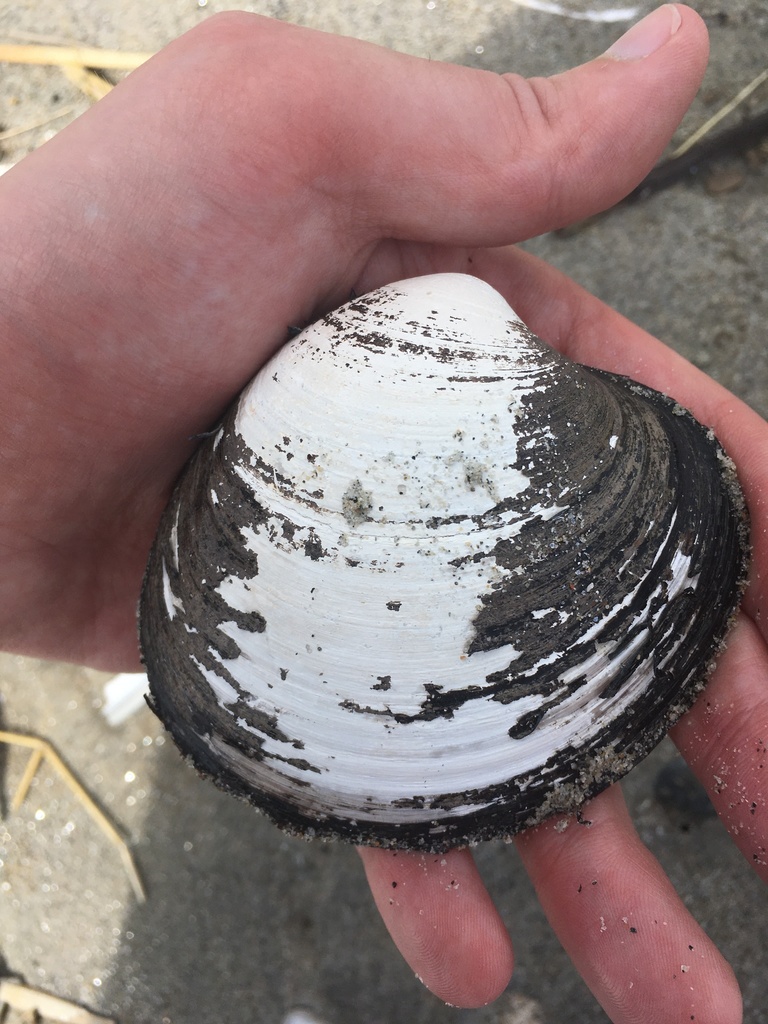
The longest-lived confirmed individual animal is an ocean quahog clam aged at 507 years. Among vertebrates, the bowhead whale tops the list at over 200 years. Six Kaught catalog species, ranked by maximum confirmed lifespan, with the biological mechanisms behind each record.
A human life of 90 years feels long. Set it against the animals below and it becomes a brief chapter. These six species from the Kaught catalog hold confirmed or reliably estimated lifespan records, backed by growth rings, isotope dating, historical documentation or a combination of all three. Every figure cited here is the highest confirmed or best-estimated individual age, not a species average.
1. Ocean Quahog: 507 years
In 2006, scientists dredging the Icelandic seabed pulled up a clam and counted 507 annual growth rings on its shell. They named it Ming, after the Chinese dynasty in whose reign it was born. Ming had been alive when Henry VIII was on the English throne, when Copernicus was still working on heliocentrism and when the Americas were barely charted by European hands.
The ocean quahog grows extremely slowly, adding 1 to 2 mm of shell per year in the cold North Atlantic. Each winter's low-growth period leaves a dark ring, just like a tree's annual ring, allowing precise year-by-year age determination. The clam filter-feeds on phytoplankton from a semi-buried position in the sandy seafloor, spending its five centuries doing essentially the same thing in the same place.
Why so long? Cold water slows metabolism, reducing the rate of cellular damage. Low metabolic rate correlates strongly with longevity across species. A clam that barely burns energy has very little oxidative stress to accumulate over time.
2. Eastern Pearlshell: up to 280 years
The eastern pearlshell is a freshwater mussel that makes the ocean quahog's cold-water strategy look positively hurried. Living in fast, oxygen-rich rivers with near-freezing temperatures, confirmed individuals have been aged at 280 years using shell rings.
Its longevity comes with a remarkable complication: the larvae (glochidia) are obligate parasites. They attach to the gills of salmon or brown trout for the first year of their lives, hitching a ride and drawing nutrients before dropping to the riverbed to begin their own centuries-long filter-feeding existence. A pearlshell cannot complete its life cycle without a healthy salmon population in the same river.
3. Bowhead Whale: over 200 years
In 2007, Alaskan hunters processing a bowhead whale found a stone harpoon tip embedded in its blubber. Analysis dated the tip to around 1890, meaning the whale had survived a harpoon strike and then lived for another 117 or more years. Other individuals have been aged using amino acid racemisation in the eye lens, with some estimates exceeding 200 years.
The bowhead is the longest-lived confirmed vertebrate. It is also the only large whale resident in the Arctic year-round, capable of breaking through sea ice up to 60 cm thick using its reinforced skull. It feeds by filter-feeding on copepods and krill through 350 baleen plates, travelling under and through ice at speeds up to 10 km/h.
Cold Arctic waters and a low metabolic rate relative to body size explain much of the bowhead's longevity. Researchers have also found that its genome contains unique variants in genes associated with DNA repair and cell-cycle regulation, suggesting it has evolved additional biological tools for suppressing the cellular damage that accumulates with age.
4. Galapagos Giant Tortoise: 175 years or more
Giant tortoises are the longest-lived reptiles and among the longest-lived vertebrates with well-documented individual records. Jonathan, a Seychelles giant tortoise (a related species to the Galapagos tortoise) living on the island of St Helena, was confirmed to be at least 192 years old in 2024, based on a photograph taken between 1882 and 1886 showing him as an already-mature adult.
Galapagos giant tortoises on the islands themselves have reached at least 175 years in documented cases. Their slow metabolism, low body temperature relative to active endotherms and low resting heart rate (around 6 beats per minute) all contribute to their extraordinary longevity. They spend the heat of the day wallowing in mud pools to thermoregulate, expending minimal energy.
5. Beluga Sturgeon: over 100 years
The beluga sturgeon is the largest freshwater fish in the world by weight and one of the longest-lived. Ages are determined by counting growth rings on the fin spines, and confirmed individuals have exceeded 100 years. Estimated maximum lifespans of up to 118 years have been reported in Russian scientific literature, with some unverified reports of older individuals.
It grows its entire life, so the largest known individuals (recorded at up to 1,571 kg and 6 m) were almost certainly very old. The beluga matures slowly, sometimes taking 20 years to reach sexual maturity, which makes it especially sensitive to overfishing: remove breeding adults and the population cannot recover quickly.
The beluga is also an Epic-tier species in the catalog, three diamonds, reflecting how rarely it is observed in the wild. Populations in the Caspian basin have declined sharply over the past century, making a sighting today rarer than at any point in recent history.
6. Alligator Snapping Turtle: over 100 years
The alligator snapping turtle holds the record for the longest-lived freshwater turtle. Wild individuals have been aged at over 100 years using growth marks in the skeletal bone. It is also one of the heaviest freshwater turtles on Earth, reaching 100 kg in adults.
Its hunting strategy is entirely passive: it lies motionless on the riverbed with its mouth open and wiggles a pink, worm-like appendage on its tongue. Fish investigating the lure swim directly into its jaws. It is the only North American turtle known to use active lure-based hunting.
The Kaught catalog rates it at Rare, two diamonds: encountered rarely in the wild given its deep-river habitat and largely nocturnal activity, though not as scarce in sightings as an Epic or Legendary species.
For more superlative rankings, see strongest animals in the world and smartest animals in the world. For another ocean record-holder, see mantis shrimp.
Longest-lived animals: frequently asked questions
What is the longest-lived animal in the world?
The confirmed record is the ocean quahog clam (Arctica islandica) nicknamed Ming, aged at 507 years using annual shell growth rings. It was alive during the reign of the Ming dynasty, hence the name.
What is the longest-lived vertebrate?
The bowhead whale (Balaena mysticetus) holds the confirmed vertebrate record. A specimen taken in 2007 carried a stone harpoon tip dating to around 1890, placing its minimum age at over 100 years. Amino acid racemisation dating of eye lenses has estimated some individuals at over 200 years.
How long do giant tortoises live?
Giant tortoises regularly exceed 100 years and well-documented individuals surpass 175 years. Jonathan, a Seychelles giant tortoise at St Helena, was confirmed to be at least 192 years old in 2024, making him the oldest confirmed living land animal.
How is animal age determined?
Methods vary: clams use annual shell growth rings; fish use growth rings in otoliths (ear bones) or fin spines; whales use amino acid racemisation in eye lenses; turtles rely on documented records or skeletal growth marks. Historical photographs and embedded human objects have also established minimum ages for some individuals.
What makes some animals live so long?
Cold body temperature and low metabolic rate reduce the rate of cellular damage over time. Some long-lived species also carry genome variants that improve DNA repair or suppress cellular ageing pathways. Large body size is correlated with longevity in vertebrates, though the ocean quahog shows that even a small, cold-water organism can vastly outlive us.
The next thing you see could be
your first catch.
Kaught is live on the App Store and Google Play. Free to start, and your first catch is one photo away.
Free to start · Live on the App Store and Google Play
Species data, type, rarity tier and measurements, is drawn from the Kaught catalog, built on open biodiversity records from GBIF and iNaturalist. Rarity reflects how often a species is observed in the wild, not its conservation status.