
Adaptation explainer
Do Megapodes Sit on Their Eggs? The Bird That Builds a Compost Heap Instead
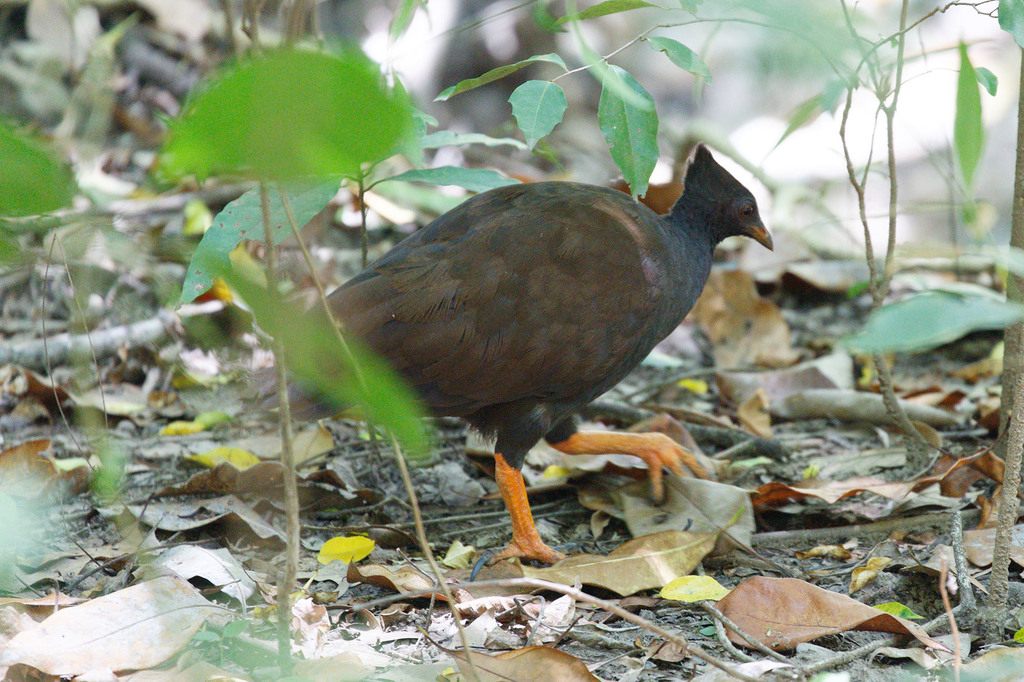
No. The orange-footed scrubfowl (Megapodius reinwardt) never incubates its eggs with body heat. Instead it builds and tends a mound of leaf litter and soil, sometimes 7 metres across, and lets the heat of decomposition hold the inside at around 33C. The chick that eventually digs itself out gets no help from either parent, ever.
Every bird on Earth faces the same problem: eggs need steady heat for weeks before anything hatches. Almost every species solves it the same way, by sitting on the nest. The orange-footed scrubfowl solves it by not sitting at all. It digs, piles, and manages a slowly cooking heap of forest floor instead, and the chick that eventually claws its way out has never once felt a parent's warmth.
Do megapodes sit on their eggs?
No. Megapodes never incubate with body heat, not the orange-footed scrubfowl of Indonesia, New Guinea and northern Australia, nor any of the roughly twenty other species in the family. Every other bird on the planet, from an albatross to a hummingbird, warms its eggs by sitting on them. Megapodes are the single exception: they bury eggs in a mound or burrow and let an outside heat source, decomposition, geothermal ground heat or the sun, do the actual incubating.
What is a megapode, exactly?
A megapode is a ground-dwelling, chicken-sized bird in the family Megapodiidae, order Galliformes, the same order as chickens, turkeys and pheasants. The name literally means "big foot", and it's earned: an orange-footed scrubfowl's strong, bright orange legs and long-clawed feet are built for one job, scratching through leaf litter to forage and shifting enormous volumes of material to build and maintain its mound. At 35 to 47 cm long and 560 g to 1.2 kg, it's roughly the size and shape of a small domestic fowl, dark brown-grey overall with a short crest at the back of the head, and usually heard before it's seen: loud clucks, gargles and screamed crows that carry through the forest at dawn, dusk and often well into the night.
How the mound actually works
A breeding pair builds a mound of leaf litter mixed with soil that can reach 7 metres across and 3 metres high, among the largest structures any bird builds. In rainforest, decomposing leaves generate the heat; on sandy coastlines, the sun does more of the work instead. Either way, the target inside the mound is a narrow band around 33C, close to the temperature a sitting bird's body would provide, just generated by rot and sunlight rather than a parent's metabolism. The same pair often returns to the same mound year after year, topping it up with fresh material each season until it grows into a genuinely large, long-lived structure, a kind of inherited compost engineering project rather than a one-season nest.
How a pair keeps the temperature right
Heat that nobody regulates will drift, so a pair checks it constantly. A bird pushes its bill into the mound to reach the egg chamber and effectively takes its temperature, then either piles on more insulating material if it's too cool or scrapes material away to vent heat if it's running hot. Both sexes share the work, probing and adjusting the pile through the whole incubation period rather than leaving it to one parent, the closest thing a megapode has to nest-sitting: constant maintenance of a heat source, instead of being one.
Laying the eggs
The female buries one egg at a time, roughly 45 cm down into the mound, at intervals of about 9 to 20 days across the breeding season rather than filling a clutch all at once. Each egg is left to incubate on its own for 50 to 80 days, an unusually long and variable window driven entirely by how warm that particular patch of the mound happens to be that season. It's a strategy built around a single-species bird that skips a nest altogether, similar in spirit to the white-nest swiftlet, which also builds its entire breeding effort around one unusual material, saliva instead of compost, rather than a conventional woven nest.
The most independent chick in the bird world
When an egg finally hatches underground, the chick is already fully feathered, strong enough to dig straight up through the mound on its own, and completely on its own once it reaches daylight. There's no brooding, no feeding, no guidance back to safety, nothing a parent provides at all. Within a day or two it's walking, running and flying unassisted, arguably the most independent entrance any bird makes into the world. It sits at the extreme opposite end of the parenting spectrum from a species like the comb-crested jacana, where a male carries newly hatched chicks under his wings for safety, or the wider range of strategies covered in the animal kingdom's most extreme parents: the scrubfowl's answer to parental care is simply none.
Where do orange-footed scrubfowls live?
Orange-footed scrubfowls range across the Lesser Sunda Islands of Indonesia, the southern coast of New Guinea and the monsoon forests of Australia's Top End, in rainforest, swamp forest, mangrove edges and monsoon woodland, mostly in the lowlands but locally up to 1,500 to 1,900 metres. Within that range they stay close to dense cover, scratching through leaf litter for seeds, fallen fruit, berries and invertebrates and preferring to run for the undergrowth rather than take flight when disturbed, much like a brood parasite avoiding detection in the great spotted cuckoo's host-fooling strategy, just aimed at staying hidden rather than staying undetected.
How rare is the orange-footed scrubfowl in Kaught?
In the Kaught catalog the orange-footed scrubfowl sits at the Legendary tier, four diamonds out of four. That reflects how often the species is actually confirmed in the wild, not its conservation status. It's neither elusive by range, it's found across a wide stretch of islands and coastline, nor nocturnal in the way that would hide it outright. What makes a clean sighting rare is behaviour: a scrubfowl forages quietly in thick leaf litter, calls more than it shows itself, and bolts into cover rather than flying up where it could be seen, so most encounters are an unmistakable voice in the dark rather than a bird in view.
Do megapodes sit on their eggs: frequently asked questions
Do megapodes sit on their eggs?
No. Megapodes are the only bird family that never incubates eggs with body heat. The orange-footed scrubfowl buries its eggs inside a mound of leaf litter and soil, and lets the heat of decomposition, or the sun on sandy coasts, do the incubating instead.
What is a megapode?
A megapode is a chicken-sized ground bird in the family Megapodiidae, order Galliformes. The name means "big foot", a reference to the strong, large-clawed legs every species uses to dig and build its incubation mound or burrow instead of sitting on a nest.
How hot does a scrubfowl's mound get, and how does it stay that way?
Around 33C. A pair checks the temperature by probing the mound with the bill, then adds or removes leaf litter and soil to correct it, a task shared between male and female and repeated for the whole incubation period.
How often does an orange-footed scrubfowl lay eggs, and how deep?
One egg at a time, buried around 45 cm deep in the mound, at intervals of 9 to 20 days through the breeding season. Each egg then incubates on its own for 50 to 80 days before the chick digs its way out.
Does a scrubfowl chick get any help from its parents?
None at all. It hatches fully feathered underground, claws its way to the surface alone, and within a day or two can already walk, run and fly without ever being fed, brooded or guided by an adult.
Where do orange-footed scrubfowls live?
Rainforest, monsoon forest, swamp forest and mangrove edges across the Lesser Sunda Islands of Indonesia, southern New Guinea and the Top End of northern Australia, mostly in lowland forest but locally up to 1,900 m.
Why is the orange-footed scrubfowl "Legendary" in Kaught?
Kaught's rarity tier tracks how often a species is actually confirmed in the wild, not its conservation status. The scrubfowl forages quietly in dense leaf litter, is far more often heard than seen, and runs rather than flies when disturbed, so a confirmed sighting is genuinely rare.
The next thing you see could be
your first catch.
Kaught is live on the App Store and Google Play. Free to start, and your first catch is one photo away.
Free to start · Live on the App Store and Google Play
Species data, type, rarity tier and measurements, is drawn from the Kaught catalog, built on open biodiversity records from GBIF and iNaturalist. Rarity reflects how often a species is observed in the wild, not its conservation status.