
Behaviour explainer
Comb-crested Jacana: the Bird Where Only the Dads Raise Chicks
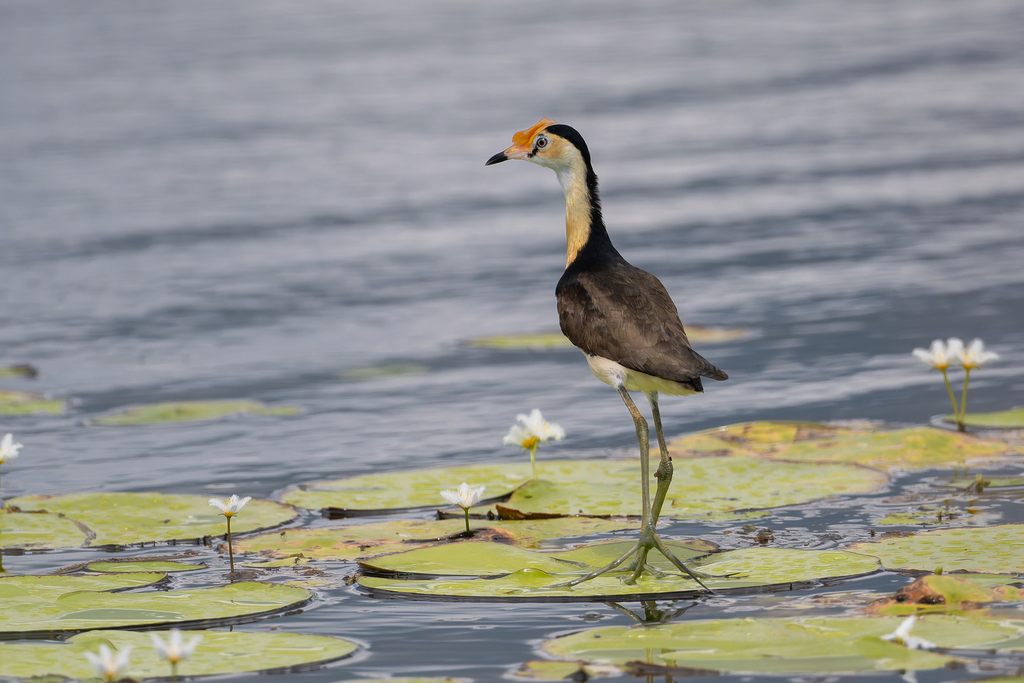
The comb-crested jacana (Irediparra gallinacea) is a wetland bird from Australia, New Guinea and Indonesia whose long toes let it walk across lily pads. It also flips bird parenting: females mate with several males a season, and each male alone builds the nest, incubates and raises the chicks.
Walk the edge of a lily-choked lagoon in northern Australia and you might see a bird do something that looks impossible: step calmly onto a floating leaf, cross it, and step onto the next without so much as a wobble. The comb-crested jacana makes a living on top of the water itself, and once you understand how, and why only the males end up raising its chicks, it becomes one of the more quietly remarkable birds you could catch.
What is a comb-crested jacana?
The comb-crested jacana (Irediparra gallinacea) is a wading bird of tropical freshwater wetlands across northern and eastern Australia, New Guinea, and parts of eastern Indonesia. It gets its name from the small, fleshy, orange-red comb on its forehead, set above a black-and-gold head, a buff-white neck and dark brown upperparts. Locals also know it as the lotusbird or lilytrotter, both earned the same way: by living almost entirely on lily pads, lotus leaves and other floating vegetation on lagoons, billabongs and slow lakes. Males measure 20-22 cm; females run noticeably bigger at 24-27 cm, a detail that matters more than it first appears.
In flight, a jacana shows a bright yellow-green flash along the leading edge of each wing, and feeding birds keep up a soft, chattering call across the water that carries a long way over a quiet lagoon. Watch one for more than a few minutes and the oversized feet stop looking like a quirk and start looking like the whole point of the bird.
How does it walk across lily pads without sinking?
The trick is in the feet. A jacana's toes and claws are absurdly long relative to its body, among the longest of any bird its size. Spread flat across a leaf, a single foot can cover an area roughly the size of a small dinner plate, which spreads the bird's modest weight, well under 150 g, so evenly that a lily pad barely dips below the surface. It isn't surface tension or speed doing the work, as with a basilisk lizard sprinting across open water; it's pure weight distribution, the same principle as a snowshoe. Every jacana species worldwide, eight in total, solves the same floating-vegetation problem with the same oversized feet, a textbook case of one adaptation reused again and again because it simply works.
The comb-crested jacana is the only member of its genus, Irediparra, and is found nowhere outside Australia, New Guinea and nearby islands. Its relatives, among them the African jacana and the pheasant-tailed jacana of South and Southeast Asia, all inherited the same long-toed body plan from a shared ancestor, then carried it to wetlands on four different continents, proof that one good design, once it exists, tends to stick around.
Why do only the males raise the chicks?
Here the comb-crested jacana gets genuinely unusual. It's polyandrous: across a single breeding season a female mates with several males, on average around 2.6 of them, and lays a separate clutch of eggs for each. Once she has laid, her involvement largely ends there. Each male builds his own flimsy nest directly on floating vegetation, incubates his four dark, blotched eggs alone, and raises the resulting chicks without her. The bodies reflect the role reversal: females are both larger and more brightly marked than males, the opposite of the pattern in most birds, where the male is the showier, more replaceable sex.
What happens when a predator threatens the chicks?
Jacana chicks are precocial, meaning they hatch ready to work. Within hours they can walk across floating leaves on their own oversized feet, swim, and dive. If a hawk, snake or monitor lizard threatens a brood, the male has a distinctive rescue move: he tucks the chicks under his folded wings and carries them off, sometimes with nothing but a pair of thin legs dangling visible beneath his feathers, even while wading or swimming across open water.
Is the comb-crested jacana dangerous?
Not remotely. It feeds on insects, seeds and small invertebrates picked delicately off the surface of lily pads and floating weed, and its only response to a person getting too close is to walk, run or flush off across the water. The bigger risk runs the other way: nests built directly on open water can flood without warning, and a startled parent that abandons a nest even briefly leaves the eggs open to the crocodiles and water monitors that share its habitat.
How rare is the comb-crested jacana in Kaught?
In the Kaught catalog the comb-crested jacana sits at the Epic tier, three diamonds out of four. That measures how often the species is actually confirmed in sightings, not its conservation status: the jacana lives on quiet, often remote freshwater wetlands, and its mottled chicks vanish into floating weed the moment they freeze, so a clean, confirmed sighting is harder to come by than for a typical shoreline bird. It isn't the only animal to flip the usual parenting script either; male seahorses carry the eggs through pregnancy, and clownfish can change sex entirely when their colony needs it. For more of nature's reversed and rewritten family rules, see our roundup of the most extreme animal parents, or for another wetland specialist worth looking for nearby, the diving, spearfishing common kingfisher.
Comb-crested jacana: frequently asked questions
What is a comb-crested jacana?
A wading bird, Irediparra gallinacea, found in tropical wetlands across northern and eastern Australia, New Guinea and parts of eastern Indonesia. It has a black-and-gold head with a fleshy red comb, a buff neck, dark upperparts and extraordinarily long slate-green toes built for walking on floating leaves.
How does a jacana walk across lily pads without sinking?
Its toes and claws are disproportionately long for its body, among the longest of any bird relative to size. Spread out, a single foot can cover an area the size of a small dinner plate, distributing its light body weight so evenly that a leaf barely dips underwater.
Why do only male jacanas incubate and raise the chicks?
The comb-crested jacana is polyandrous. A female mates with several males in one season and lays a separate clutch for each. After laying, the male alone builds the nest, incubates the eggs and raises the chicks, while females are the larger, brighter sex, the reverse of most birds.
What happens if a predator threatens jacana chicks?
Jacana chicks are precocial and can walk, swim and dive within hours of hatching. If danger approaches, the male scoops the chicks under his wings and carries them to safety, sometimes with only their legs showing, even while swimming across open water.
Is the comb-crested jacana dangerous to humans?
No. It is entirely harmless to people, feeding on insects, seeds and small invertebrates picked from the surface of lily pads and floating weed. Its only real defence when approached is to walk, run or fly off across the water.
Why is the comb-crested jacana "Epic" in Kaught?
Kaught's rarity reflects how often a species is actually confirmed in the wild, not its conservation status. The jacana lives on quiet, often remote freshwater wetlands and its chicks are well camouflaged, so a clean, confirmed sighting is harder to come by than for a typical shoreline bird.
The next thing you see could be
your first catch.
Kaught is live on the App Store and Google Play. Free to start, and your first catch is one photo away.
Free to start · Live on the App Store and Google Play
Species data, type, rarity tier and measurements, is drawn from the Kaught catalog, built on open biodiversity records from GBIF and iNaturalist. Rarity reflects how often a species is observed in the wild, not its conservation status.