
Fun facts
7 most extreme animal parents in the wild
Parental investment in the animal kingdom ranges from nothing (most fish abandon their eggs immediately) to extraordinary feats of self-sacrifice, engineering and ingenuity. These seven species represent the outer edge: a male that gets pregnant, a parent that goes without food for four months, a mother that guards her eggs against leopards, and an insect whose maternal care rivals that of mammals.
1. Common cuckoo: the ultimate outsourcer
The common cuckoo does not raise its own young. The female monitors the nests of smaller host birds (reed warblers, dunnocks, meadow pipits) and lays a single egg in each, removing one of the host's own eggs in the same motion. The timing is precise: she strikes while the host parents are away for as little as ten seconds.
The cuckoo egg hatches early. Within hours of hatching, the blind, naked chick uses a hollow in its back to heave each remaining egg over the nest rim. It then monopolises everything the host parents bring. A reed warbler feeding a cuckoo chick three times its own size is one of the most extraordinary sights in European birdwatching.
The female cuckoo produces far more eggs per season than she could raise herself. Her parenting strategy is extreme not in effort but in its complete and deliberate absence.
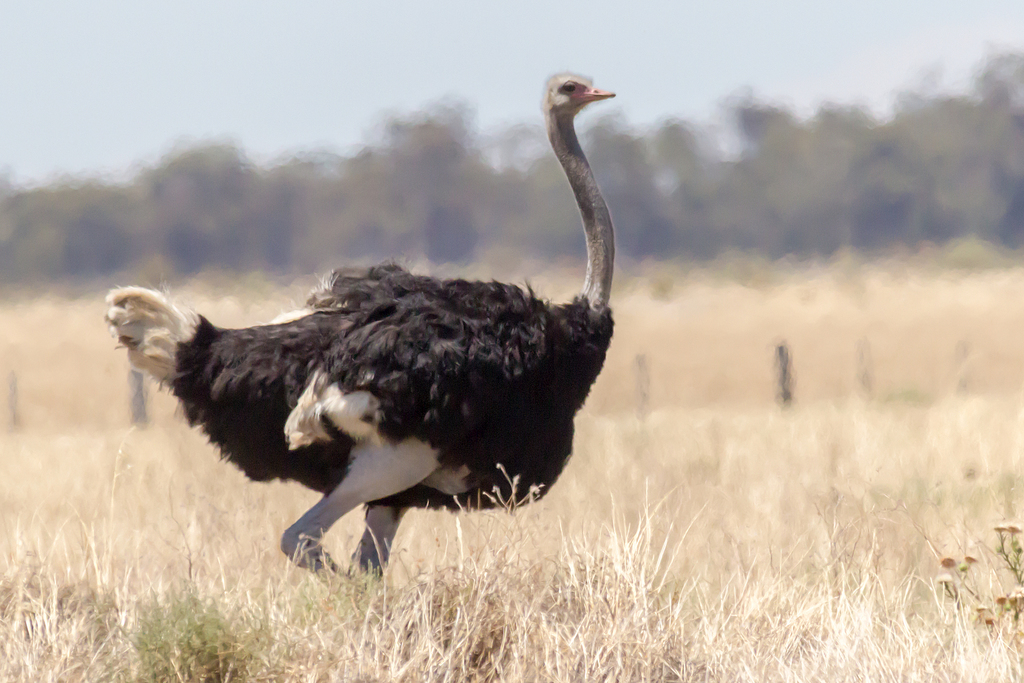
2. Common ostrich: the community crèche and the decoy run
The common ostrich lays the largest egg of any living bird: a single egg weighing up to 1.4 kg, the equivalent of roughly 24 chicken eggs. A single nest may contain up to 60 eggs, because satellite females lay in the dominant female's nest after their own smaller nests are abandoned. The dominant female can recognise her own eggs and positions them at the centre, most insulated position. She incubates only as many eggs as she can cover; peripheral eggs are sacrificed.
When a predator approaches the nest, an ostrich parent performs a broken-wing display: moving away from the nest while dragging one wing and stumbling, drawing the predator's attention. The bird that performs the display is risking itself. As the predator gives chase, the ostrich runs off at full speed, one of the fastest land birds on Earth at up to 70 km/h.
After hatching, chicks from multiple nests may be combined into crèches of up to 300 young guarded by a small number of adults. It is a collective approach that dilutes predator pressure: any single chick is less likely to be taken from a crowd of hundreds.
3. Giant seahorse: the pregnant male
In seahorses, the male is the one that gets pregnant. The female deposits her eggs into a brood pouch on the male's abdomen. He fertilises them internally, maintains the correct salinity, provides oxygen, supplies nutrients via a placenta-like tissue and regulates the embryos' immune environment as they develop. Gestation lasts 10 to 45 days depending on water temperature.
When the young are ready, the male goes into labour: muscular contractions expel the miniature seahorses into open water in batches over hours. A single birth can produce 100 to 1,500 fully formed young. As soon as the brood pouch empties, the male is ready to mate again, sometimes within hours.
The giant seahorse (Hippocampus ingens) is the largest species in the genus, found along the Pacific coast of the Americas from California to Peru. It can reach 30 cm in length and the male carries broods accordingly large.
4. Emperor penguin: four months without food
The male emperor penguin incubates a single egg on his feet, covered by a fold of abdominal skin, through the Antarctic winter. He does not eat during this period. Temperatures at the breeding colony fall to -50°C; wind speeds reach 200 km/h. He cannot leave the egg. The incubation period lasts 65 to 75 days.
To survive without food for more than two months in the coldest environment on Earth, emperor penguin males form dense huddles of hundreds or thousands of birds, constantly shuffling to share body warmth. A bird at the outside edge of the huddle moves inward as the bird currently in the centre pushes outward. The huddle rotates continuously. Core temperature of the huddle can be 20 to 30 degrees higher than the surrounding air.
The male loses up to 40% of his body weight by the time the egg hatches. If the female has not returned from the sea to relieve him by then, he must walk up to 60 km across ice to reach open water before he starves.
5. Nile crocodile: the gentlest jaws on the river
The Nile crocodile is among the most attentive reptile parents on Earth. After laying 25 to 80 eggs in a riverside nest, the female guards the site continuously for the 90-day incubation period, retreating only briefly to wet her skin. She is aggressive during this period and will confront most threats, including hyenas and monitor lizards.
When the eggs begin to hatch, the young call from inside the shells. The female responds by digging up the nest with her forefeet. She then picks up eggs and hatchlings one by one in her jaws and carries them to the water. The same mouth that can exert the highest bite force recorded in any living animal, enough to crush bone, is used here with enough precision to carry a hatchling the size of a human hand without injury. Both parents may participate in this transport. Hatchlings are guarded in the water for several weeks.
6. Giant African bullfrog: the fighting father
The giant African bullfrog is the largest frog in sub-Saharan Africa, with males reaching 2 kg. Most frogs abandon their eggs. The giant African bullfrog does the opposite: the male guards the entire breeding pool.
After a rainstorm fills a temporary pan, males compete aggressively for position at the water's edge. Once eggs are laid, the territorial male stays with the developing tadpoles. He will charge and bite animals far larger than himself: snakes, monitor lizards, herons and even humans who approach too closely. He also manages the pool environment: if the tadpole pool begins to evaporate, the male digs a channel through the mud to connect it to a larger body of water, preventing the larvae from dying in a shrinking puddle. This is active habitat engineering, not a passive vigil.
Tadpoles are guarded until they metamorphose and leave the water. The male is the only known frog to dig water channels to protect tadpoles from desiccation.
7. European earwig: the devoted insect mother
The European earwig is an insect, and most insects lay eggs and leave. The earwig does not. After laying 30 to 60 pale eggs in a soil chamber, the female coils around them and does not leave the nest for weeks. She licks each egg daily to remove mould spores. She turns the eggs regularly. She drives away predators and parasites. If the eggs are moved in experiments, they fail to develop: they depend on her grooming to survive.
This level of maternal care is exceptional in the insect world, where it is rare in any form. The earwig's commitment to her clutch resembles behaviours more typically associated with birds and mammals.
After hatching, she continues to brood the nymphs for one to two weeks. Then she dies, and the nymphs disperse. Her entire lifespan from laying to death typically ends within that window. Her last act is to provide them with food: studies show mothers in late brooding may become increasingly passive, allowing the nymphs to consume her.
Feeding the young on the parent's own body is not confined to insects. The Mexican caecilian, a legless burrowing amphibian, grows a thickened outer skin layer that its hatchlings peel off and eat, and the mother regrows it every few days. For the more conventional version of amphibian parenting, the male giant African bullfrog stands guard over his tadpole pool and will dig a channel to save it from drying out.
Extreme animal parents: frequently asked questions
Which animal is the best parent?
There is no single answer. Emperor penguins fast for months in Antarctic winter to incubate one egg. Giant African bullfrogs fight predators twice their size. European earwigs groom their eggs daily for weeks until death. Each strategy is extreme in a different way, matched to the survival pressures that species faces.
Do male animals ever take more parenting responsibility than females?
Yes. Male seahorses carry developing embryos in a brood pouch and give birth live. Male emperor penguins incubate the egg through Antarctic winter while the female is at sea. The distribution of parental investment varies enormously across taxa.
Why do cuckoos use other birds' nests?
The common cuckoo is a brood parasite. The female lays each egg in a host bird's nest, removing one host egg. The cuckoo chick hatches early, ejects remaining eggs, and receives all the host parents' feeding efforts. This lets the female produce more eggs per season than if she raised each chick herself.
How long do emperor penguins incubate their eggs?
Around 65 to 75 days. The male balances the single egg on his feet under a brood pouch through the Antarctic winter, fasting the entire time and losing up to 40% of his body weight before the egg hatches and the female returns.
Do earwigs really care for their eggs?
Yes. The European earwig is one of the few insects with extended parental care. The female lays 30 to 60 eggs, grooms each daily to prevent mould, turns them and guards them until they hatch. Eggs separated from her care typically fail to develop. She stays with the nymphs for one to two weeks after hatching, and may ultimately serve as food for them.
Which animal has the most young at once?
Among the species here, the giant seahorse can release 100 to 1,500 live young in a single birth. The common cuckoo, by contrast, lays one egg at a time in another bird's nest. Large litters tend to come with lower investment per offspring; small clutches with much higher per-offspring investment.
The next thing you see could be
your first catch.
Kaught is live on the App Store and Google Play. Free to start, and your first catch is one photo away.
Free to start · Live on the App Store and Google Play
Species data, type and rarity tier are drawn from the Kaught catalog, built on open biodiversity records from GBIF and iNaturalist. Rarity reflects how often a species is observed in the wild, not its conservation status.