
Legendary spotlight
The Black-necked Swan: the only true swan native to South America, and one of the hardest to actually see
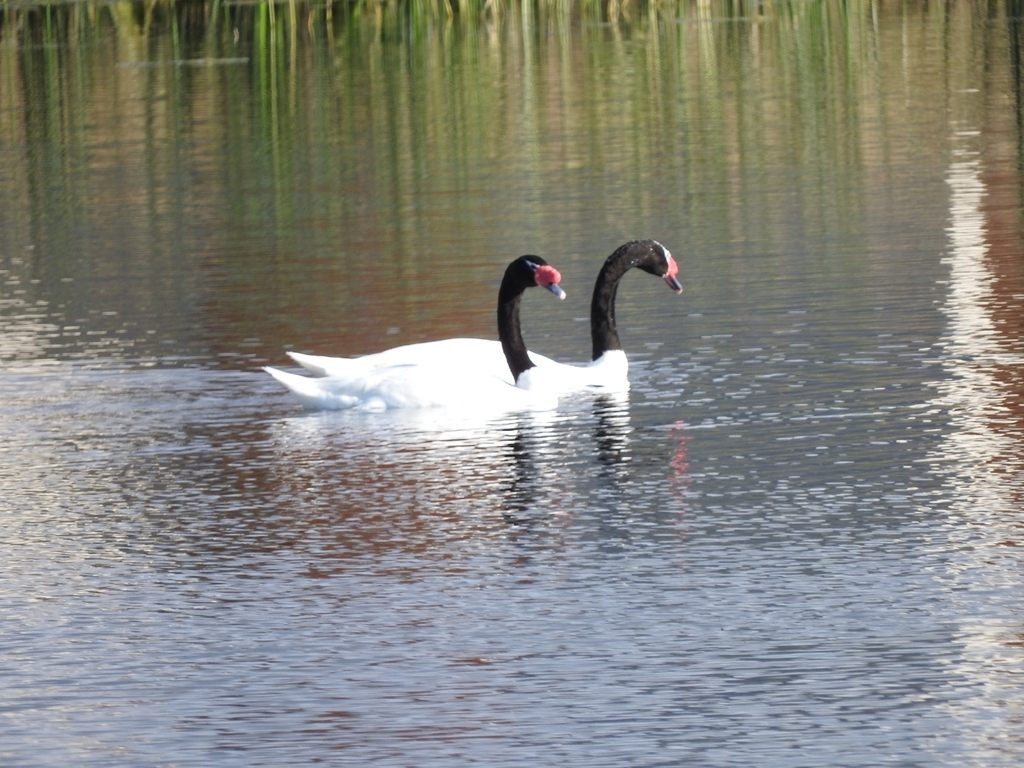
The black-necked swan (Cygnus melancoryphus) is the only true swan native to South America, with a white body, black neck and head, and a red caruncle at the base of the bill. It nests in remote southern wetlands, mates for life, and carries newly hatched cygnets on its back.
Every continent's swans look broadly alike, a long neck, a white body, an unhurried glide, except in South America, where the local swan wears a black hood down to its shoulders and a bright red knob on its bill. It is the only member of the true swan genus south of the equator, and it lives somewhere most of the world's birdwatchers will never travel. Here is how to identify one, where to look, and why the sighting is worth the trip.
How to identify a black-necked swan
Nothing else on the water looks like this:
- The colour split: a body of immaculate white feathers with a neck and head of solid, velvety black, a clean line with no blending between the two.
- The bill: blue-grey, with a double-lobed scarlet caruncle swelling at the base, the single easiest mark to spot at a distance.
- Size: South America's largest waterfowl, 102 to 124 cm long, with males running slightly bigger than females.
- Posture on water: a straighter, less curved neck carriage than a mute swan, held more upright than arched.
On land it is a different story. Short legs and a long body give it an awkward, waddling gait, so it rarely comes ashore and almost never travels far from water when it does.
Where do black-necked swans live?
Freshwater marshes, brackish lagoons, sheltered coastal shallows and open lakes across the southern half of South America, mainly Argentina, Chile, Uruguay, Brazil and Paraguay. Wandering birds have turned up as far as the Falkland Islands and the Antarctic Peninsula. Southern populations shift north outside the breeding season as the coldest wetlands freeze over, but the species never leaves the continent.
It happily uses both fresh and brackish water, which is unusual among swans, and tolerates a wider salinity range than most of its Northern Hemisphere relatives. It shares that stretch of southern wetland with South America's most photographed pink bird, the Chilean flamingo, though the two feed in completely different ways: the flamingo filters, the swan grazes.
What black-necked swans eat, and how they raise cygnets
The diet is almost entirely submerged aquatic vegetation, pondweed and stonewort pulled up by upending in shallow water, tail in the air, the same posture a dabbling duck uses. Algae and small invertebrates get taken incidentally along the way. Outside the breeding season the species is highly social and gathers in loose flocks; once pairs form, each defends its own patch of wetland.
Pairs mate for life and open the breeding season with a synchronised triumph ceremony, dipping their heads underwater together and stretching their necks skyward in unison. Cygnets hatch precocial, mobile within hours, and climb straight onto a parent's back, riding tucked into the wing feathers for weeks. It keeps them dry, warm and mostly out of reach of anything hunting from below, a strategy that puts it among the animal kingdom's most extreme parents, alongside a seahorse that reverses the pregnancy roles entirely: the giant seahorse, where the male carries the eggs instead.
How rare is the black-necked swan?
Kaught's catalog places the black-necked swan at Legendary, four diamonds out of four. That reflects how seldom the species turns up in recorded sightings worldwide, not any judgement about its numbers at home. It is the only true swan in the entire Southern Hemisphere, and its range is a narrow strip of southern South American wetland that most observers, even most birders, never pass through in a lifetime.
Within its native marshes a black-necked swan is a genuinely findable bird for a local naturalist. Globally, a confirmed sighting is a different matter entirely, which is exactly what a Legendary rating in Kaught is built to reflect: how often a species is actually recorded, not how threatened it is.
Is the black-necked swan dangerous?
No. It is a wary bird that keeps its distance and, thanks to that awkward walk, rarely leaves the water at all. A nesting pair may hiss or raise its wings at a close approach, standard swan behaviour worldwide, but there is no record of the species posing any real danger to people. Give a nest a wide berth in spring and there is nothing else to worry about.
Three things that make the black-necked swan remarkable
- It is the only species in the true swan genus Cygnus that breeds in the Southern Hemisphere, every other true swan nests north of the equator.
- The caruncle at the base of the bill grows more prominent with age and is thought to signal condition to a potential mate, much like the bare facial skin of South America's own giant scavenger, the Andean condor.
- Its cygnet-carrying habit is so consistent that young birds barely touch open water on their own until they are close to half-grown.
Black-necked swan: frequently asked questions
What does a black-necked swan look like?
A large waterbird with a pure white body and a velvety black head and neck. A blue-grey bill carries a double-lobed scarlet caruncle at its base, the single easiest field mark. It runs 102 to 124 cm long and weighs 4 to 5.4 kg, with males slightly larger than females.
Where do black-necked swans live?
Freshwater marshes, brackish lagoons and sheltered coastal shallows across southern South America, chiefly Argentina, Chile, Uruguay and Brazil, with wandering birds reaching the Falkland Islands. Southern breeders shift north outside the nesting season.
How rare is a black-necked swan sighting?
In the Kaught catalog the black-necked swan sits at Legendary, four diamonds out of four. It is the only true swan in the Southern Hemisphere, confined to a remote strip of wetland most of the world's birdwatchers never visit, so confirmed sightings are scarce outside its native range.
Do black-necked swans carry their cygnets on their back?
Yes. Newly hatched cygnets climb onto a parent's back within hours of hatching and ride there through most of their first weeks, tucked into the wing feathers. It keeps them warm, dry and largely out of reach of underwater predators while they are too small to swim long distances.
Are black-necked swans dangerous to people?
No. They are wary, rarely come onto land because their short legs make walking awkward, and keep their distance from people in the wild. A nesting pair may hiss or posture at a close approach, but there is no record of the species posing a real threat to humans.
What do black-necked swans eat?
Mostly submerged aquatic plants such as pondweed and stonewort, reached by upending in shallow water the way a dabbling duck does, plus algae and small invertebrates picked up while feeding. They rarely graze on land.
The next thing you see could be
your first catch.
Kaught is live on the App Store and Google Play. Free to start, and your first catch is one photo away.
Free to start · Live on the App Store and Google Play
Species data, type, rarity tier and measurements, is drawn from the Kaught catalog, built on open biodiversity records from GBIF and iNaturalist. Rarity reflects how often a species is observed in the wild, not its conservation status.