
Exotic spotlight
Vampire Squid: the deep-sea creature that is neither squid nor octopus
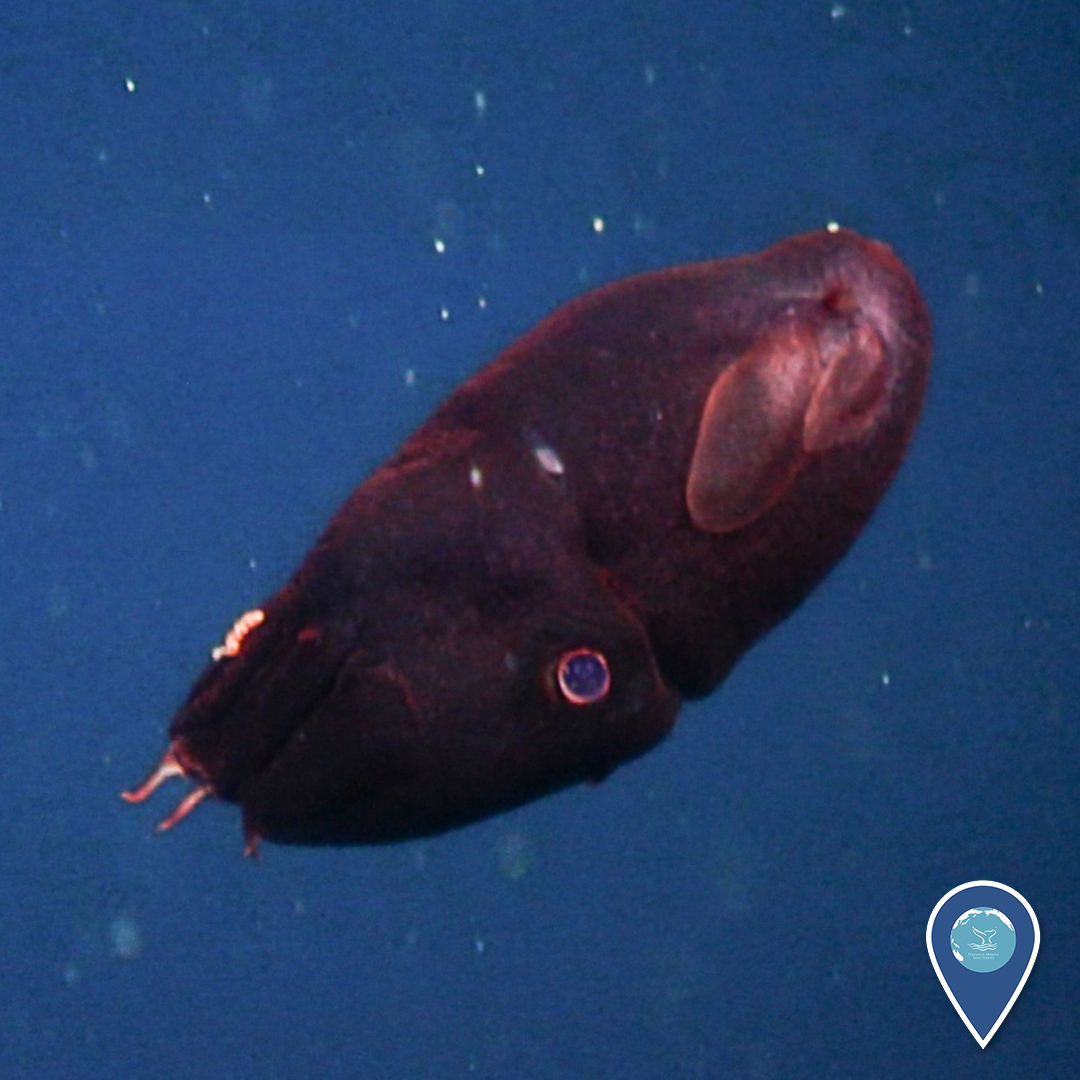
The Vampire Squid (Vampyroteuthis infernalis) is not a squid. It is not an octopus. It is the sole surviving member of its own ancient order, Vampyromorpha, living in the oxygen-starved depths of tropical oceans. It glows, it eats marine snow, and its scientific name translates as "vampire squid from hell." It sits at Rare in the Kaught catalog: globally distributed but almost never observed.
When it was first described scientifically in 1903, the Vampire Squid caused immediate confusion. It had eight arms like an octopus, but two extra retractile filaments like a squid. It had fins on its mantle like a squid, but a webbed cloak between its arms like an octopus. It fit neither group. Eventually, biologists placed it in its own order: Vampyromorpha. It remains the only living member of that order, a lineage that has persisted largely unchanged since the Jurassic.
What the Vampire Squid actually looks like
The mantle, the main body, is roughly 13 cm long. Including the arms, total length reaches about 30 cm. The body is jet black to dark red-brown in colour. Large, wide-set eyes are disproportionate to the body size, appearing blue-green in life under certain lighting. The webbing between the eight arms forms a continuous cloak, which, when pulled over the body, can invert to show a spiky interior surface.
Two thin, whip-like filaments can extend from pockets near the base of the arms to many times the body length, trailing through the water to collect particles.
Across the mantle, arms and the underside of the webbing are scattered photophores: light organs that the animal controls. Near the tips of the fins are two further photophores that glow particularly brightly. The overall bioluminescent capability is considerable for an animal this size.
The oxygen minimum zone: a habitat as a defence
The Vampire Squid lives in the oxygen minimum zone (OMZ), a layer of the open ocean at roughly 200 to 1,000 metres depth where dissolved oxygen drops to very low levels due to the decomposition of sinking organic matter by bacteria. Most active predatory fish and cephalopods cannot function at these oxygen levels. Their high metabolic demands require more dissolved oxygen than the zone provides.
The Vampire Squid has adapted to thrive here. Its blood haemocyanin has an unusually high oxygen affinity, extracting oxygen more efficiently from low-concentration water. Its metabolic rate is very low: it moves slowly, saves energy, and does not chase prey. The OMZ is both its habitat and its shield. It has sacrificed speed and agility for a home that almost nothing else can enter.
What it eats: marine snow
Most cephalopods are active predators of fish, shrimp and other invertebrates. The Vampire Squid is the exception. It feeds almost exclusively on marine snow: the continuous rain of dead organic particles, fecal pellets, shed mucus, and microscopic remains that drifts down from the sunlit upper ocean.
It extends its two long filaments passively into the water column and lets particles adhere to their sticky surface. Then it pulls the filaments back through the arms, which press the collected material into a mucus ball, and swallows it. The process is low-energy, non-competitive, and well matched to the caloric density of a food source that rains down continuously without requiring any chase.
This feeding strategy is unique among cephalopods. It places the Vampire Squid in a completely different ecological niche to its relatives, more comparable, functionally, to a filter feeder than a predator.
How it defends itself
Slow, small, and living in near-darkness presents problems even in the OMZ. The Vampire Squid has three responses to a threat.
First, the cloak inversion. It can fold its arms back over its head and pull the webbing inside out, covering the body and revealing the spiky projections on the inner surface of the webbing, effectively making itself look larger and more threatening in the darkness.
Second, bioluminescent distraction. It can release a cloud of sticky mucus containing bioluminescent particles that glow blue in the dark. A predator that has tracked the Vampire Squid by its own light suddenly has a glowing cloud to pursue instead, while the animal swims away with all photophores extinguished.
Third, photophore control. By rapidly flashing and dimming the photophores across its body in sequence, it can create disorienting patterns of light that make it difficult for a predator to locate the head or gauge direction of movement.
Where the Vampire Squid sits in the catalog
At Rare, two diamonds in the Kaught catalog, the Vampire Squid might seem under-rated for an animal this unusual. But the catalog rarity reflects observation frequency, not biological strangeness. The Vampire Squid is globally distributed across tropical and subtropical oceans, but inaccessible: the OMZ requires deep-sea submersibles or ROVs to observe in the wild, and fewer than 15 open iNaturalist records exist worldwide.
Rare in observation terms is correct. Common in the deep ocean? Probably. Nobody has counted, because the tools needed to count are still relatively scarce.
For other cephalopods with unusual biology, the most venomous animals list covers the Greater Blue-ringed Octopus. And for another ancient lineage with a biology built around deep water, the Dragon Seamoth offers a very different solution to the same problem of being small and strange in a large ocean.
Vampire Squid: frequently asked questions
What is the Vampire Squid?
A small deep-sea cephalopod in its own order, Vampyromorpha, unrelated to true squid or octopuses. It grows to about 30 cm, lives in the oxygen minimum zone at 200 to 1,000 metres depth worldwide, and feeds on sinking organic particles called marine snow rather than live prey.
Is the Vampire Squid actually a squid?
No. It belongs to its own ancient order, Vampyromorpha, separate from both squid (Teuthida) and octopus (Octopoda). It is the only living species in that order and branched away from other cephalopods roughly 300 million years ago.
Where does the Vampire Squid live?
In the oxygen minimum zone of tropical and subtropical oceans, at 200 to 1,000 metres depth. Dissolved oxygen there is too low for most predators, giving the vampire squid a refuge from pursuit in exchange for very slow movement and low-energy feeding.
What does the Vampire Squid eat?
Marine snow: dead organic particles, fecal pellets and microscopic remains drifting down from surface water. It harvests this with two long sticky filaments, not by hunting live prey. Unique among cephalopods in this feeding strategy.
How does the Vampire Squid defend itself?
Three methods: pulling its cloak over its body to expose spiky projections; ejecting a cloud of glowing sticky mucus to distract predators; and flashing bioluminescent patterns across its body to disorient a pursuer in the dark.
Why is the Vampire Squid Rare in Kaught?
The Kaught rarity reflects how often a species is observed in the wild. The Vampire Squid lives at depths only accessible by submersible or ROV, and has fewer than 15 open iNaturalist records globally. Rare is correct for observation frequency, regardless of actual ocean abundance.
The next thing you see could be
your first catch.
Kaught is live on the App Store and Google Play. Free to start, and your first catch is one photo away.
Free to start · Live on the App Store and Google Play
Species data, type, rarity tier and measurements, is drawn from the Kaught catalog, built on open biodiversity records from GBIF and iNaturalist. Rarity reflects how often a species is observed in the wild, not its conservation status.