
Species spotlight
The Roe Deer: the small, secretive deer living right beside you
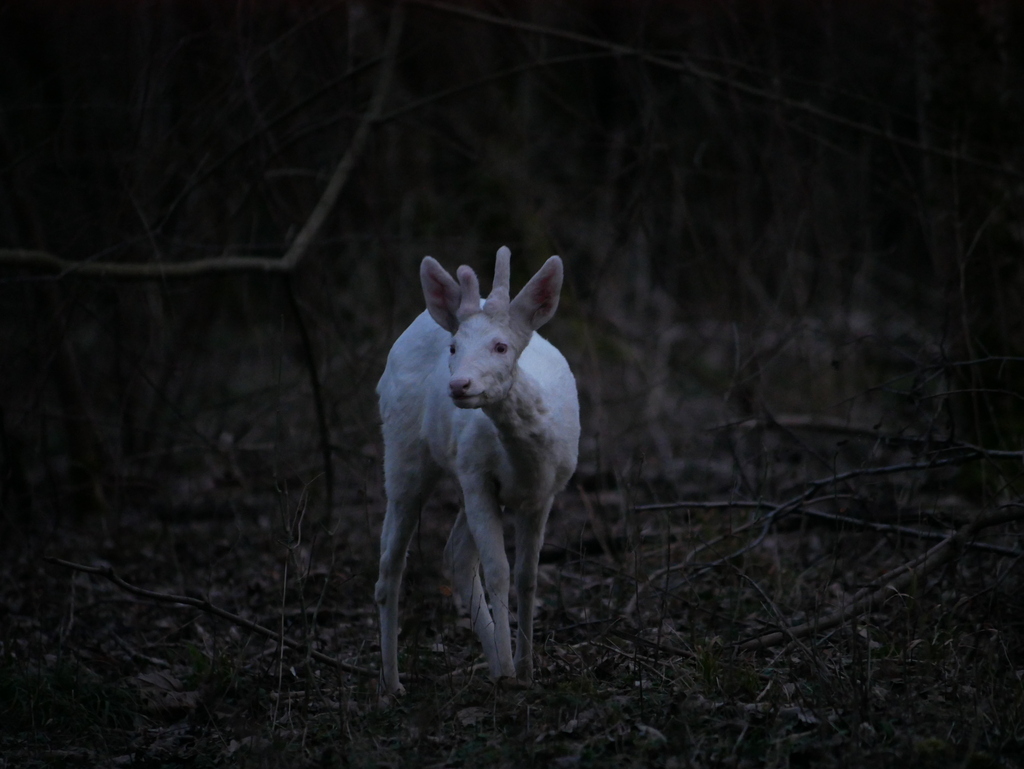
The roe deer (Capreolus capreolus) is the UK's most common native deer: a dog-sized, russet animal with a pale rump patch, no visible tail, and short rough antlers on the buck. Crepuscular and woodland-edge, it is surprisingly easy to miss despite living almost everywhere.
You can walk through a wood at midday and see no deer at all. Return at five in the morning, and the field margin is full of them. The roe deer is not rare: it is timed differently to most of us. Learn when and how to look, and you will find it almost everywhere in Britain.
How to identify a roe deer
A few field marks nail the roe deer instantly:
- Size: roughly the size of a large dog, compact and delicate. Much smaller than a fallow or red deer.
- Coat: a warm russet-red in summer. By October this shifts to a duller grey-brown, pale on the belly.
- Rump patch: a cream-white oval on the rump, conspicuous when the deer flags away through trees. There is no visible tail.
- Antlers (bucks): short and rough-textured, typically two or three upright points. By June they are in hard, velvet-free condition. Does carry no antlers.
- Face: large dark eyes, a short muzzle, and a dark patch below the lower lip give the face a clean, almost painted look.
Alarm call: a sharp, repeated bark, uncannily like a dog, three or four times in quick succession. Tracks are pointed, two-lobed hoofprints, smaller and neater than fallow deer, usually found in single file along a well-used path.
Where do roe deer live?
Across most of the UK, from lowland farmland to upland forest edge. The roe deer is a browser not a grazer, so it needs woodland or dense scrub for cover and a varied understory for food: bramble shoots, ivy, heather, cereal leaves, hedgerow buds. It seldom ventures far from at least a strip of cover.
In practice: check the margins between woodland and open field, particularly where a hedgerow meets a copse. The roe deer rarely sprints across open ground if a hedged route is available.
Behaviour: solitary, territorial, crepuscular
Outside the rut, roe deer are largely solitary. Bucks hold territories marked with scent from glands on the forehead and between the hooves; they rub their foreheads on small trees and leave distinctive fraying where the bark is stripped.
Activity peaks sharply at dawn and dusk. Midday is quiet. That rhythm makes early summer mornings the single best time to watch them: long days, short nights, and warm enough that deer are still out when you arrive at first light.
The rut: July and August in the summer woods
The roe deer rut is one of British wildlife's stranger spectacles, and it happens in summer rather than autumn. Bucks become noisier and more visible from mid-July onward. A pursuing buck emits a raspy grunt as it chases a doe in tight circles around a tree or prominent bush, sometimes wearing a distinct ring into the turf, called a "roe ring".
Mating takes place in late July and August. But fawns are not born until the following May or June. The fertilised egg suspends development (a process called embryonic diapause) for roughly five months before implanting in the uterine wall in December, which puts birth precisely when food is lush and cover is thick.
Fawns are spotted at birth and lie concealed in long grass for the first few weeks, a common source of the mistaken belief that they have been abandoned. They have not: the doe returns to suckle them, and the spots fade by late summer.
What roe deer eat
Roe deer are selective browsers. They take shoots, buds, leaves, berries and fungi rather than bulk grass. They favour bramble, ivy, bilberry, heather and a wide range of agricultural crops at the field edge. A buck also needs the minerals for antler growth in spring, so mineral-rich plants and occasionally soil are taken.
They eat small amounts frequently rather than long grazing bouts, which fits a solitary animal that needs to stay alert in patchy cover.
How rare is the roe deer?
In the Kaught catalog the roe deer sits at Rare, two diamonds out of four. That is not a comment on population size. Kaught's rarity reflects how often a species actually shows up in field records. Roe deer are widespread, but they are crepuscular, woodland-edge animals that vanish into cover quickly. A clear, unhurried sighting is genuinely less common than a robin or a house sparrow, which places them in the Rare tier.
The best single piece of advice: set an alarm for an hour before sunrise, go to a woodland edge you already know, and wait by the treeline rather than walking through it. The deer come to you.
Roe deer: frequently asked questions
What does a roe deer look like?
A small, compact deer with a russet-red coat in summer (grey-brown in winter), a cream rump patch and no visible tail. Bucks carry short rough antlers with two or three points, which are fully hard by June. About the size of a large dog, standing 75 cm at the shoulder.
How big is a roe deer?
About 110 cm long and 75 cm at the shoulder, weighing 15 to 30 kg. Noticeably smaller than a fallow or red deer, and similar in scale to a large Labrador.
Where do roe deer live in the UK?
Most of the UK, from lowland copses and farmland hedgerows to upland woodland edges. They need at least a strip of cover and prefer margins between trees and open field. Rarely far from bramble or dense understory.
When is the roe deer rut?
Late July to mid-August, earlier than most British deer. Bucks chase does in circles around a tree, often wearing a ring into the ground. Despite summer mating, fawns arrive the following May or June because the fertilised egg suspends development over winter.
Are roe deer dangerous?
No. Roe deer are shy and almost always flee. Bucks may be briefly more assertive during the July-August rut, but aggression toward people is extremely rare. Keep a respectful distance, especially around fawns.
Why is the roe deer "Rare" in Kaught?
Kaught's rarity tier measures how often a species is actually recorded in the wild, not its population size. Roe deer are widespread but crepuscular and quick to take cover, so a clear unhurried sighting is genuinely less common than an everyday garden bird. That puts them at Rare: two diamonds out of four.
The next thing you see could be
your first catch.
Kaught is live on the App Store and Google Play. Free to start, and your first catch is one photo away.
Free to start · Live on the App Store and Google Play
Species data, type, rarity tier and measurements, is drawn from the Kaught catalog, built on open biodiversity records from GBIF and iNaturalist. Rarity reflects how often a species is observed in the wild, not its conservation status.