
Behaviour guide
Why do herons stand still? The grey heron's hunting secret
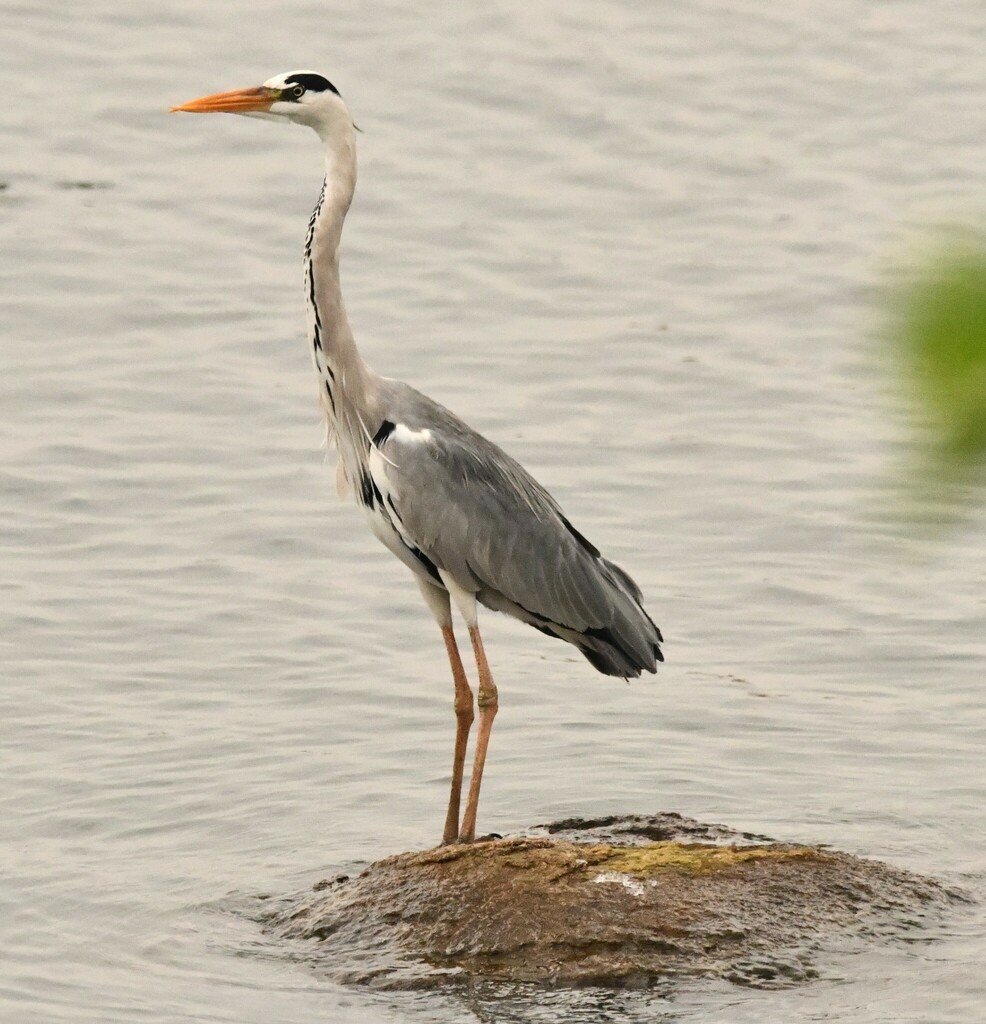
The grey heron (Ardea cinerea) stands still because movement sends ripples across the water that alert fish. Stillness is the entire hunting strategy: once prey drifts within range, specially kinked neck vertebrae release like a spring and the strike is too fast for a fish to dodge. Patience is not inactivity, it is the weapon.
There is a bird at the edge of every city canal, every park lake, every slow river in Europe, and most people have walked past it without registering it as alive. The grey heron is tall enough to look you in the eye, but it can hold absolute stillness for half an hour at a stretch. Here is why, and what happens next.
Why herons stand still: the physics of ambush
A grey heron is hunting. That is the entire answer, but the mechanism is worth understanding.
Fish detect movement through a combination of vision and a pressure-sensing system called the lateral line, which picks up vibrations in the water. The moment a heron moves a leg, it creates ripples and pressure waves that a fish registers immediately. Stand still, and both signals disappear. The heron becomes invisible to the fish's most sensitive detection system.
There is a visual component too. A motionless tall shape at the waterside reads as a reed stem or a stick to a fish glancing upward, not as a predator. Every second of stillness is a second closer to an undetected kill.
When a suitable fish finally moves into range, the heron fires. Specially kinked cervical vertebrae hold the neck coiled under tension, like a loosed spring. The bill covers the strike distance in a straight, explosive line. A fish that has drifted within 30 cm has no time to react.
How to identify a grey heron
The grey heron is Britain's largest heron, hard to mistake once you know what you're looking at:
- Size: stands about 95 cm tall, with a wingspan of up to 175 cm. The impression is of a hunched, angular bird with too-long legs and neck.
- Plumage: pale grey above, white head and neck with a broad black eye stripe extending into a drooping black crest. Throat and chest white with dark streaking. Long grey ornamental plumes hang from the chest in breeding season.
- Bill: long, dagger-shaped, yellow-orange, darkening toward the tip. This is the weapon.
- In flight: unmistakable. The neck folds back into an S against the body, and the broad grey wings beat in slow, deep strokes, bowed at the tip.
The only likely confusion species in Britain is the purple heron (Ardea purpurea), a rare visitor. It is slimmer, browner, and has a streaked russet neck rather than white. Any large, grey, hunched waterside bird standing still in western Europe is almost certainly a grey heron.
Where to find a grey heron
Grey herons use any slow or still water with accessible edges and sufficient fish: rivers, canals, drainage ditches, lakes, estuaries, fish ponds, and, famously, suburban garden ponds. If you have goldfish and no net, you have likely already met one.
They roost and nest in colonies called heronries, usually in tall trees near water, returning to the same sites for generations. Numbers on the water are spread thin, because each bird defends a feeding territory. You find them singly at a given waterside spot, statue-still.
For a contrasting wetland bird on the same river, see the common kingfisher guide: same habitat, opposite strategy, all speed and colour where the heron is stillness and grey.
What else herons eat
Fish dominate the diet, but the grey heron is an opportunist. It will take frogs, toads and newts at the water's edge, voles and water rats in the margins, young rabbits in field corners, and large insects from the surface. In hard winters, when ponds freeze, herons move to fields to hunt small mammals, standing in the stubble with the same absolute patience they bring to the waterside.
The bill works both ways. A large eel, struggling against a heron's grip, will be subdued by repeated stabbing rather than swallowing whole, and the heron will reposition it head-first before attempting to swallow. The process can take several minutes, and the bird rarely loosens its grip.
How to watch a heron hunting
The heron makes watching easy, because it does not move. Pick a spot at least 20 metres back from the waterside (closer and you risk flushing it), stay still yourself, and just watch. The posture shifts slightly as it tracks movement below: a small tilt of the head as it compensates for water refraction, a very slow forward lean as a fish drifts closer. Then the strike, and it is over before you register it started.
Herons are most active at dawn and late afternoon, but will fish at any hour, including at night near lit water. They are one of the easier wading birds to find after dark, see the guide to spotting wildlife after dark for technique.
Three things worth knowing about the grey heron
- The kinked neck vertebrae that power the strike also serve as a shock absorber: the forces involved in a full-speed lunge would otherwise cause whiplash-level injury to the bird's own skeleton.
- Herons carry powder-down feathers that disintegrate into a fine dust. They use this dust to preen oil and slime off their plumage after a meal, the equivalent of a dry shampoo for fish slick.
- A grey heron can fly distances of 30 km or more to reach a preferred fishing spot, returning to the same position on the same canal bank day after day with map-level precision.
Grey heron: frequently asked questions
Why do herons stand so still?
To hunt by ambush. Movement creates ripples and pressure waves that alert fish. A motionless heron also reads as an inert object to a fish looking upward. When prey drifts within range, kinked neck vertebrae fire like a spring and the strike is too fast to dodge.
How do you identify a grey heron?
A tall, hunched bird, about 95 cm standing, with grey and white plumage, a dagger-shaped yellow-orange bill, a black eye stripe extending into a drooping crest, and very long legs. In flight the neck folds back and wings beat in slow, bowed strokes.
Where do grey herons live?
At the edges of slow rivers, canals, lakes, estuaries and fish ponds across Europe. They will fish in garden ponds and are a familiar sight at city park lakes. They nest in colonies in tall trees near water.
What do grey herons eat?
Mainly fish, but also frogs, toads, voles, water rats, young rabbits and large insects. Almost any small creature near water is a potential target for an opportunist this size.
How long can a heron stand still?
Grey herons have been recorded motionless at the waterside for 30 minutes or more. Stillness is the entire strategy, not inactivity. Every second of patience increases the chance of an undetected kill.
Are grey herons rare?
In the Kaught catalog the grey heron is the Rare tier, two diamonds out of four. Kaught's rarity reflects how often a species turns up in genuine field observations. Herons favour specific waterside habitats and tend to sit spread thin and solitary, so a confirmed sighting is less common than an everyday garden bird.
How fast is a heron's strike?
Effectively too fast for a fish to dodge once committed. The kinked neck vertebrae act as a coiled spring released in a straight lunge, covering the strike distance in a fraction of a second from a fully loaded position.
The next thing you see could be
your first catch.
Kaught is live on the App Store and Google Play. Free to start, and your first catch is one photo away.
Free to start · Live on the App Store and Google Play
Species data, type, rarity tier and measurements, is drawn from the Kaught catalog, built on open biodiversity records from GBIF and iNaturalist. Rarity reflects how often a species is observed in the wild, not its conservation status.