
Beginner's field guide
UK garden birds: how to identify 8 species you can spot from your window
The eight most commonly recorded UK garden birds are the house sparrow, starling, blackbird, blue tit, great tit, robin, chaffinch and wren. Each has one field mark that separates it from everything else. You do not need binoculars or experience to start: most can be identified through a window.
Garden birds are where most naturalists begin. They are close, they are patient, and they tend to repeat the same routes on the same feeders and lawns day after day. The skills you build identifying them, finding the one mark that nails a species, trusting a silhouette, reading behaviour, carry everywhere. Here are eight species to learn first, each with the one thing to look for.
1. Blue Tit: the acrobat with the blue cap
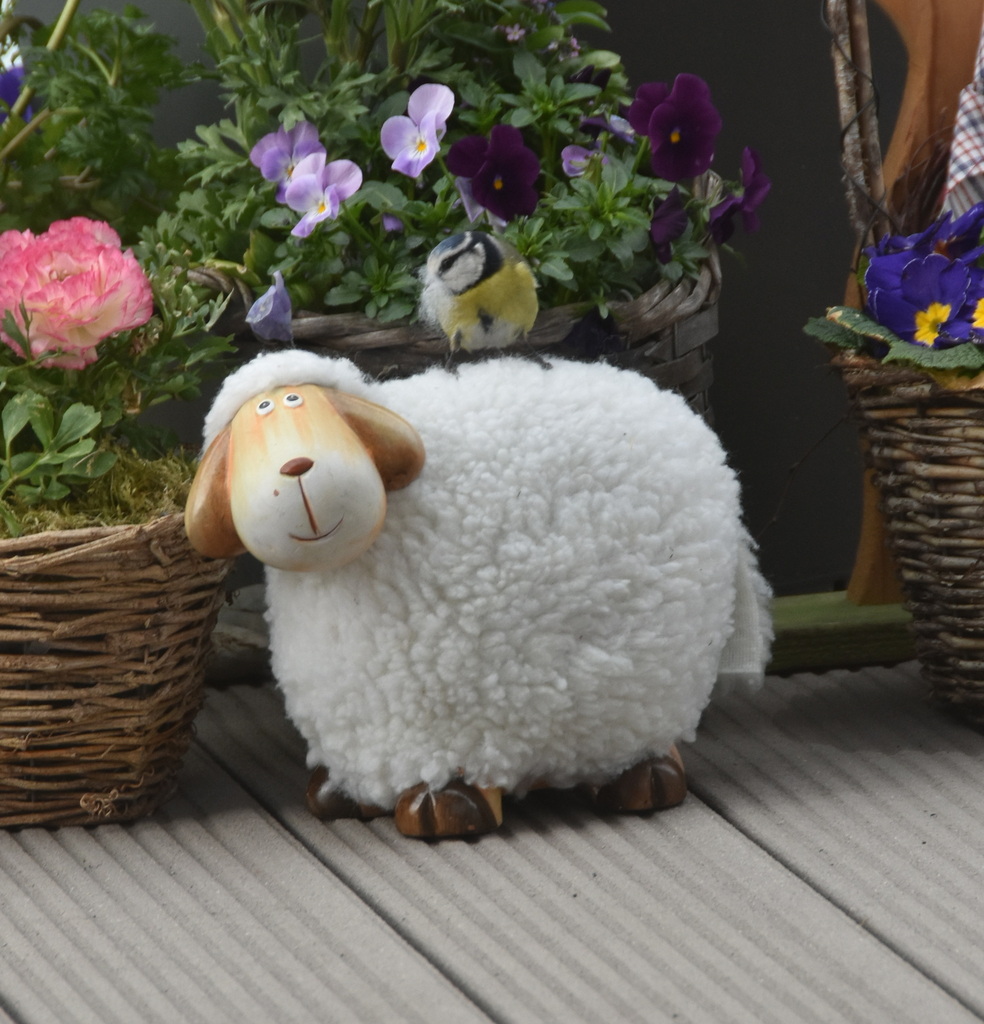
The one mark: a bright blue cap. It is the only small garden bird with actual blue on the head, impossible to confuse in good light. Yellow breast, white cheeks with a dark line through the eye, and a greenish back fill in the picture.
It hangs upside-down on feeders and branch tips to reach insects and seeds that heavier birds cannot access. If a bird is doing something acrobatic on a fat ball, it is almost certainly a blue tit. In the Kaught catalog: No. 007, common tier.
2. European Robin: the garden's territorial singer
The one mark: the orange-red breast, round and cleanly bordered by grey-brown. Both males and females wear it, and a robin seen in silhouette has a distinctive plump, short-tailed, upright shape.
Robins are bold and tame around gardeners, following a spade for exposed worms. They sing year-round, including in winter and at night under streetlights. Read the full story in the why robins sing in winter guide. In the Kaught catalog: No. 001, common tier.
3. Blackbird: the song you already know
The one mark: males are entirely jet-black with a bright yellow-orange bill and a yellow eye-ring. This combination is found in no other common British garden bird. Females are dark brown with faint mottled streaking on the breast and a duller bill.
The blackbird's rich, fluting song is one of the most familiar sounds in British gardens, particularly at dusk from late February onward. On the lawn, the cocked head and frozen pause before a worm tug is a characteristic hunting pose.
4. Great Tit: the tit with the black stripe
The one mark: a bold black stripe running down the centre of the yellow breast. The head is black with bright white cheeks, distinct from the blue cap of the blue tit. The great tit is also noticeably larger, roughly the size of a house sparrow.
Great tits use a wide range of calls, including a distinctive "teacher-teacher" two-note call that rings out from gardens in spring. They compete with blue tits at feeders but, being larger, usually win.
5. House Sparrow: the familiar brown chatterer
The one mark: males have a grey cap, chestnut-brown back streaked with black, and a neat black bib below a grey face. Females are plain buffish-brown above with a pale stripe behind the eye and no bib. Both have a stout seed-crushing bill.
House sparrows are sociable and noisy, rarely found alone, and their cheerful chirping from thick hedges is a garden constant. Numbers have fallen sharply in some areas over recent decades, so finding a garden with an active sparrow colony is worth noting.
6. Starling: iridescent and underrated
The one mark: in good light, the starling's black plumage has a brilliant green and purple iridescence, like oil on water. In winter, fresh plumage shows dense white spotting that gives the bird a speckled look. The bill is yellow in summer, dark in winter.
Starlings are probers, walking across lawns and pushing their bills into the ground to lever out leatherjackets and earthworms. The flock murmurations that gather at dusk in autumn, tens of thousands of birds moving as one fluid shape, are formed by the same species you see on the bird table. A garden visitor worth looking at properly.
7. Chaffinch: the pink-breasted finch
The one mark: in flight, two clear white wing bars flash against a dark wing, visible from a distance. Males have a pink-orange breast and face with a blue-grey cap; females are duller, brownish overall, but share the diagnostic wing bars.
Chaffinches feed on the ground under feeders as much as on them, picking up dropped seeds. The male's song is a confident descending cascade of notes ending in a flourish, one of the most frequently heard sounds in British woodland from February onward.
8. Wren: the tiny one with the cocked tail
The one mark: a very small, very brown bird with a short, cocked-upright tail and a habit of creeping through dense vegetation close to the ground. The wren is one of Britain's lightest birds at around 10 g, barely more than a 50p coin.
The tail is almost always cocked vertically when the bird is alert. The song is disproportionately loud: a rapid, rattling trill that carries from deep inside a hedge and is one of the earliest calls of the year, beginning in January in mild winters.
The one bird you might mistake for something from the riverbank
If a large, slate-grey bird with a long neck lands in your garden and stands very still near the pond: that is a grey heron. It is after your goldfish and it knows exactly what it is doing.
How to build your list
The fastest way to learn garden birds is to pick one per week and spend the week actively looking for that species only. You notice things you ignored before: the specific perching posture of a robin versus a dunnock, the different wing-bar pattern on a chaffinch versus a greenfinch. Start with the eight above, and within a month the basics are locked.
For a look at what the rarity system looks like beyond common species, see the rarest animals you can actually spot in the UK: most common garden birds sit at one diamond, and the contrast with a Legendary species is informative.
UK garden birds: frequently asked questions
What are the most common garden birds in the UK?
The most commonly recorded are house sparrow, starling, blackbird, blue tit, great tit, robin, chaffinch and wren. Most gardens attract at least five of these regularly and all can be identified confidently with one field mark per species.
How do I identify a blue tit?
A bright blue cap: the only small garden bird with actual blue on the head. Yellow breast, white cheeks with a dark eye stripe, greenish back. It hangs upside-down on feeders. Kaught catalog No. 007, common tier.
How do I tell a great tit from a blue tit?
The great tit is noticeably larger with a black head, white cheeks and a bold black stripe down the centre of its yellow breast. The blue tit has a blue cap and no central breast stripe. The black stripe is the fastest field check.
Why do robins follow gardeners?
They associate digging with exposed earthworms and invertebrates. In the wild they follow large animals that disturb the soil. Gardeners are the same opportunity in a human-shaped package.
What is the smallest UK garden bird?
The wren is one of the smallest: about 10 g, with a short, always-cocked tail and a remarkably loud song for its size, a rapid rattling trill that carries from deep inside a hedge.
How do I attract more birds to my garden?
A reliable water source, a feeder with sunflower seeds or hearts, a less-tidy corner for insect cover, and berry-bearing shrubs. Consistency matters more than complexity: a clean feeder filled reliably beats an elaborate setup that empties and is forgotten.
Are garden birds in the Kaught catalog?
Yes. The European Robin is No. 001 and the blue tit is No. 007, both common tier. Kaught's rarity reflects how often a species turns up in field observations across all habitat types, not how easily it is seen in a specific garden.
The next thing you see could be
your first catch.
Kaught is live on the App Store and Google Play. Free to start, and your first catch is one photo away.
Free to start · Live on the App Store and Google Play
Species data, type, rarity tier and measurements, is drawn from the Kaught catalog, built on open biodiversity records from GBIF and iNaturalist. Rarity reflects how often a species is observed in the wild, not its conservation status.