
Exotic spotlight
Warty Anglerfish: the reef fish that hides as a sponge and strikes in 6 milliseconds
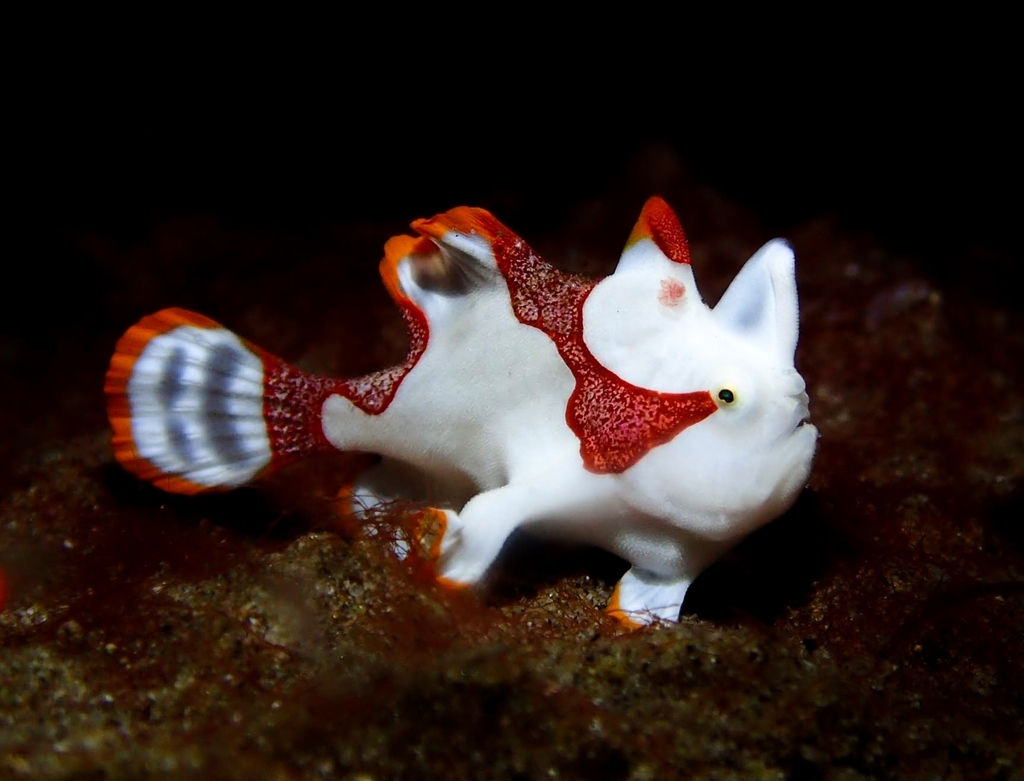
The warty anglerfish (Antennarius maculatus) is an Indo-Pacific reef fish that spends its life impersonating a sponge. It waves a built-in lure to draw prey within range, then swallows it whole in 6 milliseconds, the fastest predatory strike of any vertebrate on Earth.
Most animals that hide do so by running away. The warty anglerfish takes the opposite approach: it sits completely still and dares you to find it. On a healthy coral reef in Indonesia or the Philippines, you could fin past one a dozen times without registering it as a living thing. It does not look like a fish. It looks like an old sponge.
What is a warty anglerfish?
The warty anglerfish belongs to the frogfish family, Antennariidae, not the deep-sea anglerfishes of the midnight zone. Its common names, warty frogfish, warty anglerfish, are used interchangeably, and both point to the same lumpy, round-bodied creature. It is found from the Red Sea through the tropical Indo-Pacific: Indonesia, the Philippines, Japan, the Maldives, the Great Barrier Reef. Wherever there are sponge-covered reef flats and rubble gardens, this fish is likely present, even if nobody has seen it.
Adults rarely exceed 15 cm. They sit on the seafloor at depths from 1 to 40 metres, usually in an area with dense sponge growth. They do not school. Each fish claims a patch of reef and stays there, sometimes for months, moving only to reposition slightly or to follow prey.
How the disguise works
The warty anglerfish can change colour. Not instantly, like a cephalopod, but slowly: over days or weeks it adjusts its skin tone and the distribution of its pigment to match the exact sponge or coral it has settled on. The palette includes vivid yellow, electric orange, deep red, chalky white, black and every mottled combination between them. The skin is also textured, covered in small wart-like protrusions called spines and filaments that break up the body's outline and mimic the lumpy surface of encrusting invertebrates.
The effect is so convincing that individuals photographed at the same reef patch months apart, after a colour change, have been submitted to iNaturalist as separate species. Researchers tracking individuals have to record body shape and fin markings, not colour, because the colour alone is unreliable.
Kaught's catalog places this fish at the Epic tier: three diamonds out of four. Despite living at popular dive sites in the Indo-Pacific, its record of actual observations in iNaturalist is relatively sparse. Being an excellent hider is, by definition, what drives that rarity score.
The fishing rod on its forehead
The warty anglerfish is named anglerfish because it angles: it fishes. The first ray of the dorsal fin has been modified over evolution into a flexible spine called the illicium, essentially a fishing rod growing from the top of the head. At the tip sits the esca, a fleshy lure. In Antennarius maculatus the esca typically resembles a small worm or shrimp, complete with a segmented appearance and fine filaments.
When a small fish or crustacean approaches to investigate, the anglerfish waves the illicium in a slow, rhythmic pattern to imitate swimming prey. The target moves closer. The strike happens too fast to see with the naked eye.
The fastest strike of any vertebrate
High-speed video has timed the warty anglerfish's strike at 6 milliseconds from mouth closed to mouth fully open. A human eye blink takes roughly 150 to 200 milliseconds, meaning the strike is complete before you could register it had started. The mouth opens so rapidly that it creates a powerful suction current that pulls the prey in, along with a volume of water equal to 12 times the fish's own volume. The mouth then slams shut and the water is expelled through the gill slits while the prey is held.
Because the gape can expand to several times the fish's own head diameter, the warty anglerfish swallows prey almost as large as itself whole. This is a fish that essentially ambushes other fish, relies on total stillness for concealment, and then resolves the hunt in a fraction of a second.
Walking, not swimming
When the warty anglerfish needs to move, it does not swim in the conventional sense. It uses its modified pectoral and pelvic fins as limb-like props, pressing them against the substrate and shuffling forward in a gait that resembles a slow, deliberate walk. It can also gulp water and jet it out through small gill openings to lunge short distances. Neither technique is fast or elegant. The fish has no need for either: it waits for the world to come to it.
This walking behaviour places it alongside the dragon seamoth, another Indo-Pacific seafloor fish that moves on modified fins, though the two are entirely unrelated and arrived at the same solution independently.
How to find one
Finding a warty anglerfish requires a change of approach. Stop scanning the middle distance and look at the reef surface closely, specifically at sponges and encrusting organisms. Look for anomalies: a sponge with a slightly different texture at one end, a clump that has a shadow where a shadow should not be, a patch that seems slightly too symmetrical. The fish gives itself away, when it gives itself away at all, by the illicium moving in a gentle arc above what otherwise looks like featureless substrate.
Sites in Lembeh Strait in North Sulawesi, Indonesia, are well known for warty anglerfish sightings, as are the muck diving sites around Ambon and the Banda Sea. The species is also recorded in the Philippines, the Maldives, Hawaii, and the Red Sea. Depth is not the barrier: many sightings are in 5 to 15 metres, accessible to a snorkeller with a sharp eye.
Three things worth knowing about the warty anglerfish
- The esca lure can regenerate. If a would-be prey item bites it off, the fish grows a replacement, sometimes within weeks.
- Frogfishes have no swim bladder. They are negatively buoyant, which is why they live on the bottom rather than drifting in the water column.
- Eggs are released in a buoyant gelatinous mass called a veil, which carries hundreds of larvae up into the plankton. The juveniles look nothing like the adults and are only identified by their eventual settling behaviour.
Warty anglerfish: frequently asked questions
What is a warty anglerfish?
The warty anglerfish (Antennarius maculatus), also called the warty frogfish, is a small reef fish from the Indo-Pacific that lives on the seafloor and disguises itself as a sponge or coral. It belongs to the frogfish family Antennariidae, not the deep-sea anglerfish group. It rarely exceeds 15 cm.
How does the warty anglerfish camouflage itself?
It changes skin colour and texture over days or weeks to match the exact sponge or coral it settles on. Colours include vivid yellow, orange, red, white, black and mottled combinations. Individual fish photographed at the same spot months apart often look like completely different species.
How does the warty anglerfish hunt?
It uses a modified first dorsal spine called the illicium, which it waves above its head like a fishing rod. The tip carries an esca, a fleshy lure shaped like a worm or small shrimp. When a fish moves in to investigate, the anglerfish opens its mouth and inhales prey in as little as 6 milliseconds, the fastest strike of any vertebrate.
Is the warty anglerfish venomous or dangerous?
Not to humans. It does not sting. Divers can approach one closely without risk; the fish is reluctant to move and relies entirely on staying still. Its only danger is to small fish and crustaceans that mistake its lure for food.
Where does the warty anglerfish live?
Across shallow tropical and subtropical reefs, sponge gardens and rubble flats throughout the Indo-Pacific and Red Sea, typically at 1 to 40 metres depth. It prefers areas with dense sponge growth, where it can disappear against the substrate.
Why is the warty anglerfish Epic in Kaught?
Kaught's rarity tier reflects how often a species is recorded in the wild. Despite living in popular dive destinations, the warty anglerfish is so effective at hiding that it accumulates relatively few iNaturalist sightings. It sits at the Epic tier: three diamonds out of four.
Can the warty anglerfish walk?
Yes. Like all frogfishes, it uses modified pectoral and pelvic fins as limb-like props to shuffle along the seafloor. It rarely swims, preferring to walk slowly or remain stationary for long periods.
The next thing you see could be
your first catch.
Kaught is live on the App Store and Google Play. Free to start, and your first catch is one photo away.
Free to start · Live on the App Store and Google Play
Species data, type, rarity tier and measurements, is drawn from the Kaught catalog, built on open biodiversity records from GBIF and iNaturalist. Rarity reflects how often a species is observed in the wild, not its conservation status.