
Species spotlight
Bobcat: the wild cat hiding in plain sight across North America
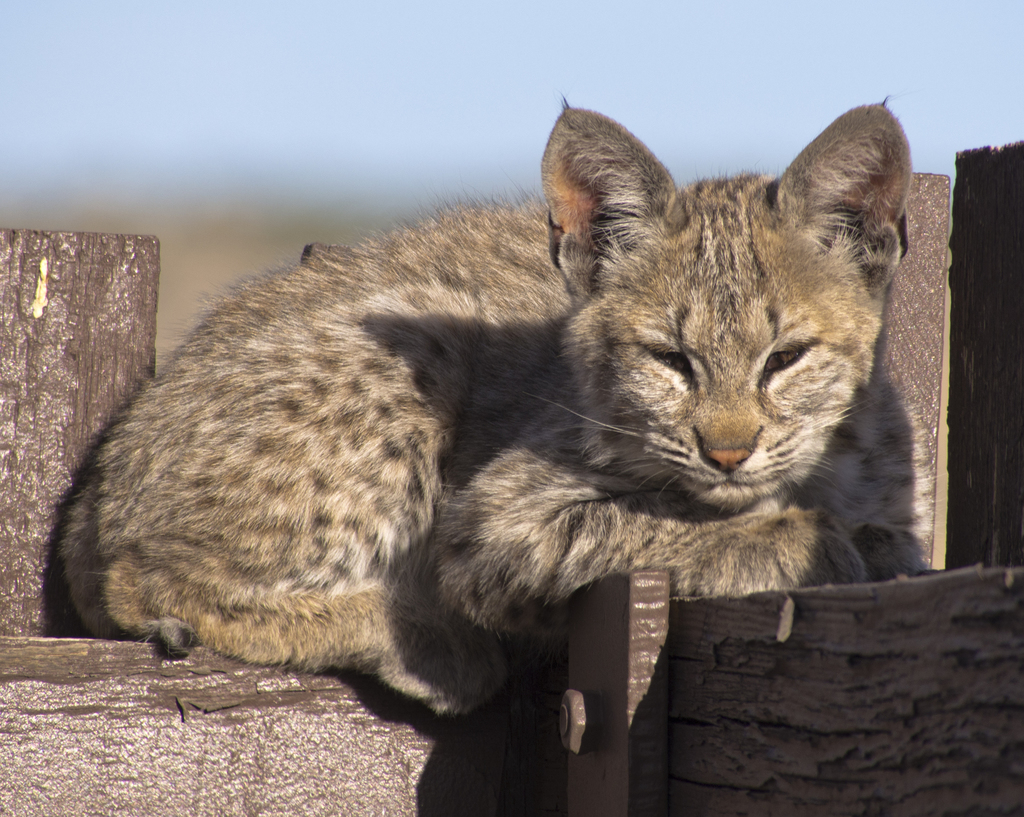
The bobcat (Lynx rufus) is the most common wild cat in North America, found from southern Canada to Mexico in every habitat on the continent. It is spotted, short-tailed and strictly nocturnal. Despite its abundance, most people who live alongside one will never see it.
There is a good chance that if you live anywhere in the continental United States, a bobcat has walked through your neighbourhood at night without you knowing. Radio-tracking studies in suburban California, Florida and Colorado have placed bobcats moving within metres of sleeping households, crossing back yards and following garden fences, then vanishing before first light. The animal is abundant. You will almost certainly never see it.
How to identify a bobcat
If you do get a sighting, here are the field marks:
- Size: roughly twice the bulk of a large domestic cat, though slender-bodied. Males weigh up to 18 kg; females typically 4 to 9 kg.
- Tail: the defining feature. Short, bobbed at 4 to 7 cm (hence the name), with a black tip on top and white underneath. This distinguishes it immediately from a domestic cat or a mountain lion.
- Coat: tawny, buff or grey, usually with dark spots and streaks on the back and sides, more pronounced in younger animals and fading in older ones. The belly is white with dark spots.
- Ears: tufted at the tip, like a small lynx, with a distinct pale spot on the back of each ear.
- Face: broad, with a noticeable facial ruff of longer fur on the cheeks and lower jaw, giving a slightly wide-faced, regal look.
The track is a round, four-toed print with no visible claw marks (retracted during walking), about 5 cm across, placed in a near-straight line. It looks like a large house cat track but sits in a longer stride pattern. In soft mud or snow, the heel pad can show a distinctive three-lobed shape at the back edge.
Where do bobcats live?
Everywhere in North America, which is not an exaggeration. The bobcat ranges from the southern fringe of Canada through all 48 contiguous US states and into central Mexico, a range exceeded among North American carnivores only by the coyote. It occupies boreal forest, swamp, tallgrass prairie, Sonoran desert, Pacific Coast shrubland, Florida scrub, Appalachian forest and the suburban edge habitats between all of these.
The one consistent requirement is cover: rocks, dense brush or fallen timber where the cat can rest, hunt from ambush and den safely. Open grassland with no structure is the environment it uses least.
Population estimates for the US alone range from 2.4 to 3.5 million individuals. By any measure this is a successful species. It has survived urbanisation, fragmented habitat and a long history of trapping that reduced populations in the 20th century; numbers have recovered substantially across most of the range.
What do bobcats eat?
Rabbits and hares are the primary prey everywhere the two species overlap, which is most of the bobcat's range. Cottontail rabbits and snowshoe hares can make up over 70% of the diet where abundant. When rabbits are scarce, the bobcat pivots efficiently to squirrels, rats, mice, birds, reptiles and, when the opportunity presents, white-tailed deer.
Deer killing is worth a word. Bobcats take fawns routinely and adult deer more often than people expect, particularly injured or winter-weakened individuals. The kill method is a fast pounce onto the back, clamping the neck with the jaws and biting down at the base of the skull or nape vertebrae. Death is near-instant if the bite lands correctly; the cat then drags the carcass to cover and feeds over several days, caching what it cannot eat immediately under leaf litter.
Like all felids, the bobcat is an obligate carnivore: it cannot manufacture certain amino acids and must get them entirely from meat. Its digestive system is optimised for protein-rich food and cannot process plant material effectively.
Is the bobcat dangerous to people?
Almost never. Wild bobcats avoid human contact instinctively, and confirmed attacks on adults are vanishingly rare. A healthy bobcat has no reason to approach a person and every reason to disappear.
They do take small pets left outside at night, particularly in areas where natural prey is reduced. Chickens in unsecured coops are at consistent risk anywhere bobcats are present. A sturdy, fully-enclosed coop with hardware cloth (not chicken wire, which bobcats and raccoons can penetrate) is the practical defence.
A bobcat approaching humans in daylight, or behaving strangely or aggressively, should be reported to local wildlife authorities immediately. This is unusual behaviour and may indicate illness.
Bobcat vs Canada lynx: how to tell them apart
The two species overlap in parts of the northern US and share a similar silhouette. Key differences:
- Paws: Canada lynx paws are enormous, like snowshoes, adapted for walking on deep snow. Bobcat paws are much smaller and neater.
- Legs: lynx have notably longer, taller legs that give them a steep angle from shoulder to hip. The bobcat has a less exaggerated build.
- Spots: bobcats are usually more clearly spotted. Canada lynx are typically plain greyish-brown with a darker streaked pattern.
- Ear tufts: both have tufted ears, but lynx tufts are significantly longer and more pronounced.
- Habitat: in most of North America, a large spotted wild cat is a bobcat. Canada lynx live primarily in dense boreal forest and are almost never seen in the lower 48 except at the northern edge.
Why is the bobcat Epic in Kaught?
Kaught's rarity is observation frequency, not population size. Despite its range of several million individuals, the bobcat is genuinely hard to observe: strictly nocturnal, intensely secretive and leaves almost no sign of its presence. Most iNaturalist records come from trail cameras, motion-triggered devices, not daylight sightings. The observation count (over 53,000 records worldwide) is significant in absolute terms but exceptional sightings remain uncommon enough to earn the Epic tier: three diamonds out of four.
That places it alongside the Eurasian lynx and the mountain lion on the rarity ladder, an appropriate grouping for three of North America and Eurasia's stealthiest cats.
Bobcat: frequently asked questions
What does a bobcat look like?
A medium wild cat about twice the size of a domestic cat, with tawny spotted fur, a short bobbed tail with a black tip on top and white below, tufted ears and a broad facial ruff. The tail is the single clearest field mark at a distance.
Where do bobcats live?
Across virtually all of North America: from southern Canada through all 48 US states to central Mexico. Every habitat type on the continent, from boreal forest to desert scrub to suburban fringes. Population estimates for the US alone run to 2.4 to 3.5 million individuals.
Are bobcats dangerous to humans?
Almost never. Wild bobcats avoid human contact completely. They can take small unprotected pets at night. A bobcat approaching people in daylight may be unwell and should be reported to wildlife authorities.
What do bobcats eat?
Primarily rabbits and hares, which can make up over 70% of the diet. Also squirrels, rats, mice, birds, reptiles and occasionally deer, especially fawns or weakened adults. They stalk silently and kill with a bite to the back of the skull or nape.
How is a bobcat different from a Canada lynx?
Bobcats are smaller, more clearly spotted and have proportionally smaller paws. Canada lynx have enormous snowshoe-like paws, longer legs and a plainer grey coat, suited to deep-snow boreal forest. In most of the continental US, a spotted wild cat is a bobcat.
Why is the bobcat Epic in Kaught?
Kaught's rarity reflects how often a species is recorded in the wild, not its population. Bobcats are strictly nocturnal and leave almost no sign of their presence. Most records come from trail cameras. Genuine daytime sightings are uncommon enough to place the species at Epic, three diamonds out of four.
The next thing you see could be
your first catch.
Kaught is live on the App Store and Google Play. Free to start, and your first catch is one photo away.
Free to start · Live on the App Store and Google Play
Species data, type, rarity tier and measurements, is drawn from the Kaught catalog, built on open biodiversity records from GBIF and iNaturalist. Rarity reflects how often a species is observed in the wild, not its conservation status.