Superlative · 6 species ranked
Most colorful animals in the world: 6 species ranked by what makes them extraordinary
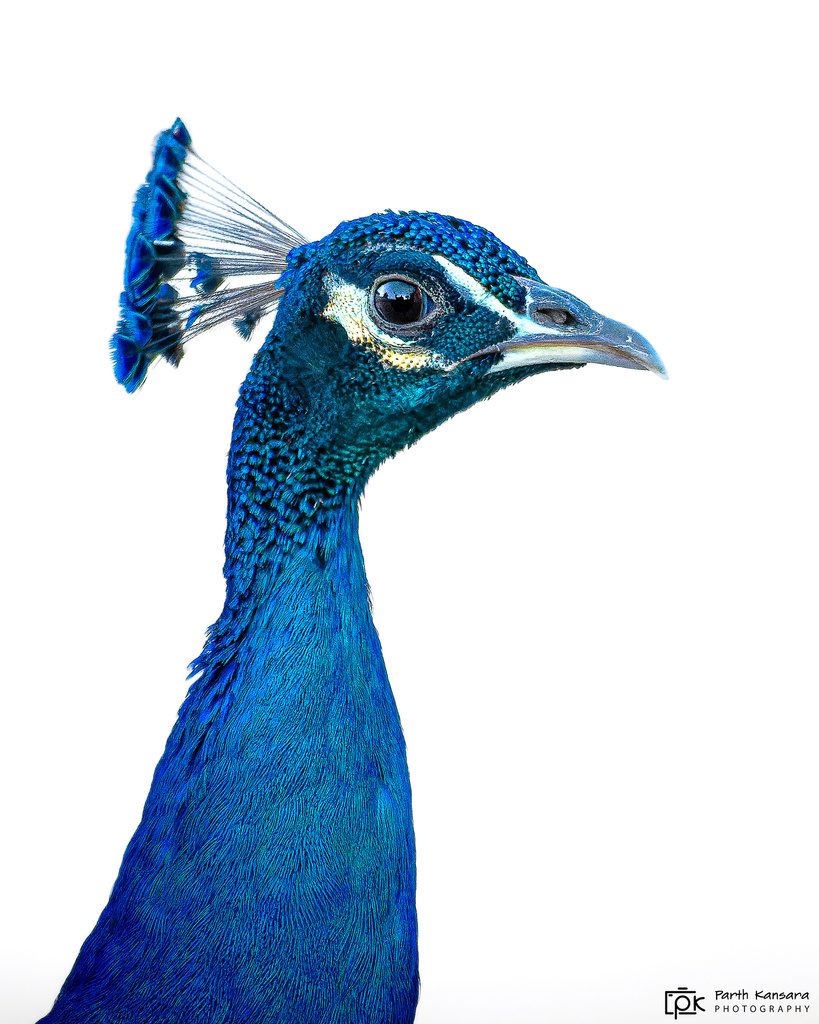
The most colorful animals in the world are almost all birds: the Indian peafowl leads, followed by the scarlet macaw, violet-backed starling, lilac-breasted roller, painted bunting, and mandarin duck. Most owe their brilliance to structural color, not pigment alone.
How animal color works
Two mechanisms produce color in animals. The first is pigment-based color: chemical compounds (melanins, carotenoids, porphyrins) that absorb some wavelengths of light and reflect others. A scarlet macaw's red feathers contain carotenoid pigments, which absorb blue and green wavelengths and reflect red and orange.
The second is structural color: microscale surface structures that refract, scatter, or interfere with light to produce hues not achievable with pigment. The peacock's tail looks emerald green from one angle and copper-gold from another because the feather barbules carry a grid of melanin rods spaced at precise intervals, creating iridescence through thin-film interference. There is no green pigment in a peacock feather. Remove the structure and the color disappears.
The most spectacular animals combine both: structural color layered over a pigment base produces the deepest, most saturated hues in nature. All six species below do this in one way or another.
1. Indian Peafowl
The peacock's train is the most elaborate display structure of any living bird. Up to 1.5 m long, it carries around 150 to 200 elongated upper tail coverts, each tipped with an iridescent eye-spot. When the bird fans and vibrates the train, the eye-spots shimmer from emerald green through sapphire blue to bronze depending on the viewing angle: classic thin-film structural color.
The body plumage is equally striking: the neck and breast are covered in scale-like feathers of intense iridescent blue-green, each individually small but collectively producing a shifting electric sheen. Males carry this full plumage year-round, moulting the train after the breeding season and regrowing it before the next.
Despite this conspicuousness, the Indian peafowl is not hard to find. It is widespread across South Asia, from Pakistan to Sri Lanka, and introduced populations exist on multiple continents. The Kaught catalog rates it as Common, one diamond, reflecting observation frequency in areas where it occurs: parks, farmland edges, and forest clearings where it forages loudly on the ground.
2. Scarlet Macaw
The scarlet macaw wears three primary colors simultaneously: scarlet-red covering most of the body, bright yellow on the wing coverts, and turquoise to blue on the flight feathers and tail. The contrast between all three, unbroken by any intermediate color, is what makes it visually arresting. There is no blending, no gradient. Each zone is a solid, saturated block.
The red is carotenoid pigment. The yellow is carotenoid pigment. The blue, as in most parrots, is structural: melanin-rich feather barbules scatter short wavelengths preferentially. The combination is entirely pigment and structure, as in the peafowl, but arranged in a bolder, higher-contrast pattern.
The scarlet macaw ranges from southern Mexico through the Amazon basin, with some populations as far west as Bolivia and south as far as Brazil's coastal Atlantic Forest. It is Rare in the Kaught catalog, two diamonds, because it requires large intact forest and is absent from most of its historical range near human settlements.
3. Violet-backed Starling
The violet-backed starling is among the most intensely iridescent birds in the world. The male's back, head, throat and upper breast are covered in feathers that produce a pure, deep violet at one angle, then shift to metallic green or magenta as the light changes. The belly is clean white, making the iridescent upper parts flash against it in contrast.
The color is entirely structural, produced by a melanin nanostructure in the feather barbules. There is no violet pigment. The feathers appear dark, almost black, in the shade. In full sun, the same feathers become electric. This light-dependence is characteristic of structural color and means the violet-backed starling's appearance is qualitatively different in different viewing conditions.
It is widespread in woodland and forest edge across sub-Saharan Africa, breeding seasonally and sometimes forming large roost flocks. The Kaught catalog rates it Epic, three diamonds, because despite a wide range it is patchily distributed and most observations come from a limited set of sites with the right woodland structure.
4. Lilac-breasted Roller
The lilac-breasted roller is one of the most frequently photographed birds in East Africa, and the reason is straightforward: it sits in the open on dead branches, telephone wires, and acacia tops, and it carries eight distinct colors simultaneously. The crown is green. The face is white. The throat is lilac. The breast grades from lilac into turquoise. The wing coverts are deep blue. The flight feathers are turquoise. The back is brown. The tail is dark blue.
In flight, it rolls from side to side to display these colors during aerial courtship, hence the name. The rolling flight is a full-body iridescent shimmer that is visible at distances where the bird is still a small dot against the sky.
The lilac-breasted roller favors open savanna with scattered trees and is one of the most reliably encountered colorful birds on any East or southern African safari. The Kaught catalog rates it Rare, two diamonds: common within its range but absent from forest, dense bush, and the majority of the continent.
5. Painted Bunting
The male painted bunting is the most colorful bird native to North America. The head is deep violet-blue. The back is bright lime-green. The underparts and rump are red. Three colors, each fully saturated, each covering a distinct body zone without overlap. Ornithologists sometimes describe it as looking like a child's crayon drawing of a bird.
The red and green are carotenoid-based. The blue is structural. The combination is not unique in mechanism but is unusual in its three-way division of primary colors across a single small bird. Male painted buntings are also strongly territorial and will fight rival males aggressively, which keeps them visible in open scrub during the breeding season.
The species breeds in the southern United States (Texas, Oklahoma, the Carolinas, Florida) and winters in Central America and the Caribbean. It is Common in the Kaught catalog, one diamond, because in the right scrub and thicket habitat it is reliably found and regularly reported on iNaturalist.
6. Mandarin Duck
The mandarin duck male carries more distinct color zones than arguably any other duck alive: a red bill, white eye-stripe, chestnut face, purple-green crown, blue and green back, orange "sail" feathers fanning from the back, chestnut-orange flanks, and cream underparts. The sail feathers are the signature feature: large, scale-shaped tertial feathers that fold up vertically along the back like a small orange fin.
The species is native to East Asia (China, Japan, Korea, and far-eastern Russia) and has established feral breeding populations in the United Kingdom, particularly along the River Thames. In East Asia, it frequents wooded lakes and rivers with overhanging branches for nesting (it nests in tree cavities). In the UK, it has adapted to urban and suburban parks with dense waterside vegetation.
The Kaught catalog rates the mandarin duck Common, one diamond. In areas where feral populations are established, like Virginia Water in Surrey or St James's Park in London, it is reliably present year-round. In its native Asian range, it is patchier but still regularly observed in suitable woodland waterway habitat.
Why birds dominate this list
Every animal on this ranking is a bird. This is not a coincidence or a bias in the selection: birds are the most colorful vertebrates on Earth, and the gap between the most colorful bird and the most colorful mammal is large.
Birds can incorporate dietary carotenoids directly into feathers (flamingos turn pink from crustaceans; the scarlet macaw's red requires carotenoid-rich food). Birds evolved structural color in feather microstructure independently in multiple lineages. And critically, birds see into the ultraviolet: color patches that appear monochrome to human eyes may be distinctly patterned in the UV range that birds perceive, meaning color complexity in birds is even greater than we can directly observe.
The most colorful mammals (mandrill, golden snub-nosed monkey, some bats) achieve vivid skin coloration in restricted patches, usually the face or rump. No mammal approaches the full-body polychromatic displays of the birds above.
Most colorful animals: frequently asked questions
What is the most colorful animal in the world?
The Indian peafowl (Pavo cristatus) is commonly cited as the most colorful. The male's train reaches 1.5 m, carrying hundreds of iridescent eye-spot feathers that shift between emerald green, sapphire blue, and bronze depending on angle. The color is structural, produced by feather microstructure, not pigment.
What makes an animal colorful?
Animals produce color two ways: pigment (chemical compounds absorbing some wavelengths) and structural color (microscale surfaces refracting or scattering light). The most vivid animals combine both: a structural layer over a pigment base. Structural color is what makes peacock feathers, hummingbirds, and starlings iridescent.
Why are some birds so much more colorful than mammals?
Birds incorporate dietary carotenoids into feathers, evolved structural color from feather microstructure, and see into the UV range. Mammals have fewer pigment types (mainly melanins) and no equivalent of feather structural coloration. The gap between the most colorful bird and mammal is very large.
Where can you see the most colorful birds in the world?
Indian peafowl: South Asia, especially India and Sri Lanka. Scarlet macaw: Central America and Amazon basin. Violet-backed starling: sub-Saharan Africa. Lilac-breasted roller: East and southern Africa. Painted bunting: southern USA and Mexico. Mandarin duck: East Asia and feral populations in the UK.
Are the most colorful animals always male?
In birds, the most vivid colors are usually on males. Sexual selection drives elaborate male plumage when females choose mates based on display quality. Female painted buntings are green, female mandarin ducks are grey-brown. In some species, the female is more brightly colored and the male incubates.
The next thing you see could be
your first catch.
Kaught launches soon. Join the waitlist and be first to start a collection of the living world, one photo at a time.
Free at launch · No spam, just one email on launch day
Species data, type, rarity tier and measurements, is drawn from the Kaught catalog, built on open biodiversity records from GBIF and iNaturalist. Rarity reflects how often a species is observed in the wild, not its conservation status.