
Species spotlight
American Alligator: how to identify one and what to do if you see one
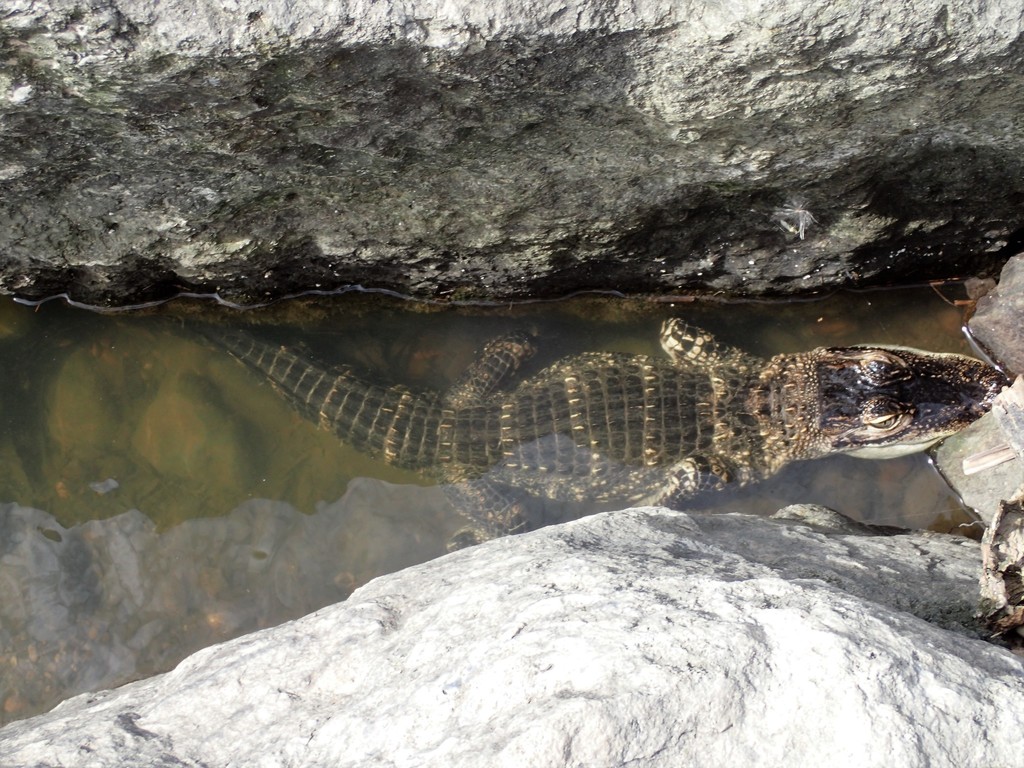
The American alligator (Alligator mississippiensis) is the apex predator of the southeastern United States wetlands. Adults reach 4.6 m and 450 kg, with a bite force of around 13,000 Newtons. The round U-shaped snout is the key field mark separating it from crocodiles. It is found in Florida, Louisiana, Georgia and neighbouring states, and is most active at night.
A large American alligator at rest looks like a section of waterlogged log. The back is dark, heavily armoured with bony plates called osteoderms, and the animal holds absolutely still for hours. Then the log blinks. It is a patience specialist, and the patience is the point: it waits, barely metabolising, for something edible to come within range. When that happens, it moves faster than most people can react.
How to identify an American alligator
The single most useful field mark is the snout shape:
- U-shaped snout: the American alligator has a broad, rounded snout that resembles a U when viewed from above. The American crocodile (found only in the southern tip of Florida) has a narrow V-shape.
- Hidden fourth tooth: when the mouth is closed, an alligator's lower fourth tooth fits into a socket in the upper jaw and disappears. On a crocodile, the lower teeth remain visible against the upper jaw even when the mouth is shut.
- Colour: adults are dark grey to near-black. Juveniles carry yellow bands that fade over the first few years.
- Size: females typically reach 2.5 to 3 m; males grow to 3.5 to 4 m, occasionally beyond. True 4.6 m individuals exist but are exceptional.
The eye is worth noting: the iris is a rich amber-brown, and the vertical slit pupil widens enormously at night, where most of the animal's active hunting occurs. Eye-shine from a torch held at head height reveals the characteristic red-orange glow of an alligator floating in darkness.
Where to find American alligators
The American alligator is endemic to the southeastern United States. Its range covers the coastal plain from eastern Texas and Oklahoma through Louisiana, Mississippi, Alabama, Georgia, Florida, and the Carolinas. Florida has the highest population, estimated at around 1.3 million animals.
It inhabits freshwater: swamps, marshes, rivers, lakes, ponds, canals and golf course water hazards. In warm weather it may move through brackish estuaries and occasionally enter saltwater for short periods, but it cannot tolerate salt like the saltwater crocodile does.
Good sites include the Everglades National Park, Okefenokee Swamp in Georgia, Atchafalaya Basin in Louisiana, and Brazos Bend State Park in Texas. The best time is any warm day: alligators are ectotherms and bask on banks to regulate body temperature. They are most active between April and October.
What alligators eat
Juveniles eat insects, crustaceans, small fish and frogs. Adults are opportunistic apex predators: fish, turtles, snakes, birds, small mammals, and, for the largest individuals, deer, wild boar and large wading birds. The hunting strategy is almost always ambush from or at the water surface. The animal waits motionless, then lunges with the full body in a forward drive that can lift it clear of the water to catch a bird.
The bite force is approximately 13,000 Newtons, enough to crush the shell of a large freshwater turtle. The digestion is equally powerful: stomach acid at pH 2 dissolves bone within 24 hours. Alligators swallow gastroliths (small stones) to aid digestion, a behaviour shared with some dinosaur lineages.
The icing behaviour: surviving a freeze
Alligators are ectotherms and become dormant in cold weather, sheltering in burrows (called "gator holes") and slowing metabolism almost to a standstill. In brief freezing conditions they exhibit one of the most striking reptile behaviours known: icing.
Before the water surface freezes, an alligator positions itself vertically with its nostrils just above the water line. As the surface freezes around it, the nostrils remain protruding through the ice. The animal goes into torpor, its body locked in ice but its airway clear. When temperatures rise and the ice melts, it emerges unharmed. This has been documented in North Carolina, at the northern edge of the range, where winter ice events are periodic.
Nesting and parental care
Female alligators build mound nests from vegetation and mud in late spring, laying 20 to 60 eggs. The nest acts as a compost heap: decomposing vegetation generates heat that incubates the eggs. The female guards the nest for the 65-day incubation period. Temperature during incubation determines sex: eggs incubated above 34°C produce males, below 30°C produce females.
When eggs begin to hatch, the young call from inside the shell with a high-pitched grunt. The female digs open the nest, carries hatchlings in her mouth to the water, and protects them for the first year. This level of parental investment is unusual for a reptile and puts the alligator in the same category as birds and some crocodilians for attentive nesting behaviour.
Is the American alligator dangerous?
It can be. Unprovoked attacks occur, primarily in Florida, where residential development places people and alligators in frequent contact. The Florida Fish and Wildlife Conservation Commission handles thousands of nuisance complaints per year and removes animals that have lost their caution around people, usually because someone fed them.
The rules are straightforward:
- Keep at least 15 feet (4.5 m) from any alligator you see on land.
- Never feed an alligator: it is illegal in Florida and conditions the animal to associate people with food.
- Do not swim in bodies of water known to hold large alligators, especially after dark.
- Keep pets on a lead near water. Small dogs are particularly at risk.
An alligator that has not been fed, and has not been approached repeatedly, will typically exit the water, eye you from a distance, and sink back under. The threat posture (mouth open, held at the bank) is usually a warning, not an imminent attack.
How rare is the American alligator?
In the Kaught catalog the American alligator sits at Epic, three diamonds out of four. That reflects observation frequency: the species is found only in the southeastern US, is primarily nocturnal, and even in dense Florida populations a close clear sighting of a large individual in natural hunting behaviour is uncommon. Read about other large reptiles at Nile crocodile and water monitor lizard.
American alligator: frequently asked questions
How do you identify an American alligator?
The key field mark is the broad, rounded U-shaped snout. When the mouth is closed, the lower teeth are hidden inside the upper jaw. Adults are dark grey to near-black, heavily armoured, and reach 2.5 to 4.6 m. Juveniles have yellow bands that fade with age.
Where do American alligators live?
Exclusively in the southeastern United States: primarily Florida, Louisiana, Georgia, Alabama, Mississippi, South Carolina, North Carolina and Texas. They inhabit freshwater swamps, marshes, rivers, lakes and ponds. Florida holds an estimated 1.3 million animals.
Are American alligators dangerous?
They can be. Keep 15 feet of distance, never feed one (illegal in Florida), and avoid swimming where alligators are active after dark. An unhabituated alligator will usually retreat. One that has been fed repeatedly is genuinely dangerous.
What is the difference between an alligator and a crocodile?
The snout: the American alligator's is broad and rounded (U-shape); the American crocodile's is narrow (V-shape). When the mouth is closed, an alligator's lower fourth tooth is hidden; a crocodile's stays visible. Alligators are also darker overall.
Can alligators survive freezing temperatures?
Yes. They use 'icing': before the water surface freezes, an alligator holds its nostrils above the waterline. As the ice forms around it, the nostrils stay exposed. The animal goes into torpor under the ice and emerges unharmed when temperatures rise.
Why is the American alligator Epic in Kaught?
Kaught's rarity reflects observation frequency. The alligator lives only in the southeastern US, is primarily nocturnal, and even in dense Florida populations a close sighting of a large individual is infrequent. That places it at Epic, three diamonds out of four.
The next thing you see could be
your first catch.
Kaught is live on the App Store and Google Play. Free to start, and your first catch is one photo away.
Free to start · Live on the App Store and Google Play
Species data, type, rarity tier and measurements, is drawn from the Kaught catalog, built on open biodiversity records from GBIF and iNaturalist. Rarity reflects how often a species is observed in the wild, not its conservation status.